

Hypochlorous Acid Concentration For Disinfection
Why We Obsess Over the Right HOCl Strength
We work with HOCl every single day, so we feel both excitement and pressure when we talk about Hypochlorous Acid Concentration For Disinfection. The right level brings strong action, the wrong level causes trouble, so we treat it like tuning a guitar string. One wrong twist and the tone breaks. One right twist and the whole system sings.
We love that this weak acid still clears a wide range of germs. We also love that our system lets us choose not just a number but a vibe.
Every level tells a story. Some help with wound care, some help with water treatment, and some help with baby toys. Each target has a sweet spot measured in parts per million ppm. We chase that sweet spot daily.
HOCl Basics We Live By
What HOCl Really Is
We explain it like this
A weak acid with attitude
A natural defense tool made by white blood cells
A broad-spectrum fighter
A safe option for sensitive zones
A germ killer with almost no sting
We love that hypochlorous acid HOCl works fast. It jumps on bacteria and viruses with energy. It breaks cell walls like a hero in an action movie that never sleeps.
Why Strength Matters
We test every concentration of hocl because the strength changes both safety and results. Too low, weak action, too high, harsh feel. When levels spike, we call them high-concentration bursts. They kill germs fast, but they also bring more risk, so we use them with care.
Our Favorite HOCl Ranges
The Big Table of HOCl Targets
We carry this list in our heads like a grocery list of safety
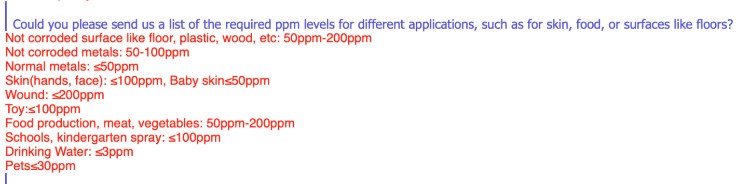
Non-corrosive surfaces, floors, plastics, wood → 50ppm–200ppm
Non-corrosive metals → 50–100ppm
Common metals → ≤50ppm
Skin hands face → ≤100ppm
Infant skin → ≤50ppm
Wounds → ≤200ppm
Toys → ≤100ppm
Food production, meat and vegetables → 50–200ppm
School and kindergarten spraying → ≤100ppm
Drinking water → ≤3ppm
Pet-friendly setups → ≤30ppm
These ranges keep life simple. We follow them because they avoid adverse effects. We also use them because they hit that sweet spot between safe and highly effective.
How We Choose HOCl Levels With Feeling
1. We Think About the Surface
We check the item first
Hard floors handle 200 ppm
Soft metals stay happy under 50 ppm
Wood accepts mid-levels
Plastics remain calm near 100 ppm
We learned this the hard way once when we cleaned a metal hinge with a strong level. That hinge looked like it aged ten years in one hour. Lesson learned.
2. We Think About the User
We use low levels for kids, pets, and wounds. Our hearts always lean toward gentle ranges.
A baby toy needs ≤100 ppm. A dog bowl stays safe near ≤30ppm. A scraped knee likes ≤200ppm. These levels keep the process clean yet kind.
3. We Think About Purpose
We adjust levels by the task
Kill bacteria → 100–200 ppm
Fast wipe downs → 50–100 ppm
Food slicing rooms → 50–200 ppm
Air and mist zones → ≤100 ppm
Water systems → ≤3 ppm
We love how a small number like 3 ppm still handles big water jobs. Tiny range big drama.
When HOCl Outshines Other Options
Why We Often Pick HOCl Over Sodium Hypochlorite
We once used sodium hypochlorite everywhere, but we got tired of the strong smell. That sharp sting made our eyes water and our nerves jump.
The shift to HOCl still surprises us. HOCl acts fast, smells mild, and stays friendly to skin. It never bites like some older options.
HOCl also holds a nice shelf life when we store it in cool, dark rooms. We track every batch to stay ahead of drift. Fresh mix, steady strength, clean hit.
How Our System Keeps Levels Right
We design our system to give steady levels because steady levels save time, energy, and life. We limit mentions of our HClO Generator as required, but we still smile when we think about its role. It delivers the power we need without chaos.
Our setup tracks every number during production. Our process reads like a flight checklist
Input salt and water
Set target range
Watch the electrodes
Confirm ppm
Seal the batch
Tag the date
This rhythm keeps us grounded and keeps every bottle trustworthy.
Real Uses That Touch Our Hearts
Wound Moments
We once helped a nurse test a 200 ppm batch for wound care. The quick, calm result impressed her so much that she joked that HOCl feels like magic water. We never forget that moment because it marked a turning point for us.
School Sprays
Teachers tell us they feel safer when they spray ≤100 ppm. Kids run around with wild energy, so these mild levels keep things clean without fear.
Food Prep
We work with kitchens that use 50–200 ppm on cutting boards, fresh veggies, and meat rooms. They love the wide range because each zone needs a different mood.
How We Avoid HOCl Mistakes
We protect our workflow by watching for overload
High levels sting the nose
Too much use dries surfaces
Wrong metals react poorly
Poor storage weakens the mix
We avoid those issues through simple rules
Keep dark bottles
Make small batches
Update logs daily
Test the ppm before use
Fun Surprises We Found
We discovered that pets react in funny ways to low ranges. One dog kept licking a bowl sprayed with ≤30 ppm because it liked the fresh scent. Another stared at the bottle like it expected treats. These tiny surprises keep us laughing during long days.
Final Thoughts We Carry Forward
We treat Hypochlorous Acid Solution like a smart tool. Its strength shifts its personality.
At 3 ppm, it protects water. At 200 ppm, it steps into battle. Every level matters, and every number tells us what story it wants to write.
We trust HOCl because it wins against germs with calm energy. Our work shows that safe levels create safe spaces and strong levels create strong action. We believe the right Hypochlorous Acid Concentration For Disinfection brings peace to our daily routine. We feel proud when our mix helps someone live cleaner and safer.