

HOCl Validation: Lab vs Reality
A laboratory test can show impressive disinfection results. However, real facilities face very different conditions. Dust, grease, moisture, surface materials, and human activity can all affect performance. This is why laboratory results do not always match daily cleaning results.
At Shandong Shine Health, we believe reliable disinfection needs more than a strong laboratory report. Facilities must also check how a hypochlorous acid solution performs during normal operations. This process helps businesses select the right concentration, application method, and equipment.
In this guide, we compare laboratory efficacy with real-world performance. We also explain how to test an HOCl system and avoid common validation mistakes.
1. What Is HOCl Disinfection Validation?
Hypochlorous acid (HOCl) is a weak acid with strong oxidizing properties. Our immune system naturally produces it as part of its defense against harmful microorganisms. Scientists have also studied its use in surface disinfection, wound care, and healthcare environments.
HOCl attacks important microbial structures, including proteins, enzymes, and cell membranes. It can damage cell walls and other structures that microorganisms need to survive. Therefore, it offers broad spectrum antimicrobial activity against many bacteria, viruses, and fungi.
However, effective disinfection depends on several factors:
Active ingredient: Free available chlorine (FAC) provides a useful measurement of active chlorine.
Concentration: We commonly express FAC in parts per million (ppm).
pH: pH affects the balance between HOCl and hypochlorite ions (OCl⁻).
Contact time: The solution needs enough time to interact with microorganisms.
Organic matter: Blood, grease, and dirt can consume active chlorine.
Temperature: Temperature can affect chemical activity and solution stability.
Application method: Spraying, wiping, and soaking create different exposure conditions.
We should never judge a disinfectant by concentration alone. A higher ppm value does not automatically guarantee better results in every situation.
2. Laboratory Efficacy vs Real-World Performance
Laboratory testing provides controlled conditions. Researchers can measure microbial reductions under specific temperatures, concentrations, and exposure times. These results help us understand the potential of an HOCl solution.
However, a laboratory surface usually looks much cleaner than a busy facility.
What Laboratory Tests Usually Measure
A typical laboratory evaluation may include:
A selected microorganism or microbial strain.
A defined HOCl concentration, such as 50, 100, or 200 ppm.
A controlled contact time, such as 30 seconds or 5 minutes.
A specific test surface, such as stainless steel or ceramic.
A defined level of organic contamination.
Microbial counts before and after treatment.
Researchers often express the results as log reduction.
Log reduction | Approximate microbial reduction |
1-log | 90% |
2-log | 99% |
3-log | 99.9% |
4-log | 99.99% |
5-log | 99.999% |
These numbers help facilities compare different test conditions. However, a 3-log reduction in a laboratory does not guarantee the same result everywhere.
Why Real Facilities Get Different Results
Real environments introduce many variables. A food processing floor may contain grease and protein residues. A hospital may have frequent contact with contaminated surfaces. A livestock facility may experience high organic loads and continuous microbial exposure.
Several conditions can reduce actual performance:
Workers apply too little solution.
Surfaces dry before the required contact time.
Cleaning teams skip visible dirt removal.
The solution loses active chlorine during storage.
Spray equipment delivers uneven coverage.
Surface cracks protect microorganisms from direct exposure.
For this reason, we recommend testing the complete cleaning and disinfection process, not just the chemical solution.
3. Which Microorganisms Can HOCl Control?
One common question concerns the antimicrobial range of HOCl. People often ask: does hypochlorous acid kill fungus? Does hypochlorous acid kill mold? Can it affect viruses and bacteria?
The answer depends on the microorganism, formulation, concentration, and exposure conditions.
Bacteria, Fungi, and Mold
Research supports the ability of properly formulated HOCl solutions to reduce many Gram-positive and Gram-negative bacteria. Examples include Escherichia coli, Staphylococcus aureus, and Pseudomonas aeruginosa.
Does hypochlorous acid kill fungus? Laboratory studies show activity against certain fungal organisms. However, fungal spores may require different treatment conditions from ordinary bacterial cells.
Does hypochlorous acid kill mold? HOCl can help reduce certain mold organisms on suitable surfaces. Nevertheless, surface disinfection does not remove the source of moisture. Facilities must also fix leaks, improve ventilation, and remove visible mold contamination.
The term hypochlorous acid mold therefore needs careful interpretation. A successful surface test does not prove complete mold removal throughout a building.
Viruses and Other Resistant Targets
Will hypochlorous acid kill norovirus? Some studies report encouraging results. One carrier study evaluated HOCl concentrations from 20 to 200 ppm. Researchers reported at least a 3-log reduction under their tested conditions within 10 minutes.
However, other norovirus studies show different results across formulations and test methods. We should never assume that every HOCl spray can control norovirus. Facilities need product-specific evidence against the exact target pathogen.
Another question is: does hypochlorous acid kill pinworm eggs? We cannot make this claim without direct validation. Pinworm eggs can survive on household objects for two to three weeks. The CDC recommends careful handwashing, hot-water laundering, and other hygiene measures. We should not replace these measures with an unverified disinfectant claim.
Does HOCl Kill Good Bacteria?
Yes, HOCl can also affect beneficial bacteria when they receive sufficient exposure. It does not recognize whether a microorganism helps or harms humans.
This distinction matters in healthcare and food production. For example, surface disinfection aims to reduce unwanted contamination. It does not aim to preserve every microorganism on a treated surface.
Therefore, facilities should apply HOCl only to the intended treatment area. They should also follow the instructions for skin, food-contact surfaces, and other special applications.
4. How to Validate HOCl in a Real Facility
We recommend a step-by-step validation plan. It should connect laboratory findings with actual facility conditions.
Step 1: Define the Disinfection Target
First, identify the main reason for disinfection. Different facilities have different microbial risks.
Facility | Main validation focus |
Food processing | Bacteria and food-contact surfaces |
Healthcare | Healthcare-associated pathogens |
Livestock | Environmental microbial control |
Commercial buildings | Frequently touched surfaces |
Dental facilities | Equipment and selected waterlines |
Choose the microorganisms that match the actual risk. Do not select test organisms simply because they produce impressive laboratory results.
Step 2: Set the Test Parameters
Next, define the operating conditions before testing begins.
We suggest recording these parameters:
HOCl concentration: 50–200 ppm, depending on the application.
pH: Record the actual measured value.
FAC: Measure available chlorine in ppm.
Contact time: Record the required exposure period.
Temperature: Record the solution and room temperature.
Organic load: Test both clean and realistically soiled conditions.
Surface type: Include stainless steel, plastic, ceramic, or other relevant materials.
Application method: Record spraying, wiping, or soaking.
These values represent possible evaluation conditions, not universal treatment instructions. Always follow the validated product label and applicable regulations.
Step 3: Compare Before-and-After Results
Collect microbial samples before treatment. Apply the HOCl solution according to the test plan. Then collect samples after the specified contact time.
Compare the results using CFU/mL, CFU/cm², or log reduction. Where appropriate, use an independent laboratory to confirm the findings.
We also recommend repeating tests across different days and operating shifts. One successful test cannot represent an entire facility.
5. Important Factors That Affect Long-Term Performance
Even a successful laboratory formula can lose effectiveness during daily operation. We pay particular attention to solution quality, equipment performance, and staff practices.
Concentration and Solution Stability
HOCl can lose available chlorine through exposure to sunlight, heat, air, and unsuitable storage conditions. Therefore, a solution that measures 100 ppm during production may not retain that concentration later.
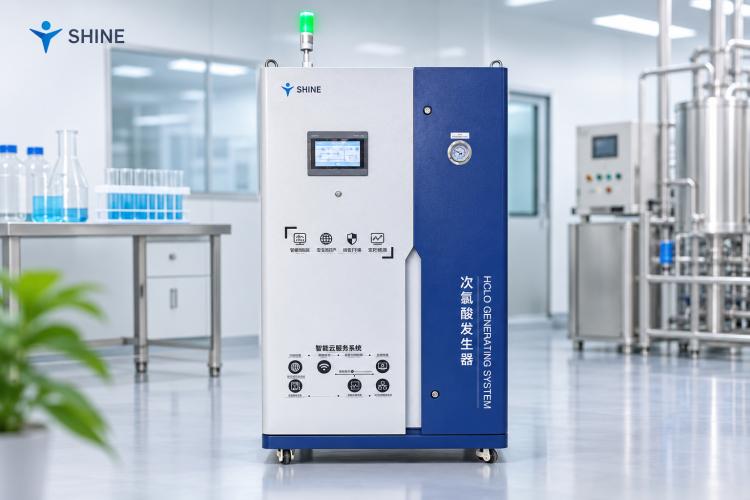
Our HOCl Generator approach focuses on on-site production. The system creates fresh hypochlorous acid solution according to the required concentration and output.
For reliable operation, we recommend:
Checking FAC at the production point.
Recording pH and temperature.
Monitoring concentration during operation.
Using suitable storage materials.
Avoiding unnecessary storage time.
Checking solution quality before important applications.
This approach helps facilities maintain better control over daily production.
Contact Time and Application Quality
Contact time remains one of the most important factors in disinfection. The surface must receive enough solution and remain wet for the required period.
A quick spray followed by immediate wiping may not provide sufficient exposure. Likewise, an uneven spray pattern can leave untreated areas.
We recommend training operators to follow a consistent procedure. Simple checklists often prevent more mistakes than complicated instructions.
Skin Irritation and Other Side Effects
Many people describe HOCl as a mild alternative to a harsh chemical disinfectant. However, mild does not mean risk-free.
Possible side effects depend on concentration, pH, formulation, exposure, and application method. Some products may cause skin irritation or eye discomfort. Users should follow the manufacturer's safety instructions.
For wound care, only use an appropriate formulation intended for that purpose. Industrial generator output does not automatically qualify as a medical wound-care product.
6. Choosing the Right HOCl Generator for Facility Validation
A reliable generator should support stable production and repeatable testing. We believe equipment selection should start with actual facility demand.
At Shandong Shine Health, we focus on practical production control. Our HOCl Generator systems allow customers to adjust the effective chlorine concentration and control solution output.
When evaluating equipment, we suggest checking these features:
Evaluation item | What to check |
Production capacity | Required output in L/h |
Chlorine concentration | Adjustable ppm range |
pH control | Consistent operating conditions |
Electrolytic cell | Material and operating stability |
Water quality | Suitable feedwater requirements |
Monitoring | FAC and pH measurement |
Maintenance | Cleaning and component replacement |
Production mode | Fresh on-site generation |
A facility should also consider its daily water demand and disinfection schedule. For example, a small dental facility and a large food processing plant need different production capacities.
We recommend testing the complete system before final equipment selection. This includes water supply, electrical conditions, solution output, and application equipment.
7. Final Thoughts: Validate Performance, Not Just Claims
Laboratory tests provide an important starting point. However, real-world validation tells us whether a disinfection process works under daily operating conditions.
We should evaluate concentration, pH, contact time, organic load, surface coverage, and microbial reduction together. We should also distinguish proven antimicrobial activity from unsupported claims.
For example, evidence about bacteria does not automatically prove activity against every fungus, virus, or parasite egg. Similarly, a successful surface disinfection test does not establish medical suitability for wound care.
At Shandong Shine Health, we believe reliable disinfection starts with measurable performance. Our goal is to help facilities produce fresh HOCl solution and maintain consistent operating conditions.
If you are planning an HOCl disinfection project, we welcome you to discuss your application, required concentration, and production capacity with our team.