

Hypochlorous Acid: 5 Key Uses
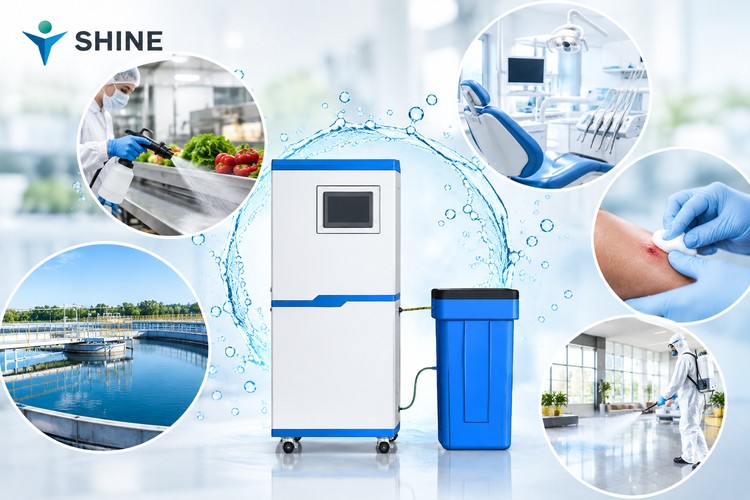
Hypochlorous acid offers a wide range of uses in modern disinfection. We see growing interest in food sanitation, dental care, wound care, and water treatment. Each application needs the right concentration, pH level, contact time, and safety controls.
At Shandong Shine Health, we focus on practical solutions that help facilities produce fresh hypochlorous acid on-site. Our HOCl Generator supports controlled production for suitable disinfection tasks. In our view, reliable results depend on both good equipment and correct use.
What Is Hypochlorous Acid?
Hypochlorous acid (HOCl) is a weak acid that contains hydrogen, oxygen, and chlorine. Its hypochlorous acid formula is HClO, also written as HOCl. When people ask, “what is hypochlorous acid,” we explain it as an active chlorine compound that can help control many harmful microorganisms.
How HOCl Works
HOCl acts as a powerful oxidant. It can react with important parts of microbial cells, including proteins and cell membranes. These reactions can damage normal cell functions and help HOCl kill bacteria and other susceptible pathogens.
Our immune system also uses HOCl. White blood cells produce it as part of their defense against invading microbes. However, a substance that helps the immune system does not automatically make every commercial solution safe for every use.
Why pH and Concentration Matter
The ph range and ph level affect HOCl activity. In water, HOCl and hypochlorite ions exist in a changing balance. A suitable pH helps maintain the desired active chlorine form, while the correct concentration supports the intended task.
Important factors include:
Active chlorine: Measured in parts per million (ppm).
pH: Influences chlorine chemistry and product performance.
Contact time: Gives the solution time to act.
Water quality: Can affect stability and disinfection results.
1. Food Sanitation and Surface Disinfection
Food facilities need reliable ways to manage microbial risks. Hypochlorous acid solution can support sanitation programs for suitable food-contact equipment, preparation areas, and processing surfaces. The facility must follow applicable food safety rules and validate its disinfection process.
Supporting Cleaner Food Processing Areas
Food processors may use an approved HOCl solution for disinfecting surfaces, conveyor belts, worktables, and selected tools. The correct concentration and contact time depend on the product label and the target microorganism. Staff should also remove visible dirt before disinfection because organic matter can reduce performance.
A fresh hypochlorous acid spray can help staff treat selected surfaces evenly. However, spraying alone does not replace cleaning, proper handling, or routine sanitation checks. We recommend matching the generator's output to actual demand instead of choosing capacity by guesswork.
2. Dental Care and Equipment Hygiene
Dental clinics manage several potential routes for microbial transmission. They need clear procedures for surface hygiene, instrument processing, and dental unit waterlines. HOCl may support selected hygiene tasks when the formulation and intended use meet local requirements.
Applications in Dental Settings
Suitable, validated products may support the disinfection of dental chairs, work surfaces, and other compatible equipment. Dental teams must follow the equipment manufacturer's instructions and the solution's approved label. They should never assume that one concentration works for every dental application.
Dental unit waterlines also need a dedicated control plan. Clinics should monitor water quality and use validated treatment methods. An HOCl solution may fit a specific program, but it cannot replace required testing or instrument sterilization.
3. Wound Care and Personal Care Products
Some regulated HOCl products support wound cleansing and selected skin-care uses. These products require suitable formulations, quality controls, and clear directions. Their intended use matters more than a general claim about hypochlorous acid itself.
Use the Right Product for the Right Purpose
In wound care, clinicians choose products based on the wound and the patient's needs. A general-purpose generator output does not automatically qualify for direct skin or wound use. Likewise, cosmetic care products and medical products may face different regulatory requirements.
We encourage buyers to check product specifications before selecting a system. Pay attention to concentration, pH, purity, and intended application. Never apply an industrial disinfection solution to eyes, wounds, or sensitive tissue unless its labeling specifically allows that use.
4. Water Treatment and Microbial Control
Water treatment plants must control harmful microorganisms while maintaining water quality. HOCl can contribute to disinfection in suitable, validated systems. Operators need to control dosage, water chemistry, contact time, and any applicable residual disinfectant limits.
Fresh Production with an HOCl Generator
An HOCl Generator produces hypochlorous acid on-site for use in a planned process. This approach can reduce dependence on stored solution, depending on the system design. Operators should still monitor output and maintain the equipment according to the manufacturer's instructions.
Before selecting a generator, we suggest reviewing:
Required output, such as L/h.
Target active chlorine concentration, such as ppm.
Feedwater quality and operating conditions.
Daily demand and dosing control.
Maintenance needs and safety requirements.
For drinking water, operators must confirm that the treatment method meets local regulations. They should also test the finished water using approved methods. A generator alone cannot guarantee safe drinking water.
5. General Environmental Disinfection
HOCl may support a broad range of environmental hygiene tasks when users select an appropriate product. Examples include compatible hard surfaces in commercial facilities, food-processing areas, and selected animal-care environments. Each setting requires its own concentration, contact time, and material-compatibility checks.
Important Limits to Remember
HOCl can help control susceptible microbes, but it does not kill every pathogen under every condition. Results depend on the organism, solution quality, surface condition, and exposure time. Users should follow the product label instead of relying on one universal dosage.
We also advise users to avoid mixing HOCl products with other cleaners unless the manufacturer explicitly permits it. Good ventilation, suitable protective measures, and routine checks remain important. The best disinfection program combines a suitable chemical, trained staff, and consistent procedures.
Choose a Solution That Fits Your Needs
Hypochlorous acid has useful roles in food sanitation, dental hygiene, selected wound-care products, water treatment, and environmental disinfection. Its performance depends on chemistry and correct application, not marketing claims alone.
At Shandong Shine Health, we help customers assess production capacity, active chlorine concentration, pH control, and application needs before selecting equipment. Our goal is to support practical, on-site production with clear operating requirements. Contact our team to discuss an HOCl generation solution for your facility.