

Mastering On-Site Sodium Hypochlorite Generation
When we discuss modern water disinfection, chemical supply matters as much as treatment performance. Many plants still depend on bulk chemicals delivered by truck. An On-Site Generation System For Sodium Hypochlorite takes a different approach. It uses salt and electricity to produce a usable sodium hypochlorite solution directly at the treatment site.
For us, the main value is simple: make the disinfectant where we need it. This approach can reduce dependence on bulk chemicals and limit the need to transport concentrated chemicals. It also gives operators better control over production and dosing.
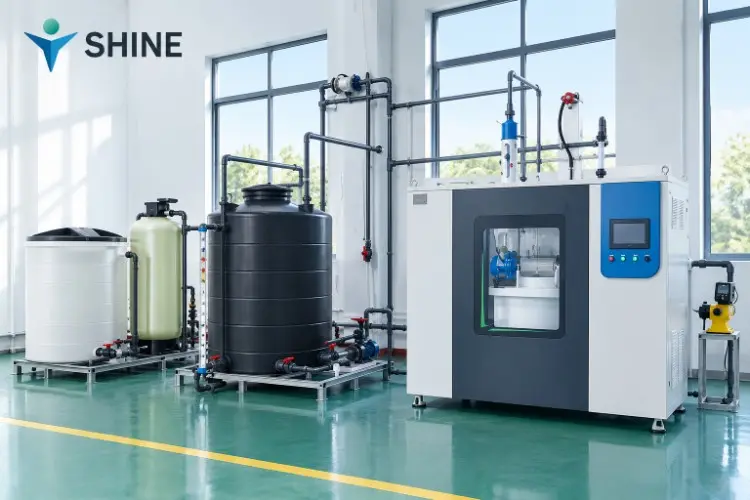
What Is On-Site Hypochlorite Generation?
An on-site hypochlorite generation system uses electrolysis to convert salt water into a dilute sodium hypochlorite solution. The core process needs three main inputs:
Sodium chloride (NaCl)
Water (H₂O)
Electrical power (DC)
The system then sends the generated solution to a day tank or other storage tanks. From there, dosing equipment feeds the disinfectant into the water system.
The Basic Process
The overall flow looks like this:
Salt → Brine → Electrolytic Cell → Sodium Hypochlorite → Storage → Dosing
A typical sodium hypochlorite generation system may also include water treatment, brine preparation, pumps, ventilation, hydrogen management, sensors, and automatic controls.
This makes the generating system more than just an electrolyzer. Every supporting component affects stable operation.
How Does a Sodium Hypochlorite System Work?
Step 1: Prepare Salt Water
First, we dissolve salt in treated water to create brine. Water quality matters because hardness and impurities can affect equipment performance.
The brine concentration depends on the system design. Some systems use a concentrated brine first, then dilute it before electrolysis.
Step 2: Electrolysis Creates the Disinfectant
Next, a pump sends the salt water through the electrolytic cell. Direct current passes between the electrodes and drives an electrochemical reaction.
In simplified form:
NaCl + H₂O + electricity → NaOCl + H₂
The process also produces hydrogen gas. Therefore, a commercial system needs suitable hydrogen collection, dilution, ventilation, and safety controls.
The result is a sodium hypochlorite solution that the plant can use for disinfection.
Why Plants Produce Sodium Hypochlorite On Site
The biggest difference comes from chemical supply. Instead of receiving large deliveries, a plant can produce sodium hypochlorite when needed.
This can reduce the dependence on long-distance chemical transport. It can also reduce the amount of concentrated sodium hypochlorite stored at the facility.
Salt, Water, and Power
Salt has a practical advantage. It usually has simpler storage requirements than liquid disinfectant. Operators can also keep salt on site and generate solution according to demand.
Our experience shows that this creates useful flexibility for municipal plants and industrial facilities. However, the system still needs reliable water, electricity, salt, and maintenance.
Where Can the System Be Used?
A site sodium hypochlorite generator can support several treatment applications.
Common examples include:
Drinking water disinfection
Municipal water systems
Industrial water systems
Process water treatment
Cooling water applications
Remote treatment facilities
The correct capacity depends on chlorine demand, flow rate, operating hours, and required residual.
For example, a project may specify:
Production: 50–60,000 g/h
Product concentration: 0.8% / 8,000 ppm
Installed power: 0.3–90 kW
Operation: automatic or manual
Control: PLC + sensors
Product storage: day tank or storage tank
These values vary by project. We always recommend sizing the hypochlorite generation system around actual chlorine demand.
Sodium Hypochlorite vs. Chlorine Gas Supply
Traditional plants may use chlorine gas or delivered sodium hypochlorite. Each chemical supply method requires careful storage, handling, and emergency planning.
With site hypochlorite generation, the plant generates a dilute disinfectant from salt water. This can reduce reliance on transporting chlorine gas and bulk sodium hypochlorite.
However, on-site production does not remove every safety requirement. Hydrogen gas, electrical equipment, brine, chemical storage, and ventilation still need proper engineering.
What Makes a Modern Generating System Reliable?
We believe automation makes a major difference. A fully automated system can monitor key operating conditions and adjust production according to demand.
Important components may include:
Brine preparation system
Water softener or pretreatment
Electrolytic cell
DC power supply
Hydrogen removal system
Product storage tank
Dosing pumps
Flow and level sensors
PLC control cabinet
Safety alarms
The system should also allow operators to check production status quickly. Good controls turn a complicated process into a manageable daily task.
Final Thoughts
On-site sodium hypochlorite generation combines a simple idea with careful engineering. Salt water enters the process, electricity drives electrolysis, and the system produces sodium hypochlorite for water disinfection.
For a water treatment plant, the real question is not simply whether the technology works. We need to consider capacity, water quality, salt consumption, power use, storage volume, safety, and dosing demand.
At Shandong Shine Health, we design sodium hypochlorite equipment around these operating factors. A well-sized hypochlorite system should produce the required disinfectant reliably, safely, and with predictable operating control.