

How to Select a Water Treatment System for Industrial Process Water
Industrial water quality affects production, equipment life, and operating costs. We often see buyers focus on equipment first. We believe the better approach starts with the water itself.
The right system should match the water supplies, process demand, contaminants, flow rate, and required quality. It should also remain practical for daily operation. After all, a complex system that nobody wants to maintain is not a great system.
What Is Industrial Water Treatment?
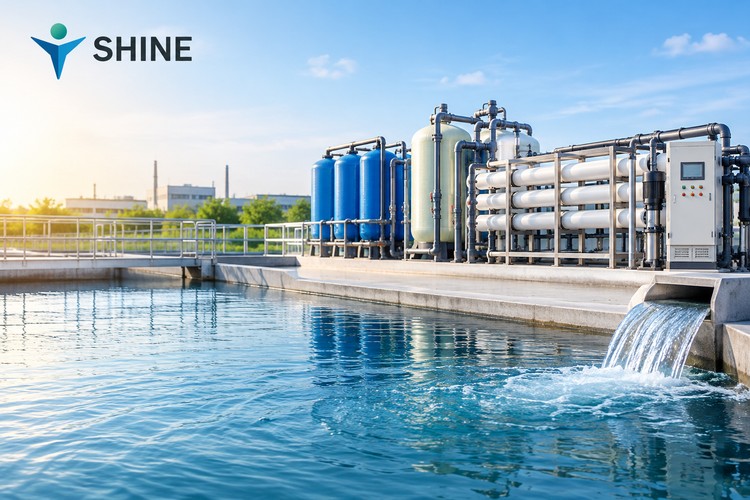
Industrial water treatment prepares water for manufacturing, cooling, cleaning, boilers, or other processes. It can also treat wastewater before discharge or reuse. The treatment train depends on what the water contains and how the facility will use it.
How Does Industrial Water Treatment Work?
A typical process may include:
Raw water intake
Pre treatment
Filtration
Softening
Chemical treatment
Membrane treatment
Disinfection
Storage and distribution
We normally start with water testing. Key parameters include pH, turbidity, hardness, conductivity, TDS, iron, manganese, organic matter, and microbial levels. If testing shows high levels of heavy metals or other contaminants, we select additional treatment steps.
EPA guidance also shows that filtration and disinfection often work together for water reuse. US EPA
What Is TLI in Industrial Water Treatment?
The term TLI does not have one universal meaning in industrial water treatment. In recent water research, TLI can mean Turbidity Load Index, which helps describe suspended-solid loading. ScienceDirect
Therefore, we recommend checking the project specification before using this term. Clear definitions prevent expensive design mistakes.
Match Treatment to Water Quality
We never recommend one treatment method for every industrial facility. Different contaminants need different solutions. The first step involves identifying what we need to remove contaminants from the source water.
Check the Main Contaminants
Common targets include:
Suspended solids → filtration systems
Hardness → water softeners
Heavy metals → specialized media or membranes
Dissolved salts → reverse osmosis
Microorganisms → UV disinfection or chemical disinfection
Taste and odor → activated carbon or advanced oxidation
This approach helps us avoid unnecessary equipment. It also makes the final system more cost effective.
Choose the Right Disinfection Process
Disinfection protects process water from unwanted microorganisms. The best method depends on water quality, contact requirements, residual needs, and operating conditions.
Chemical Treatment or Ultraviolet UV?
Chemical treatment can provide a measurable disinfectant residual. This can suit applications that need protection throughout a water distribution network. An Industrial Water Treatment Disinfection System can use sodium hypochlorite or another suitable disinfectant.
Ultraviolet UV offers a physical disinfection option. UV can inactivate microorganisms without adding a chemical residual. However, turbidity and suspended solids can reduce UV performance, so good pretreatment matters. EPA
For this reason, we often view disinfection as the final step, not the first step.
Size the System for Real Demand
System capacity should follow actual process demand. Oversizing increases equipment cost, energy use, and maintenance. Undersizing creates pressure during production peaks.
Review These Parameters
Before selecting equipment, we recommend confirming:
Parameter | Typical design focus |
Flow | L/h or m³/h |
Peak flow | Maximum production demand |
Pressure | Inlet and operating pressure |
pH | Feedwater chemistry |
Turbidity | NTU |
Hardness | mg/L as CaCO₃ |
TDS | mg/L |
Conductivity | µS/cm |
Disinfection | Required dose or residual |
Recovery | % for water reuse |
We also consider seasonal changes. A water source can behave very differently in summer and winter. Designing only around today's average value can cause problems later.
Consider Cost Beyond the Purchase Price
A water treatment system represents a long term investment. We therefore compare more than the equipment quotation.
Calculate the Total Operating Cost
We review:
Electricity consumption
Chemical consumption
Filter replacement
Membrane replacement
Water loss
Labor
Cleaning
Maintenance
Waste disposal
Water reuse can also reduce freshwater demand. EPA notes that industrial reuse can support applications such as manufacturing, cooling, food production, and energy generation. US EPA
In our view, the cheapest machine rarely means the lowest lifetime cost. A simple design with reliable components often wins over time.
Build a Complete Treatment Train
The final system should work as one process. We may combine water purification, filtration, softening, membranes, and disinfection according to the water analysis.
A Practical Selection Checklist
Before ordering, we suggest checking:
What is the water source?
What contaminants require removal?
What flow rate does the process need?
What quality does the process require?
Does the facility need water reuse?
Does the system need chemical residual?
Can operators maintain the equipment easily?
What are the five-year operating costs?
This process helps industrial facilities improve water quality without adding unnecessary treatment stages.
Why Proper Selection Matters
A well-designed treatment system protects equipment and supports stable production. It can also reduce water consumption and chemical waste. More importantly, it gives operators a clear process instead of a confusing collection of machines.
For us, good engineering starts with the water, not the equipment catalog. Once we understand the source, demand, and treatment target, selecting the right water treatment systems becomes much easier.
For industrial projects, our team can also design an Industrial Water Treatment Disinfection System around specific flow, water quality, and disinfection requirements.