

What is HOCl?
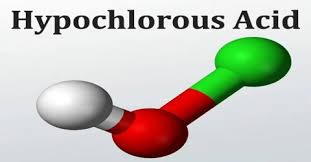
When we discuss commercial disinfection, we often hear the same question: what is hypochlorous acid? We see HOCl in healthcare, food processing, water treatment, agriculture, and surface cleaning. Yet many people still confuse it with bleach.
We think that confusion deserves a simple explanation. HOCl offers strong antimicrobial action, but its performance depends on concentration, pH, storage, contact time, and application. In this guide, we explain the chemistry and practical uses in clear terms.
What Is Hypochlorous Acid?
HOCl formula and basic chemistry
So, what is hypochlorous acid hypochlorous acid formula in simple terms? Hypochlorous acid has the chemical formula HOCl. We also write it as HClO in some scientific references. The molecule contains hydrogen, oxygen, and chlorine.
HOCl forms when chlorine dissolves in water. It also appears naturally inside our bodies. White blood cells produce HOCl as part of the immune system response to invading microorganisms. This natural role helps explain why researchers continue to study its antimicrobial properties.
The basic chlorine balance looks like this:
HOCl ⇌ H⁺ + OCl⁻
Here, OCl⁻ represents the hypochlorite ion. The balance between HOCl and OCl⁻ changes with pH. This point matters greatly during commercial disinfection.
HOCl acid is not simply bleach
Many people compare hypochlorous acid HOCl with bleach or sodium hypochlorite. They share chlorine chemistry, but they are not the same product. Sodium hypochlorite uses the formula NaOCl, while HOCl uses HOCl.
When chlorine-based chemicals enter water, they can form both HOCl and OCl⁻. However, HOCl generally provides stronger disinfecting activity than the hypochlorite ion. EPA guidance also highlights the strong effect of pH on this balance.
Why pH Matters in HOCl Solution
The role of pH in disinfection
The pH range can change the performance of an HOCl solution. HOCl acts as a weak acid with a pKa near 7.5. As pH rises, more chlorine shifts toward OCl⁻. At lower pH, HOCl becomes the dominant chlorine species.
For practical systems, we normally monitor several key parameters:
pH: commonly around 5–7, depending on the application
Available chlorine: measured in ppm or mg/L
Temperature: higher temperatures can increase reaction rates
Contact time: longer exposure can improve microbial control
Organic load: dirt and proteins can consume active chlorine
Storage time: HOCl can lose strength over time
This is why we never judge a disinfectant only by its chlorine concentration. Two products may contain similar free chlorine levels but behave differently.
Why concentration alone can mislead
Suppose a facility uses 100 ppm free chlorine. That number tells us something useful, but not everything. We also need to know the pH, organic load, contact time, and target organism.
For example, EPA material explains that chlorine disinfection depends strongly on the relationship between HOCl and OCl⁻. Lower pH generally favors HOCl, which has stronger germicidal activity.
Therefore, our approach focuses on the complete process. We control the ppm + pH + contact time + application method, rather than chasing one number.
Hypochlorous Acid Uses in Commercial Settings
Surface disinfectant and facility cleaning
One of the most practical hypochlorous acid uses involves cleaning and disinfection. Commercial facilities can use suitable formulations to disinfect surfaces such as equipment, work areas, floors, and other hard surfaces.
The exact concentration depends on the product label and intended application. We recommend following the applicable regulatory approval and manufacturer instructions. Operators should also remove heavy soil before applying a disinfectant.
A typical commercial workflow looks like this:
Remove visible dirt.
Clean the surface when required.
Apply the approved surface disinfectant.
Maintain the required wet contact time.
Allow the surface to dry as directed.
Repeat according to the sanitation plan.
This simple process often works better than spraying everything and hoping for the best. Disinfection is chemistry, not magic.
Food processing and water applications
Food facilities need reliable sanitation while managing water, equipment, and production costs. Properly approved HOCl products can support sanitation programs for suitable applications. However, operators must always follow local food-contact regulations and product labels.
Water treatment also uses chlorine chemistry extensively. Chlorine forms HOCl in water, and treatment systems control chlorine residuals to manage microbial risks.
For commercial projects, we consider:
Flow rate, such as m³/h or L/min
Required chlorine concentration, such as 1–5 ppm
Water quality
Contact time
pH
Chlorine demand
Required residual
Automatic dosing control
These factors help us size an appropriate Hypochlorous Acid System or related chlorine-generation solution.
How HOCl Helps Kill Pathogens
A wide range of antimicrobial activity
HOCl can kill bacteria and affect many other microorganisms. Research describes activity against bacterial, viral, and fungal organisms. HOCl also shows activity against biofilms in several applications.
Its antimicrobial action comes from its chemical reactivity. HOCl can react with proteins, enzymes, membranes, and other important cell components. This broad action helps explain why it can provide effective disinfection across different settings.
Still, we avoid saying that HOCl instantly kills pathogens under every condition. Real-world performance depends on the organism and the operating conditions.
HOCl and the human immune system
The human body already uses HOCl as part of innate immunity. White blood cells can generate it during the immune response. This natural connection makes HOCl especially interesting in research and healthcare.
However, natural biology does not automatically make every commercial HOCl product safe for every use. Formulation, concentration, pH, purity, and intended application all matter.
HOCl for Skin and Wound Care
Wound care applications
Researchers have studied HOCl extensively for wound care. Clinical literature reports promising antimicrobial and safety results for suitable formulations. Expert recommendations also support HOCl as an adjunct within established wound-care practices.
Recent research continues to examine its safety and effectiveness. One 2026 study evaluated HOCl irrigation across surgical settings and reported favorable findings. However, the researchers also called for more controlled studies.
We therefore recommend a careful distinction between commercial surface sanitation and medical use. Medical applications require products designed, tested, and approved for those specific purposes.
Skin care products and safety profile
HOCl also appears in some skin care products and topical formulations. Published reviews report generally favorable tolerability for suitable products. Some studies describe minimal adverse effects compared with certain traditional antiseptics.
Even so, users should not assume that every acid solution works the same way. A commercial product needs proper formulation and quality control. For medical or skin applications, we always recommend using products intended for that purpose.
HOCl vs Bleach: What Should We Choose?
Comparing HOCl and sodium hypochlorite
The phrase bleach sodium hypochlorite often creates confusion. Household bleach usually contains sodium hypochlorite, or NaOCl. HOCl represents a different chlorine species.
Both belong to the same broader chlorine chemistry. Yet their performance can vary with pH, concentration, formulation, and application. EPA guidance confirms that HOCl provides stronger disinfecting activity than OCl⁻ under many chlorine-treatment conditions.
For commercial facilities, we compare products based on more than chemical names:
Factor | What we check |
Active chlorine | ppm or mg/L |
pH | Product-specific target |
Contact time | Required wet exposure |
Organic load | Chlorine demand |
Storage | Stability and shelf life |
Application | Surface, water, equipment, etc. |
Regulations | Local approval and labeling |
This approach helps us avoid a common mistake: choosing a disinfectant by concentration alone.
Practical Tips for Commercial HOCl Systems
For commercial operations, we recommend building a simple control plan. First, define the target application and required microbial performance. Then determine concentration, pH, flow, contact time, and monitoring points.
A commercial generation system can offer another advantage. We can produce disinfectant close to the point of use instead of storing large quantities of finished chemical. Our Hypochlorous Acid System approach can also support controlled production for water treatment and other industrial applications.
Before deployment, we suggest checking:
Water quality: hardness, organic matter, and impurities
Target dose: ppm or mg/L
Flow: L/min or m³/h
pH: measured continuously or at set intervals
Residual chlorine: verified with a suitable test method
Contact time: matched to the application
Storage: protected from heat and light
Maintenance: electrodes, pumps, sensors, and dosing parts
Good monitoring makes the system predictable. And predictable sanitation makes operators sleep better at night.
Frequently Asked Questions
Is hypochlorous acid the same as bleach?
No. Bleach commonly contains sodium hypochlorite, NaOCl. HOCl represents hypochlorous acid, a different chlorine species. Both can participate in chlorine disinfection chemistry.
What is the hypochlorous acid chemical formula?
The hypochlorous acid chemical formula is HOCl. Some scientific sources also write it as HClO.
What pH works best for HOCl?
There is no single universal value. The ideal pH depends on formulation and application. In chlorine water chemistry, lower pH favors HOCl over the hypochlorite ion.
Can HOCl disinfect surfaces?
Yes, suitable and approved products can support surface disinfection. Users must follow the product label, concentration, contact time, and local regulations.
Does HOCl have adverse effects?
Suitable formulations generally show a favorable safety profile in many studied applications. However, adverse effects can still depend on concentration, formulation, and use. Medical products require application-specific evidence.
Is HOCl useful for wound care?
Research supports its potential in wound cleansing and infection management. However, wound care should follow professional clinical guidance and approved product instructions.
Final Thoughts
So, what is hypochlorous acid in practical terms? We see it as a powerful chlorine-based antimicrobial with an interesting biological origin and broad commercial potential. Its formula is simple, but its performance depends on chemistry and process control.
For commercial cleaning and disinfection, we focus on the whole system. Concentration, pH, contact time, water quality, and application method all matter. When we control those variables carefully, HOCl-based technology can become a practical part of a modern sanitation program.