

Automatic HOCl Systems for Better Consistency
At Shandong Shine Health, we believe reliable disinfection starts with consistent production. An automatic HOCl Generator helps facilities control output, monitor key settings, and reduce manual work. These features matter when daily operations require a steady supply of freshly generated hypochlorous acid.
However, automation means more than pressing a button. A well-designed system must manage production settings, monitor operating conditions, and alert operators when something changes. It should also match the user's water supply, required concentration, and daily demand.
In this article, we explain the key features that improve process consistency. We also share practical points for choosing a hypochlorous acid generator for commercial and industrial applications.
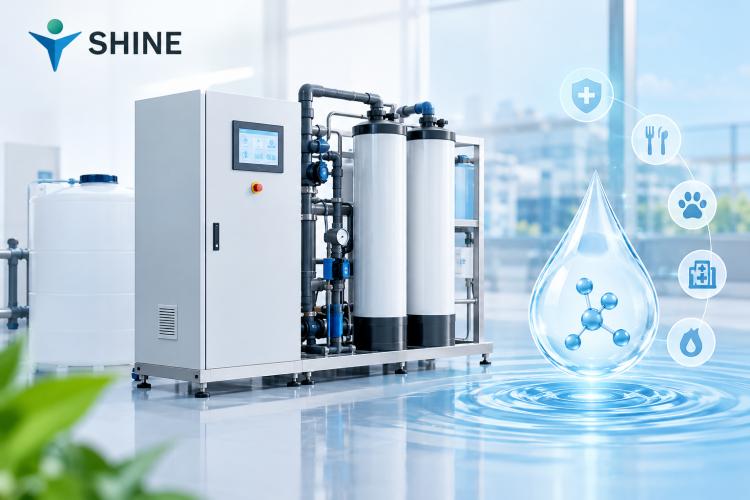
Why Process Consistency Matters in HOCl Production
Hypochlorous acid (HOCl) is an active chlorine compound used in many disinfection applications. It can act as a highly effective disinfectant when operators control its concentration, pH, and contact time. However, good results depend on more than the chemical itself. Production quality and correct application also matter.
An automatic hypochlorous acid machine helps operators maintain defined production conditions. Instead of adjusting every step by hand, operators can use preset parameters and automatic controls. This approach reduces routine errors and makes daily production easier to manage.
Common causes of inconsistent output
Several factors can affect the quality of electrolyzed water:
Changes in feedwater quality or temperature.
Incorrect salt or electrolyte supply.
Unstable electrical current or voltage.
Electrode wear and mineral deposits.
Changes in production flow or operating time.
Poor cleaning and maintenance routines.
A reliable system should help operators control these factors. It should also make problems easy to identify before they affect production.
Automatic Concentration Control
Concentration control is one of the most important features in an automatic HOCl Generator. The required output depends on the application, target concentration, and daily demand. A system that supports adjustable production settings gives operators greater control over these needs.
Set the target concentration
We recommend selecting a generator that supports the required effective chlorine concentration. For example, a facility may request an output of 50 ppm, 80 ppm, or 100 ppm. The correct setting depends on the intended use and the equipment's validated operating range.
A control system should help maintain the target value within a defined tolerance. Where available, automatic monitoring can identify changes and prompt operators to investigate. However, a preset value alone does not prove that the actual output meets specifications.
Verify output with testing
Operators should check actual output with suitable test equipment. Free available chlorine testing can help confirm the generated solution's concentration. pH measurement also matters because it affects the balance between HOCl and hypochlorite ions.
We suggest recording the target value, measured result, test time, and any corrective action. These simple records make quality checks easier to repeat and review.
Stable Electrolysis and Power Control
A hypochlorous acid generator uses electrolysis to produce active chlorine species under defined conditions. The electrical supply, electrolyte conditions, and electrode performance can influence the production process. Therefore, stable operation helps improve repeatability.
Control voltage and current
A well-designed system should operate within the manufacturer's specified electrical range. Depending on its design, it may monitor current, voltage, operating time, and production status. Some models also provide alarms when operating conditions move outside set limits.
These features help operators spot problems earlier. For example, an unexpected current change may indicate an electrical fault or a process issue. The operator can then inspect the system rather than assume that production continues normally.
Protect electrode performance
Electrodes play a central role in the electrolysis process. Mineral deposits, unsuitable water, and poor maintenance can reduce performance over time. We recommend checking electrode condition and following the manufacturer's cleaning schedule.
Buyers should also ask about electrode materials, expected service life, and replacement procedures. A machine that runs well for one week but requires frequent repairs offers little long-term value.
Feedwater and Electrolyte Monitoring
Consistent production begins with suitable input materials. Water quality can affect system performance, while electrolyte concentration can influence electrochemical reactions. An automatic system should therefore provide a clear way to manage these inputs.
Check water quality before production
We recommend reviewing the feedwater requirements before choosing a hypochlorous acid maker. Hardness, dissolved minerals, and other impurities may affect equipment performance. Pretreatment may be necessary when the incoming water falls outside the manufacturer's specifications.
A practical installation checklist should include:
Feedwater quality and supply pressure.
Water temperature and flow rate.
Electrolyte type and concentration.
Salt or reagent quality, where applicable.
Drainage and ventilation requirements.
Routine inspection and cleaning access.
Not every generator uses the same process or electrolyte. Buyers should confirm the actual design instead of assuming that all systems work identically.
Monitor input changes
Input monitoring helps operators identify problems before production becomes unstable. Depending on the model, sensors or alarms may track water flow, liquid level, or other operating conditions. The control system should explain what each alarm means and how operators should respond.
For larger installations, a documented operating procedure can reduce confusion between shifts. Clear instructions also help new operators learn the process faster.
Real-Time Monitoring and Alarm Functions
Automatic monitoring makes daily operation easier to manage. Instead of relying only on visual checks, operators can review the system's operating status through a control panel. More advanced models may support remote monitoring or data export.
Use alarms to prevent avoidable errors
Useful alarms may cover low water supply, abnormal electrical conditions, low electrolyte levels, or equipment faults. The exact functions depend on the machine's design. Buyers should check which conditions trigger an alarm and whether the system stops production automatically.
An alarm should provide clear information, not just make noise. Operators need to know what happened, when it happened, and what action they should take. Otherwise, automation becomes another puzzle in the maintenance room.
Keep useful production records
Production records help teams compare operating conditions across shifts and days. Useful data may include:
Start and stop times.
Target and measured concentration.
pH and other monitored parameters.
Alarm history and corrective actions.
Maintenance dates and component replacements.
Production volume and operating hours.
These records can support quality reviews and troubleshooting. However, operators should verify that logged values accurately represent measured conditions rather than preset targets alone.
Adjustable Output for Different Applications
Different facilities have different production needs. A food processing plant may require a different output volume from a dental facility or a commercial cleaning operation. Therefore, buyers should consider both concentration and production capacity.
Match flow rate to daily demand
We recommend estimating the required solution volume before selecting equipment. A generator with insufficient capacity may struggle to meet peak demand. An oversized system may increase the purchase cost without providing useful benefits.
For example, a buyer might compare systems designed for 100 L/h, 200 L/h, or 300 L/h. These figures represent illustrative production rates, not universal product specifications. The required capacity depends on the actual concentration, operating schedule, and application.
Choose a suitable hypochlorous acid machine
When comparing the best hypochlorous acid generator options, consider more than the purchase price. Review the following factors:
Feature | What to check |
Production capacity | Required L/h or L/day |
Effective chlorine | Target ppm and allowable tolerance |
pH control | Monitoring range and adjustment method |
Automation | Preset controls, alarms, and interlocks |
Verification | Testing methods and calibration needs |
Materials | Compatibility with process chemicals |
Maintenance | Cleaning, spare parts, and service access |
Safety | Electrical protection and ventilation |
A hypochlorous acid generator for home use may suit small, occasional tasks. Commercial and industrial facilities usually need more capacity, stronger process controls, and clearer maintenance procedures. The best hypochlorous acid machine is the one that matches the real workload and quality requirements.
Safety, Maintenance, and Fresh Production
Automation can reduce manual work, but it cannot replace proper safety controls. HOCl production involves chemical and electrical processes that require suitable equipment, training, and operating procedures. The system should include safeguards appropriate to its design and installation.
Follow a practical maintenance plan
We recommend a regular schedule that covers:
Inspecting electrical connections and protective devices.
Checking sensors and verifying measurement accuracy.
Cleaning electrodes according to manufacturer guidance.
Inspecting tubing, seals, pumps, and valves.
Reviewing alarms and production records.
Testing generated solution at defined intervals.
Fresh production can also help facilities reduce their reliance on long-term storage. However, HOCl stability varies with concentration, pH, temperature, light, and other conditions. Operators should follow validated storage limits and avoid assuming that every solution remains effective for the same period.
Understand what a powerful disinfectant requires
A powerful disinfectant needs suitable concentration, contact time, and application conditions. Organic matter and other environmental factors can affect chlorine-based disinfection. Users must follow the applicable product instructions and local requirements.
We believe a reliable machine should make correct operation easier, not encourage users to skip essential checks. Good automation supports trained operators and clear procedures.
How to Select the Right HOCl Generator
Before purchasing equipment, define the production requirements and confirm that the manufacturer can support them. A short technical review can prevent costly mismatches between the machine and the application.
We suggest asking these questions:
What concentration and pH range can the machine produce?
What production volume can it maintain under normal conditions?
Which parameters does the system monitor automatically?
Does it provide alarms, production records, or remote access?
How does the manufacturer verify output consistency?
What maintenance and calibration tasks does the system require?
Which installation, ventilation, and safety measures apply?
What technical support and spare parts can the supplier provide?
At Shandong Shine Health, we believe the right solution starts with actual operating needs. Our approach focuses on matching the generator's production settings, capacity, and control features to the customer's requirements. We encourage buyers to review technical specifications and output verification methods before making a decision.
Conclusion
Automatic controls can improve consistency by managing production settings, monitoring operating conditions, and helping operators identify problems. Concentration verification, stable electrolysis, input monitoring, useful alarms, and planned maintenance all contribute to reliable operation.
However, no single feature guarantees consistent output. The strongest results come from suitable equipment, verified measurements, trained operators, and clear procedures. When these elements work together, a hypochlorous acid generator becomes a practical tool for controlled, on-site disinfection.