

Can You Use Hypochlorous Acid On Cats?
Cats lick everything. They groom their fur, clean their paws, and often investigate things with their tongues. Because of that, many pet owners worry about the products they use around their feline friends. We hear questions like: Can You Use Hypochlorous Acid On Cats? Is it safe? What happens if it gets licked?
The good news is that hypochlorous acid, HOCl, has gained attention as a gentle and effective solution for pet hygiene. Many veterinarians, groomers, and pet owners now use HOCl products for skin care, wound care, and environmental cleaning.
In this guide, we will explain how hypochlorous acid works, why it is different from harsh chemicals, and how to use it safely around cats.
What Is Hypochlorous Acid HOCl?
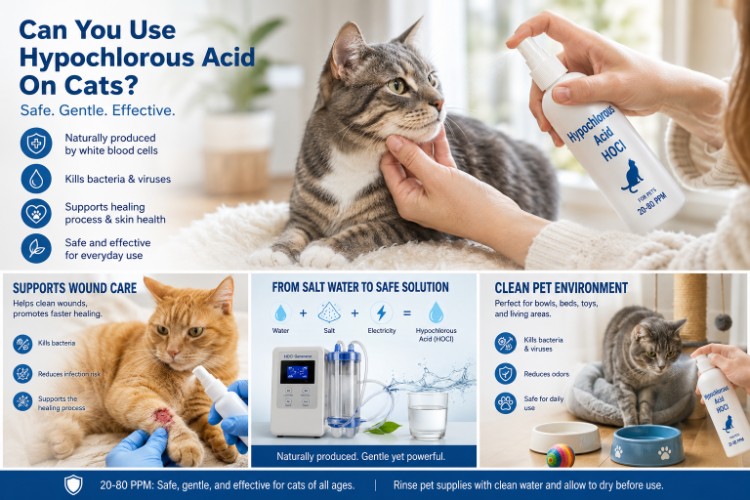
Hypochlorous acid, HOCl, is a substance naturally produced by white blood cells. When harmful bacteria or viruses enter the body, the immune system creates hypochlorous acid to help fight them.
This natural defense mechanism has existed for millions of years. In simple terms, your cat's body already knows how to use hypochlorous acid.
Modern technology can produce hypochlorous acid from salt water through electrolysis. A quality HOCl Generator combines:
Water
Salt
Electricity
The result is a gentle disinfecting solution that remains highly effective against many harmful microorganisms.
Unlike bleach and other strong cleaners, hypochlorous acid works with biology instead of against it.
Why White Blood Cells Produce HOCl
White blood cells act like tiny security guards. When they detect threats, they release compounds that attack invading microbes.
Hypochlorous acid helps by:
Killing bacteria
Damaging viruses
Supporting the healing process
Reducing contamination
That natural origin explains why many people consider it one of the safest disinfectants available today.
Can You Use Hypochlorous Acid On Cats?
Yes, you can use hypochlorous acid safely on cats when you choose an appropriate concentration and follow proper instructions.
Many pet owners use solutions ranging from 20-80 PPM for routine applications. This concentration range offers excellent cleaning performance while remaining gentle on sensitive skin.
We often recommend hypochlorous acid for:
Minor wound care
Skin irritations
Scratches
Hot spots
Paw cleaning
Grooming support
Pet bedding sanitation
Cats have delicate skin. Therefore, products used on them should avoid unnecessary irritation. Hypochlorous acid stands out because it cleans effectively without relying on harsh chemicals.
Understanding the 20-80 PPM Range
PPM means parts per million.
For cats, the common range is:
Application | Recommended Concentration |
Facial area cleaning | 20-50 PPM |
Skin care | 20-80 PPM |
Minor wound care | 40-80 PPM |
Pet supplies cleaning | 20-80 PPM |
Pet supplies and living environments can benefit from 20-80 PPM solutions. After disinfecting pet beds, bowls, or toys, rinse with clean water and allow them to dry before use.
This simple step helps prevent pets from licking any remaining moisture.
Benefits of Hypochlorous Acid for Cats
Cat owners often search for products that balance safety and performance. Hypochlorous acid achieves that balance remarkably well.
Several benefits make it popular among pet caregivers.
Supports Wound Care
Cats frequently get small cuts and scratches.
These injuries can happen from:
Playing
Climbing
Fighting
Outdoor exploration
Hypochlorous acid helps keep affected areas clean. A cleaner wound environment may help wounds heal more efficiently.
Many pet owners spray the area gently and allow it to air dry.
Helps Manage Skin Conditions
Some cats experience:
Dry skin
Itching
Skin irritations
Allergic reactions
A properly formulated hypochlorous acid product may help maintain skin hygiene while remaining gentle.
Unlike alcohol-based cleaners, it usually does not create a burning sensation.
Reduces Harmful Microorganisms
Hypochlorous acid is highly effective at killing bacteria.
It can also help control certain bacteria and viruses found on surfaces and pet accessories.
This benefit becomes especially useful when multiple pets share the same environment.
Is Hypochlorous Acid Safe If Cats Lick It?
This question appears almost every time we discuss cat hygiene.
Cats are professional groomers. They can spend hours licking their fur every day.
Fortunately, hypochlorous acid safely fits into many pet-care routines because it originates from substances naturally produced by the immune system.
What Happens If Accidentally Ingested?
Small amounts accidentally ingested during normal use generally create minimal concern.
However, pet owners should still:
Follow label directions
Use appropriate concentrations
Avoid excessive application
Store products safely
No cleaning product should become a snack, even if it has an excellent safety profile.
Think of it this way. A cat should not drink the bottle, but normal grooming after proper application usually presents far less risk than many traditional disinfectants.
Why HOCl Is Different From Harsh Chemicals
Traditional disinfectants often contain strong ingredients.
Examples include:
Bleach
Ammonia
Alcohol
Quaternary compounds
These chemicals can cause discomfort when they contact sensitive skin.
Hypochlorous acid offers a different approach.
Instead of relying on aggressive chemistry, it mimics a process already used by white blood cells.
As a result, many users report fewer concerns regarding:
Strong odors
Skin irritations
Residue
Surface damage
That difference explains why hypochlorous acid products continue gaining popularity in the United States and around the world.
A More Natural Cleaning Option
Many consumers now prefer products derived from simple ingredients.
Hypochlorous acid begins with:
✓ Salt water
✓ Electricity
✓ Advanced electrolysis
That simple process creates a powerful solution without introducing unnecessary additives.
Sometimes the best answer comes from nature itself.
Best Ways to Use Hypochlorous Acid Around Cats
Proper usage helps maximize benefits while maintaining safety.
We recommend these practical steps.
For Skin and Fur
Spray lightly onto the affected area.
Allow the solution to dry naturally.
Avoid spraying directly into:
Eyes
Nose
Mouth
For Wound Care
Clean the area first if dirt is present.
Apply the solution evenly.
Repeat according to product instructions.
Consistency often supports a smoother healing process.
For Pet Supplies
Many owners use hypochlorous acid on:
Food bowls
Water bowls
Litter scoops
Carriers
Beds
Toys
After disinfecting pet supplies, rinse with clean water and allow them to dry completely.
This extra step reduces the chance of pets licking residual moisture.
Choosing the Right Hypochlorous Acid Product
Not all products deliver the same quality.
When evaluating a hypochlorous acid product, consider:
Concentration level
Manufacturing quality
Shelf life
Purity
Packaging
Reliable manufacturers use advanced production systems to maintain consistent quality.
A professional HOCl Generator helps produce stable solutions with predictable concentrations.
That consistency matters because pets deserve dependable care.
Signs of a Quality Product
Look for products that:
Clearly list concentration
Include usage instructions
Use clean ingredients
Follow quality standards
Provide safety information
Trustworthy manufacturers make these details easy to find.
Final Thoughts
So, can you use hypochlorous acid on cats?
In many situations, yes.
Hypochlorous acid, HOCl, offers a safe and effective option for pet hygiene, wound care, and environmental cleaning. Because white blood cells naturally produce it, the body already recognizes this remarkable molecule. It helps support the healing process, assists in killing bacteria, and may help manage minor skin conditions.
We appreciate how simple the science feels. Salt water, electricity, and smart engineering combine to create a solution that works with nature rather than against it.
For cat owners searching for a gentle alternative to harsh chemicals, hypochlorous acid may be one of the most practical tools available today.