

Disinfectant Used in Water Treatment: A Safe Choice
Clean water is important for every community. People need safe water for drinking, farming, industry, and daily life. However, natural water sources may contain harmful microorganisms, suspended particles, and other pollutants.
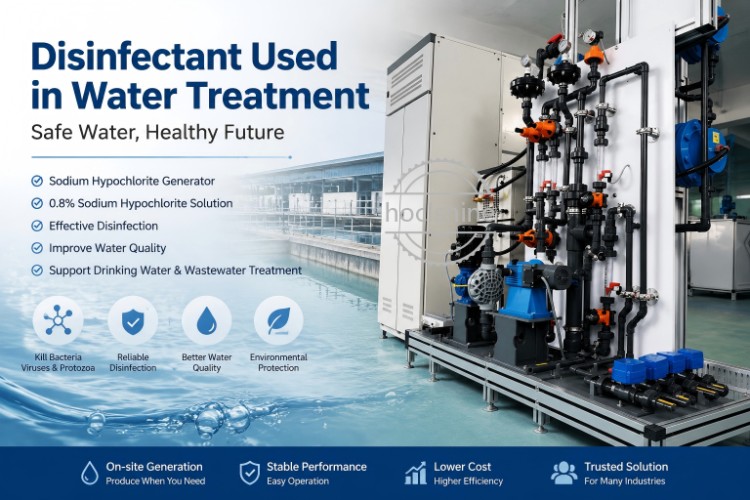
At Shandong Shine Health, we focus on safe and reliable water treatment solutions. We produce Sodium Hypochlorite Generator systems that help customers make disinfectant on-site. Our systems support drinking water treatment, wastewater treatment, and many other water applications.
Choosing the right disinfectant is not only about killing germs. It also depends on water quality, chemical concentration, and contact time. A good treatment system should protect people and reduce environmental impact.
Why Water Disinfection Is Important
Water may look clean but still contain harmful organisms. Many bacteria, viruses, and protozoa are too small to see. Without proper treatment, they can enter the water supply and create health risks.
Protecting People From Waterborne Pathogens
The main goal of water disinfection is simple. It helps control harmful microorganisms in water.
Common targets include:
Bacteria such as E. coli
Viruses that spread through unsafe water
Protozoa such as Giardia and Cryptosporidium
Other waterborne pathogens
Safe water treatment helps communities reduce disease risks. It also improves overall water quality.
We believe water safety starts with a reliable disinfection process. A small mistake in treatment can affect many people. That is why stable equipment matters.
How Disinfectants Help Water Treatment
Disinfectants work by damaging microorganisms. They stop bacteria and viruses from growing or spreading.
Common disinfectants used in water treatment include:
Sodium hypochlorite
Chlorine dioxide
Ultraviolet UV
Ozone
Each method has different advantages. The best choice depends on the water source and treatment goals.
Sodium Hypochlorite for Safe Water Treatment
Sodium hypochlorite is one of the most common disinfectants worldwide. It releases free chlorine when added to water. This chlorine helps destroy harmful microorganisms.
We choose sodium hypochlorite because it is effective, easy to use, and suitable for many projects.
How Sodium Hypochlorite Works
When sodium hypochlorite enters water, it creates hypochlorous acid (HOCl).
The basic reaction is:
NaOCl + H₂O → HOCl + NaOH
HOCl can quickly attack microorganisms. It helps remove bacteria, viruses, and other harmful organisms.
The disinfection effect depends on several factors:
Chlorine concentration
Water temperature
pH value
Water cleanliness
Concentration and contact time
The right balance creates effective disinfection. More disinfectant does not always mean better results.
Why Use a Sodium Hypochlorite Generator
Many facilities traditionally buy and store liquid chemicals. This method can create problems. Storage space, transportation, and chemical management all require attention.
A Sodium Hypochlorite Generator offers a better approach. It allows users to produce disinfectant when they need it.
Main benefits include:
On-site disinfectant production
Lower chemical transportation costs
Less storage pressure
Stable chlorine supply
Easy operation
For drinking water treatment, our system can produce a 0.8% sodium hypochlorite solution. This concentration is widely used for professional water treatment systems.
How Disinfectants Work in Water Treatment Systems
Water treatment usually includes several steps. Disinfection is often one of the final steps before water reaches users.
Water Treatment Before Disinfection
Before adding disinfectant, treatment systems remove unwanted materials.
Typical steps include:
Removing large particles
Filtering suspended particles
Reducing organic matter
Improving water quality
Adding disinfectant
Clean water allows disinfectants to work better. High levels of dirt or organic matter may reduce chlorine performance.
We always recommend checking the complete treatment process. Disinfection works best when every step works together.
Drinking Water Treatment Applications
Drinking water treatment requires strict control. The disinfectant must remove harmful organisms while keeping water safe.
Common applications include:
Municipal water supply
Rural drinking water projects
Emergency water treatment
Industrial water systems
Operators must control chlorine levels carefully. They need to check concentration and contact time regularly.
A stable disinfectant level helps protect water from the treatment plant to the final user.
Comparing Water Disinfection Methods
Different water projects need different solutions. We often compare several technologies before selecting equipment.
Sodium Hypochlorite vs Chlorine Dioxide
Chlorine dioxide is another strong disinfectant. It can work well in special water treatment conditions.
However, sodium hypochlorite has several advantages:
Simple production
Easy dosing control
Lower system complexity
Wide application range
For many water supply projects, sodium hypochlorite provides a practical solution.
Sodium Hypochlorite vs UV Disinfection
Ultraviolet UV disinfection uses light to control microorganisms. It does not add chemicals into water.
UV disinfection works well when:
Water has low turbidity
Fast treatment is needed
No chlorine residual is required
However, UV cannot protect water after treatment. Sodium hypochlorite can keep a disinfectant residual in pipelines.
Many modern treatment systems combine UV disinfection with chlorine treatment. This creates stronger protection.
Sodium Hypochlorite vs Ozone Generators
Ozone generators produce ozone for water treatment. Ozone provides strong oxidation power.
Ozone can help with:
Taste control
Odor removal
Organic matter reduction
However, ozone systems often need more equipment and maintenance.
For many customers, sodium hypochlorite offers a simpler and more affordable choice.
Key Factors for Effective Water Disinfection
Good disinfection depends on more than adding chemicals. Operators must understand several important factors.
Concentration and Contact Time
Concentration and contact time directly affect disinfection results.
The basic formula is:
CT Value = Disinfectant Concentration × Contact Time
For example:
Higher concentration needs less contact time
Lower concentration needs more contact time
Water temperature and pH also affect performance.
A professional system adjusts these values according to actual water conditions.
Water Quality Conditions
Every water source is different. River water, groundwater, and wastewater all have unique challenges.
Important factors include:
pH level
Turbidity
Organic materials
Flow rate
Temperature
Monitoring these factors helps maintain stable treatment results.
At Shandong Shine Health, we design equipment based on real customer needs. We do not believe one system fits every project.
Environmental Benefits of On-Site Disinfection
Today, many industries focus on environmental protection. Water treatment should protect nature while protecting people.
Reduce Chemical Transportation
A Sodium Hypochlorite Generator produces disinfectant directly at the site.
This helps reduce:
Chemical transportation
Plastic packaging waste
Storage risks
Unnecessary chemical losses
Users can produce only what they need. This improves efficiency and reduces waste.
Applications in Different Industries
Sodium hypochlorite systems are used in many fields.
Examples include:
Drinking water treatment
Wastewater treatment
Food processing
Agriculture
Livestock farms
Industrial water treatment
Different industries need different chlorine levels. A flexible system makes operation easier.
Choosing the Right Water Disinfection Solution
The correct disinfectant system depends on project requirements.
What Should Customers Consider?
Before selecting equipment, we check:
Water flow rate
Required chlorine concentration
Water source condition
Treatment purpose
Local regulations
A small water project may need a compact system. A large treatment plant may need a higher output solution.
The best system is not always the biggest one. It is the system that matches the real application.
The Future of Water Treatment
Water safety will become more important in the future. Growing populations and environmental challenges require better treatment solutions.
Reliable technologies will continue to improve. However, proven methods like sodium hypochlorite disinfection will remain important.
We continue improving our Sodium Hypochlorite Generator technology. Our goal is simple: help customers create safer water with reliable equipment.
Conclusion
A good disinfectant plays a key role in water treatment. It helps control bacteria, viruses, and protozoa. It also protects public health and improves water quality.
Sodium hypochlorite remains a trusted choice for many water treatment systems. With a Sodium Hypochlorite Generator, users can produce disinfectant on-site and manage their treatment process more easily.
At Shandong Shine Health, we believe clean water is a basic need. Through reliable technology and professional service, we help customers build safer water supply systems around the world.