

Disinfection Unit In Water Treatment
Clean water should feel simple. Turn on the tap, fill a glass, and trust what comes out. Yet behind that easy moment, water treatment systems work hard every second. A Disinfection Unit In Water Treatment helps protect public health by reducing harmful microorganisms before water reaches people, processes, or products.
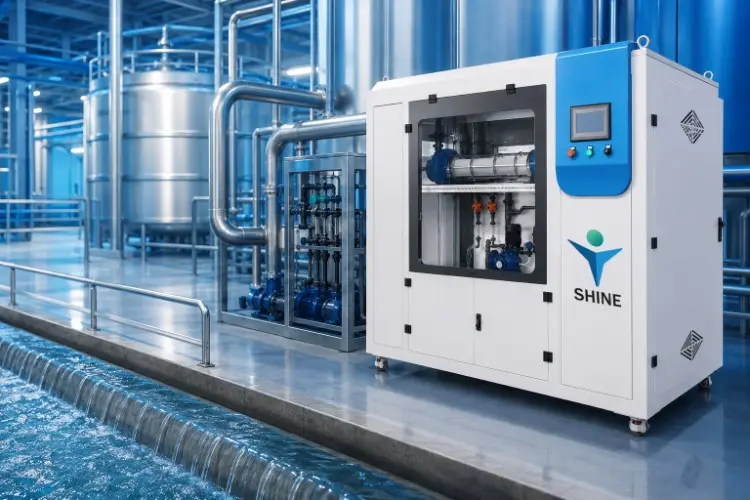
At Shandong Shine Health, we care about the practical side of treating water. We know operators need safe chemistry, steady output, and equipment that does not behave like a moody coffee machine on Monday morning. Our focus sits on dependable water disinfection, especially through on-site sodium hypochlorite generation. When a system produces fresh 8000 PPM sodium hypochlorite solution on demand, operators gain better control, safer storage, and easier daily operation.
Why Disinfection Matters So Much
Water may look clear and still carry invisible risks. Bacteria, viruses, algae, and some protozoa can enter water through source pollution, pipe breaks, storage tanks, or poor pretreatment. Therefore, drinking water treatment needs a reliable final barrier. This barrier supports water quality and helps communities avoid disease outbreaks.
A good disinfection unit does more than “kill germs.” It supports the whole treatment chain. Filtration removes particles, while final disinfection targets remaining microorganisms. In many systems, operators combine physical removal, chemical dosing, and monitoring to keep water safe.
Disinfecting water becomes more complex when source water changes. Rain, temperature, organic matter, and turbidity can change demand quickly. For this reason, operators need flexible disinfection systems. They also need simple controls, because nobody wants to solve a chemistry puzzle during a night shift.
What Is a Disinfection Unit?
A disinfection unit treats water before distribution, reuse, discharge, or process use. It may use chlorine, sodium hypochlorite, chlorine dioxide, ozone, ultraviolet disinfection, or a combined method. Each technology has strengths. However, each one also needs correct design and operation.
In many water treatment systems, the disinfection unit sits near the end of the process. Engineers often call this stage final disinfection. The system checks flow, dosage, contact time, residual value, and sometimes oxidation-reduction potential. These values help operators keep performance stable.
Core Functions
A reliable unit should support several daily tasks. It should reduce microbial risk, maintain water quality, and fit the actual site. It should also help operators avoid excessive chemical handling.
Key functions include:
Dosing disinfectant at a controlled rate.
Matching dosage with flow changes.
Supporting enough contact time.
Monitoring residual disinfection.
Reducing risks from large quantities of stored chemicals.
Helping operators record data for compliance.
Keeping maintenance simple and predictable.
That last point matters more than people admit. A system that looks impressive but confuses staff may fail in real life. We prefer equipment that operators can understand, trust, and maintain.
Main Technologies Used in Water Disinfection
No single technology wins every project. Water source, flow, turbidity, temperature, regulations, and budget all matter. Still, most projects compare chemical disinfection with ultraviolet UV treatment. Many advanced systems use both.
Sodium Hypochlorite Generation
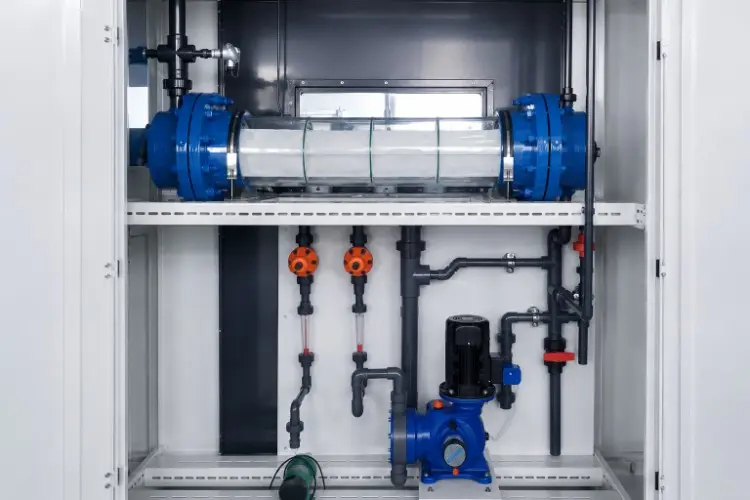
An On-Site Low-Strength Sodium Hypochlorite Generator produces sodium hypochlorite solution at the site. The system usually uses salt, water, and electricity. It creates a low-strength disinfectant solution, such as 8000 PPM available chlorine. This approach helps reduce transport and storage concerns linked to stronger chemicals.
For many operators, fresh sodium hypochlorite feels practical. It works as an oxidizing agent and supports residual disinfection in pipelines or storage tanks. That residual matters because water may travel through long networks. UV light disinfects at the point of treatment, but it does not leave a chemical residual.
Our On-Site Low-Strength Sodium Hypochlorite Generator supports projects that need steady output and safer chemical management. It can serve municipal water, rural drinking water, industrial water, and water reuse applications. The goal stays simple: produce the right disinfectant, at the right strength, when the site needs it.
UV Disinfection
UV disinfection uses ultraviolet light to damage microorganisms and stop reproduction. Operators often choose uv units because they act quickly and add no chemical taste. Ultraviolet disinfection also helps target some chlorine resistant organisms. That makes it useful in specific drinking water treatment designs.
However, uv light needs clear water. High turbidity, iron, manganese, color, or suspended solids can reduce performance. Lamps also need cleaning and replacement. In short, UV performs well when pretreatment and maintenance stay strong.
UV systems offer a sharp tool, not a magic wand. They disinfect water at the reactor, but they do not provide residual disinfection. Therefore, many projects combine ultraviolet uv treatment with sodium hypochlorite. The UV handles immediate inactivation, while chlorine residual protects downstream water.
How 8000 PPM Sodium Hypochlorite Helps
A low-strength sodium hypochlorite solution offers a useful balance. It has enough strength for practical dosing, yet it avoids many problems linked to highly concentrated chemicals. An 8000 PPM solution equals about 0.8% available chlorine. This level supports safer handling and flexible dosing for many sites.
The system can generate disinfectant on demand. That reduces the need to store large quantities of commercial bleach or gas-based chemicals. It also helps operators avoid strength loss during long storage. Fresh solution gives better consistency, especially in hot environments.
Typical Parameters Operators Watch
Operators should never run disinfection by guesswork. Clear parameters help keep the process stable and safe. They also make troubleshooting much easier.
Useful control points include:
Available chlorine: around 8000 PPM in generated solution.
Finished water residual: project-dependent, often measured in mg/L.
pH range: commonly monitored because pH affects chlorine performance.
Contact time: measured in minutes before water reaches users.
Flow rate: shown as m³/h, L/min, or gallons of water per day.
Salt purity: important for stable generation.
Power supply: matched to production capacity.
ORP: useful as a process trend indicator.
Temperature: affects reaction speed and chemical stability.
These values help operators see the whole picture. A number alone rarely tells the full story. For example, low residual may come from high organic matter, wrong dosing, poor mixing, or high demand. Good equipment gives operators clues, not headaches.
Contact Time and Residual Disinfection
Contact time sounds simple, but it decides real performance. Disinfectant needs time to react with microorganisms. If water moves too fast, the disinfectant may not finish its job. If the dosage runs too low, the system may lose protection.
Engineers often use the “CT” idea. C means disinfectant concentration, and T means time. Together, they help define disinfection strength. Operators must also consider pH, temperature, turbidity, and target organisms.
Residual disinfection protects water after treatment. This matters in tanks, pipes, and long distribution networks. Without residual, treated water may face recontamination. That is why chlorine-based disinfection still plays a major role worldwide.
Why Mixing Matters
Even perfect dosing fails without good mixing. Water needs uniform disinfectant contact across the full flow. Dead zones, short-circuiting, or poor tank design can weaken performance. Nobody wants a “clean on one side, questionable on the other” situation.
A good design uses static mixers, contact tanks, baffles, or controlled injection points. It also places sensors where readings make sense. Smart placement helps operators avoid false confidence. In water treatment, false confidence can become expensive fast.
Comparing UV Units and Sodium Hypochlorite Systems
UV units and sodium hypochlorite systems solve different problems. UV disinfection acts fast and avoids chemical addition. Sodium hypochlorite supports ongoing residual disinfection. Together, they can create a stronger barrier.
When UV Works Best
UV works well when the water stays clear. It suits applications where operators want fast inactivation and low chemical impact. It also helps when target organisms show chlorine resistant behavior. However, UV systems need clean sleeves, stable power, and correct lamp intensity.
UV does not work well when particles block light. It also cannot protect water after the reactor. So, if treated water enters a tank or pipe network, operators may still need a residual disinfectant. This is where sodium hypochlorite often steps in.
When Sodium Hypochlorite Works Best
Sodium hypochlorite works well when systems need residual protection. It suits drinking water networks, storage tanks, rural water stations, industrial plants, and emergency treatment sites. An On-Site Low-Strength Sodium Hypochlorite Generator can reduce dependence on delivered chemicals. It also keeps chemical strength more predictable.
Chemical disinfection still requires careful control. Overdosing wastes chemical and may affect taste. Underdosing can weaken safety. That is why dosing pumps, sensors, and operator training matter.
Choosing the Right Disinfection System
Every project starts with questions. What is the raw water source? How many gallons of water need treatment each day? Does the site need continuous operation? Does the system require residual disinfection after treatment?
A strong selection process should review water quality first. Turbidity, organic matter, ammonia, iron, manganese, pH, and temperature can change performance. Operators should also check local standards and site conditions. The best equipment matches the real project, not a brochure fantasy.
Practical Selection Checklist
Before choosing a system, we recommend checking these items:
Daily water demand: m³/day or gallons of water/day.
Peak flow: m³/h or GPM.
Target application: drinking, process, reuse, or discharge.
Required residual: mg/L after contact time.
Source water quality: turbidity, pH, organics, and metals.
Available utilities: power, water, drainage, and ventilation.
Operator skill level: manual, semi-automatic, or automatic control.
Chemical storage limits: site safety and local rules.
Maintenance plan: spare parts, cleaning, and inspections.
Monitoring needs: chlorine, ORP, flow, alarms, and data logs.
Good selection prevents future drama. And let us be honest, water plants already have enough drama. Pumps complain, valves stick, and alarms love bad timing. A well-matched disinfection unit should lower stress, not add to it.
Why Shandong Shine Health Focuses on On-Site Generation
We believe safer disinfection should feel practical. Operators should not need to store large quantities of high-strength chemicals. They should not depend fully on delivery schedules. They also should not fight unstable dosing every week.
Our On-Site Low-Strength Sodium Hypochlorite Generator supports fresh production near the point of use. It can help water treatment systems improve chemical control and reduce handling risk. The 8000 PPM output level gives many projects a useful dosing range. It also fits many water disinfection scenarios.
We design with real sites in mind. Dust happens. Power fluctuates. Operators get busy. Therefore, we value stable structure, clear control logic, and easy maintenance. In our view, the best disinfection unit quietly does its job and lets people sleep better.
Final Thoughts: Cleaner Water Needs Smarter Control
A disinfection unit does not just add chemical or shine uv light through water. It protects people, products, pipes, and trust. Good design combines source water knowledge, proper dosing, contact time, residual control, and daily monitoring. When these parts work together, water safety becomes more reliable.
For many projects, sodium hypochlorite generation offers a strong and practical route. UV disinfection can also play an important role, especially when water clarity supports it. The smartest systems often combine technologies based on actual site needs. That approach gives operators more control and fewer surprises.
At Shandong Shine Health, we see water disinfection as a serious job with a human purpose. Clean water supports families, factories, hospitals, farms, and cities. That gives our work meaning. And yes, it also reminds us that good engineering can make life feel wonderfully ordinary.