

Free vs Combined Chlorine in Water
Chlorine plays an important role in modern water treatment. It helps control harmful microorganisms and protects water quality during distribution. However, not all chlorine in water works in the same way. Free chlorine and combined chlorine have different properties, reaction speeds, and uses.
At Shandong Shine Health, we believe that understanding these differences helps water treatment plants make better decisions. Our experience with an On-site Sodium Hypochlorite Generator also shows why accurate dosing and regular testing matter. In this guide, we explain the key differences, common chlorine sources, and practical ways to monitor disinfection.
What Is Free Chlorine in Water Treatment?
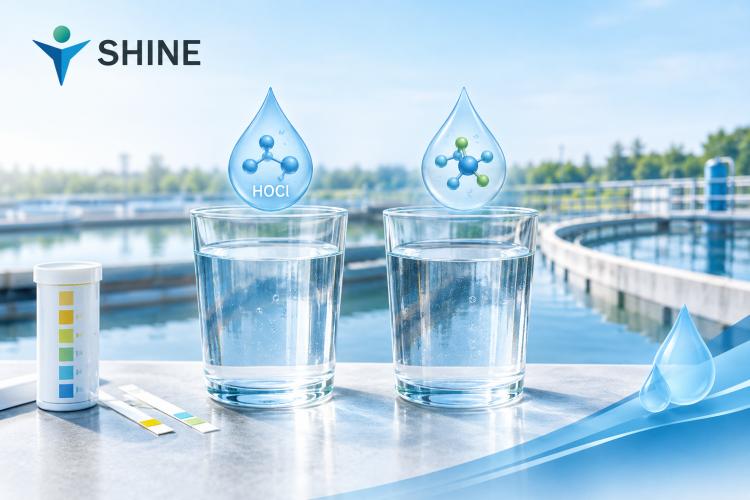
Free chlorine refers to chlorine in water that remains available for disinfection. It mainly includes hypochlorous acid (HOCl) and hypochlorite ions (OCl⁻). Their proportions depend largely on water pH and temperature.
When chlorine enters water, it forms active chemical species that attack harmful microorganisms. These reactions help control bacteria, viruses, and other pathogens. As a result, free chlorine plays a key role in drinking water disinfection.
How Does Free Chlorine Work?
Hypochlorous acid (HOCl) usually provides stronger disinfection than the hypochlorite ion (OCl⁻). HOCl can enter microbial cells and damage essential cell structures. This action helps reduce the risk of waterborne diseases.
Water pH affects the balance between these two forms. Lower pH generally favors HOCl, while higher pH increases the proportion of OCl⁻. Therefore, operators must consider both chlorine concentration and pH when they plan an effective disinfection process.
What Is Free Chlorine Residual?
A free chlorine residual is the amount of free chlorine remaining after initial reactions with substances in water. This residual helps protect treated water from microbial regrowth and contamination.
Water plants often monitor residual levels at several points. These include the treatment outlet and locations across the distribution system. A falling residual may indicate higher chlorine demand, contamination, or other operating problems.
What Is Combined Chlorine?
Combined chlorine forms when free chlorine reacts with ammonia or certain nitrogen-containing compounds. The reaction produces chloramines, including monochloramine, dichloramine, and trichloramine.
Water utilities sometimes use chloramines for long-lasting disinfection. They can maintain a residual longer than free chlorine in many distribution systems. However, their disinfection speed and strength differ from those of free chlorine.
Why Does Combined Chlorine Form?
Combined chlorine can appear when source water contains ammonia or organic nitrogen compounds. Operators may also add ammonia deliberately to produce chloramines.
This process requires careful control. Poor chlorine-to-ammonia balance can create unwanted chloramine species or affect water quality. Therefore, treatment plants need regular testing and clear operating targets.
Is Combined Chlorine Always a Problem?
No. Combined chlorine serves a useful purpose in systems designed for chloramine disinfection. It can help protect water as it travels through long pipelines.
However, operators should investigate unexpected combined chlorine levels. These results may indicate ammonia reactions or changes in source water. The correct response depends on the plant's disinfection strategy and local water quality rules.
Free Chlorine vs Combined Chlorine: Key Differences
Both forms support water disinfection, but they behave differently. Understanding these differences helps operators choose suitable treatment methods and control residual levels.
Feature | Free Chlorine | Combined Chlorine |
Main forms | HOCl and OCl⁻ | Mainly chloramines |
Formation | Available chlorine remains uncombined | Chlorine reacts with ammonia or nitrogen compounds |
Disinfection speed | Generally faster | Generally slower |
Residual stability | Often decreases faster | Often lasts longer in distribution systems |
Common role | Primary disinfection and residual control | Long-lasting residual in selected systems |
Monitoring | Free chlorine test | Combined chlorine calculated from total and free chlorine |
The best option depends on source water, treatment goals, and distribution conditions. Free chlorine supports rapid disinfection, while chloramines can offer a more persistent residual. Neither option removes the need for proper monitoring.
What Is Chlorine Demand in Water Treatment?
Chlorine demand describes the amount of chlorine that water consumes through chemical reactions before a selected residual remains. Organic matter, ammonia, iron, manganese, and other substances can increase this demand.
Operators need to understand demand before setting a chlorine dose. Otherwise, a plant may add too little chlorine or waste chemicals through excessive dosing.
How to Calculate Chlorine Demand
A simple operational relationship is:
Chlorine demand = Chlorine dose − Chlorine residual
For example, suppose an operator adds 2.0 mg/L of chlorine. After the required contact period, the measured residual reaches 0.5 mg/L. The apparent chlorine demand equals 1.5 mg/L.
This example assumes that the dose and residual use the same measurement basis. Actual plant calculations must also consider sampling time, water chemistry, and the difference between free and total chlorine.
How Much Chlorine Is Used in Water Treatment?
There is no single dose for every water source. Many drinking water systems use doses around 1–5 mg/L, but actual requirements vary with water quality and treatment design.
Operators should measure demand through jar tests or controlled plant trials. They should also verify contact time, pH, turbidity, and residual levels. A higher dose does not automatically mean better disinfection.
What Forms of Chlorine Are Used in Water Treatment?
Several chlorine sources can support water treatment. Each option has different storage, handling, and operating requirements.
· Chlorine gas: This source can provide effective disinfection, but it requires strict safety controls and specialized handling.
· Sodium hypochlorite: This liquid disinfectant supports controlled dosing in drinking water treatment and wastewater treatment.
· Calcium hypochlorite: This solid chemical offers another source of available chlorine. Operators must manage its storage and preparation carefully.
· Chloramines: These compounds provide a longer-lasting residual in systems designed for chloramine disinfection.
When people ask, "Is chlorine used in water treatment?" the answer is yes. However, the selected type of chlorine depends on the facility, local rules, and water quality requirements.
How an On-Site Generator Supports Chlorination
An On-site Sodium Hypochlorite Generator produces sodium hypochlorite solution at the treatment facility. Our systems use salt, water, and electricity to support on-site production under controlled operating conditions.
This approach can reduce dependence on delivered hypochlorite and simplify supply planning. Operators can coordinate production with daily demand and dosing requirements. However, they still need suitable storage, ventilation, hydrogen management, and routine maintenance.
At Shandong Shine Health, we focus on practical systems that match plant capacity and operating conditions. We recommend reviewing daily chlorine demand, required output, water quality, and available installation space before selecting equipment.
How to Measure Chlorine in Water
Accurate testing helps operators maintain effective disinfection without unnecessary chemical use. A single reading cannot explain every water quality problem, so we recommend checking trends over time.
Free Chlorine Test Strips and Other Methods
Operators can use test strips for quick checks in suitable applications. However, treatment plants often use DPD colorimetric methods or calibrated instruments for more reliable process monitoring.
For routine testing, operators should:
1. Collect a representative water sample.
2. Test free chlorine using the selected method.
3. Measure total chlorine when the application requires it.
4. Calculate combined chlorine by subtracting free chlorine from total chlorine.
5. Record the results, sampling location, and time.
6. Compare results with plant targets and applicable standards.
Use the test method according to its instructions. High chlorine levels, sample handling, and interfering substances can affect readings.
What Chlorine Level Should Drinking Water Maintain?
The correct chlorine concentration depends on local regulations, pH, temperature, contact time, and water quality. The World Health Organization recommends at least 0.5 mg/L free chlorine after 30 minutes of contact at pH below 8 for effective disinfection under its specified conditions. It also recommends maintaining at least 0.2 mg/L at the delivery point.
These values provide guidance rather than a universal operating target. Each facility must follow its applicable standards and validate its treatment process. Operators should also monitor disinfection by-products when required.
Practical Tips for Better Water Disinfection
Reliable disinfection depends on more than choosing a chemical. We recommend a complete approach that combines sound equipment selection, accurate dosing, and routine testing.
· Check source water: Changes in ammonia, organic matter, and turbidity can increase chlorine demand.
· Control pH: The balance between HOCl and OCl⁻ affects disinfection performance.
· Verify contact time: Chlorine needs enough time to inactivate target microorganisms.
· Monitor residuals: Check suitable points across the distribution system.
· Review chemical storage: Temperature, sunlight, and storage time can affect sodium hypochlorite quality.
· Prevent excessive dosing: Higher doses can increase costs and may increase disinfection by-product formation.
· Maintain equipment: Regular inspection helps keep dosing and generation systems stable.
These practices support drinking water treatment, wastewater treatment, and other suitable water disinfection applications. They also help operators respond quickly when water quality changes.
Conclusion
Free chlorine and combined chlorine both support water disinfection, but they serve different operational roles. Free chlorine generally acts faster, while chloramines can maintain a longer-lasting residual. Operators should monitor both forms when their treatment process requires them.
At Shandong Shine Health, we believe good disinfection starts with understanding water quality and controlling chlorine demand. Our on-site sodium hypochlorite generation solutions help facilities produce disinfectant where they need it. With the right equipment, testing plan, and operating controls, water treatment plants can improve consistency and manage daily disinfection needs.