

Fresh HOCl for Safer Food Plants
Introduction
Food plants face a daily challenge: keeping production areas clean while protecting product quality. Every surface, conveyor belt, cutting tool, and processing line can affect food safety. Poor cleaning and sanitizing practices may allow foodborne pathogens to spread and cause serious foodborne illness.
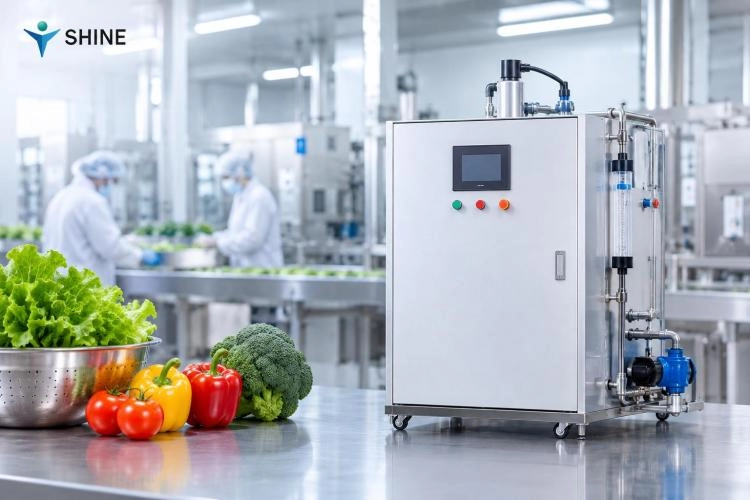
At Shandong Shine Health, we believe on-site hypochlorous acid generation offers a practical option for modern food processing facilities. It allows plants to produce fresh disinfectant when they need it. This approach can reduce dependence on packaged cleaning agents and simplify daily supply management. More importantly, it gives operators better control over disinfectant production and use.
However, choosing the right system requires more than checking its output. We should also consider operating costs, water quality, concentration control, contact time, and food safety requirements.
Why Food Plants Need a Better Disinfection Supply
An effective food safe disinfectant must meet several requirements. It should control target microorganisms, fit the production process, and meet local regulations. It should also support fast and consistent cleaning and sanitizing routines.
Food plants often use sodium hypochlorite and other cleaning agents. These products can work well, but supply and storage create challenges. Plants must manage product deliveries, storage conditions, stock levels, and chemical handling. Some facilities also want to reduce their use of harsh chemical products.
An on-site HOCl system changes this supply model. Instead of relying entirely on delivered disinfectant, a plant produces its own solution. Operators can adjust production to match daily demand and reduce unnecessary inventory.
How Fresh HOCl Supports Food Hygiene
Hypochlorous acid (HOCl) acts as an oxidizing antimicrobial agent. It can damage important structures in microorganisms under suitable conditions. These include bacteria, viruses, and fungi. Its performance depends on concentration, pH, water quality, organic matter, and contact time.
A properly designed industrial system can produce fresh HOCl for different sanitation tasks. Plants may use the solution for equipment, worktables, floors, and selected food-contact surfaces. However, each application needs suitable efficacy data and regulatory approval.
This approach can support hypochlorous acid food safety programs. It does not replace good manufacturing practices or a complete sanitation plan.
1. How On-Site HOCl Generation Works
An industrial HOCl generator produces disinfectant at the production site. Depending on the system design, it uses water, salt or a specified electrolyte, and electricity. An electrolytic cell then generates an HOCl solution under controlled conditions.
Water and electrolyte + Electrical energy → Electrolytic generation → Fresh HOCl solution → Spraying / Equipment / Utensils
The generator can provide a controlled output based on production requirements. For example, operators may specify an effective chlorine concentration and required flow rate. This makes daily supply planning easier.
Important Operating Parameters
When selecting equipment, we recommend checking these parameters:
· Effective chlorine: The available chlorine concentration, measured in ppm.
· pH: A key factor that affects HOCl chemistry and performance.
· Output capacity: The required solution volume per hour or day.
· Water quality: Chloride levels, hardness, and other impurities.
· Production control: Stable concentration and adjustable output.
· Monitoring: Suitable instruments for pH and available chlorine.
Fresh production offers an important supply advantage. HOCl can lose strength during storage, depending on light, temperature, pH, and other conditions. Therefore, producing it close to the point of use can reduce long storage periods.
2. Cost Effectiveness and Supply Advantages
Chemical purchasing costs represent only one part of a food plant's sanitation budget. Transportation, packaging, storage, handling, and inventory management also affect total costs. On-site generation gives plant managers another way to control these expenses.
Where Can Plants Save Money?
An industrial HOCl generator can reduce several recurring costs:
1. Transportation: Plants can reduce frequent deliveries of ready-made disinfectant.
2. Packaging: On-site production reduces dependence on disposable chemical containers.
3. Storage: Smaller chemical inventories can simplify warehouse management.
4. Inventory losses: Fresh production helps reduce losses from expired or degraded stock.
5. Supply reliability: Plants gain more control over daily disinfectant availability.
6. Labor planning: Automated production can reduce some routine preparation tasks.
We suggest calculating total operating costs before purchasing a system.
C_total = C_electricity + C_water + C_electrolyte + C_labor + C_maintenance
Then compare this figure with the current disinfectant purchasing cost. For example, a plant should compare its monthly chemical spending against electricity, water, consumables, maintenance, and equipment depreciation. This calculation provides a more realistic picture than comparing chemical prices alone.
3. Food Safety, Safety Controls, and Compliance
Cost savings matter, but food safety always comes first. A food safe disinfectant must deliver proven performance under actual operating conditions. Plants should never assume that every HOCl solution automatically qualifies for food-contact use.
Managing Foodborne Pathogens
Foodborne pathogens can spread through contaminated equipment, workers, utensils, and processing surfaces. Common concerns include Salmonella, Listeria, and pathogenic E. coli. These microorganisms can cause foodborne illness and threaten public health.
A suitable HOCl solution may support a broad spectrum of antimicrobial control. Depending on validated product claims, it may help control bacteria, viruses, and fungi. However, operators must check the target organisms and approved contact time.
Important applications include:
· Processing tables and food preparation surfaces.
· Conveyor belts and suitable equipment surfaces.
· Cutting tools and reusable utensils.
· Selected food storage and handling areas.
· Floors, walls, and other non-food-contact surfaces.
These applications can help reduce cross contamination risks. However, HOCl cannot replace physical cleaning, employee hygiene, or proper separation of raw and finished products.
Food-Contact Safety Requires Attention
The phrase food safe disinfectant spray does not mean operators can spray any HOCl solution directly onto food. Plants must distinguish between food-contact surface sanitizing and direct food treatment.
Before selecting a product or generator, check:
· Local food-contact chemical requirements.
· Product registration or applicable regulatory authorization.
· Approved concentration and application method.
· Required contact time and drainage conditions.
· Whether rinsing is necessary.
· Restrictions involving direct contact with food.
For example, US regulations under 21 CFR §178.1010 specify permitted sanitizing solutions and conditions. The regulation requires adequate draining before food contact in the applicable circumstances. Specific formulations and uses matter, so operators should review the actual regulatory requirements.
An EPA-registered product label may also specify surface preparation, wet contact time, and rinsing instructions. Never assume that one product's instructions apply to every generator.
4. Better Cleaning and Sanitizing in Food Processing
HOCl can support a wide range of sanitation tasks across the food industry. However, successful disinfection starts with proper cleaning. Organic matter, grease, and food residues can reduce disinfectant performance.
A Practical Sanitation Workflow
We recommend a clear process for daily operations:
1. Remove visible food waste and other debris.
2. Apply suitable detergents or cleaning agents.
3. Rinse surfaces when the cleaning procedure requires it.
4. Apply the approved HOCl solution at the validated concentration.
5. Maintain the required contact time.
6. Drain, rinse, or air-dry according to product instructions.
7. Check sanitation results through suitable monitoring methods.
This process helps operators maintain consistent results. It also reduces the chance of spreading contamination between production zones. For example, a food processing plant can use separate tools for raw-material and finished-product areas. Staff should also follow clear procedures when moving between hygiene zones.
Food Safe Disinfectant Spray and Wipes
An on-site generator can supply fresh HOCl for several application formats. These may include food safe disinfectant spray bottles and compatible disinfectant food safety wipes. However, the plant must validate each delivery method.
Spraying works well for many suitable hard surfaces. Wipes can help operators treat smaller equipment and hard-to-reach areas. Both methods need enough solution to cover the target surface for the full contact time.
A few practical points deserve attention:
· Use compatible spray bottles and storage containers.
· Avoid cross-contamination between clean and dirty tools.
· Prevent spray mist from reaching exposed food.
· Keep treated surfaces wet for the approved contact time.
· Replace wipes according to the validated procedure.
Remember, a disinfectant wipe does not become food safe simply because it contains HOCl. Its formulation, material, and intended application all matter.
5. HOCl and Sodium Hypochlorite in Food Plants
Many food factories already use sodium hypochlorite for sanitation. It remains an established chlorine-based chemical with recognized applications. HOCl offers another approach, especially when a plant wants fresh, on-site production.
Both solutions require proper concentration control and suitable operating conditions. Their performance also depends on pH, organic load, water quality, and application methods.
Consideration | HOCl generation | Sodium hypochlorite |
Supply method | On-site generation | Delivered product or on-site generation |
Storage | Fresh-use approach can reduce storage needs | Requires suitable storage |
Production | Controlled electrolytic process | Chemical supply or electrolytic process |
Monitoring | pH and available chlorine | Available chlorine and pH |
Main concern | Stability and application validation | Stability and chemical handling |
We do not recommend choosing one solution based on concentration alone. Each plant should consider its sanitation targets, operating conditions, regulatory requirements, and total cost. For some facilities, both systems may serve different purposes. The best choice depends on the actual process rather than marketing claims.
6. Industrial Hypochlorous Acid Generator Buying Guide
Choosing an industrial system requires careful planning. A low purchase price does not always mean lower operating costs. We recommend evaluating the following points before making a decision.
Six Factors to Check Before Buying
Production capacity: Calculate the total daily disinfectant demand. Consider peak production hours, cleaning schedules, and future expansion. Choose an output capacity that meets actual demand without unnecessary oversizing.
Adjustable concentration: Different sanitation tasks may require different available chlorine levels. Select a generator that supports the concentrations required by your approved applications.
Electrolytic cell quality: The electrolytic cell directly affects system performance and service life. Check electrode materials, cell design, and maintenance requirements.
Automatic control: Automatic monitoring helps maintain stable production. We recommend checking pH control, chlorine concentration monitoring, alarms, and safety protection.
Maintenance and technical support: Ask about electrode cleaning, consumable replacement, spare parts, and technical assistance. Reliable support can prevent unnecessary production interruptions.
Installation and expansion: Check available floor space, water supply, drainage, electrical capacity, and ventilation. Also consider whether the system can support additional production lines later.
Example Technical Parameters
The following values illustrate common specifications for industrial HOCl applications. Final configurations should match the customer's process requirements.
Parameter | Typical consideration |
Effective chlorine | 6–100 ppm |
Solution pH | 5.0–6.5, where specified |
Cell material | Corrosion-resistant materials |
Production control | Adjustable output |
Monitoring | pH and available chlorine |
Installation | Industrial production environment |
Operation | Fresh generation and immediate use |
These values do not represent universal food-contact limits. The plant must validate its selected concentration and application method.
7. Why Choose Shandong Shine Health?
At Shandong Shine Health, we focus on HOCl generator manufacturing and practical on-site generation solutions. We understand that food plants need more than a machine. They need stable production, simple operation, and reliable technical support.
Our approach focuses on three important areas:
· Controlled production: We design systems with adjustable concentration and controllable output.
· Practical operation: We aim to make daily generation and application easier for plant operators.
· Application flexibility: We support different production requirements through customized system configurations.
We believe fresh production can help food manufacturers improve disinfectant supply management. It can also reduce unnecessary storage and transportation demands. Most importantly, we encourage customers to match equipment specifications with their sanitation plans. A good generator should support a validated food safety process, not replace it.
Conclusion: Make Disinfection Supply More Reliable
Food plants need consistent sanitation and dependable disinfectant supplies. On-site HOCl generation offers a practical way to produce fresh solution near the point of use. It can reduce chemical inventory, simplify supply management, and support daily surface disinfection.
However, successful implementation requires proper equipment selection and application control. Operators must verify concentration, pH, contact time, and regulatory requirements. They must also maintain effective cleaning procedures and monitor sanitation results.
At Shandong Shine Health, we believe the future of food industry sanitation combines reliable equipment with smarter chemical management. If you are planning a new food processing facility or upgrading an existing sanitation system, we welcome the opportunity to discuss your requirements.
Contact Shandong Shine Health for an industrial HOCl generator solution tailored to your production needs.