

Water Treatment Methods: A Complete Guide
Water quality affects public health, industry, agriculture, and the environment. However, raw water rarely meets every user's needs. It may contain suspended particles, dissolved solids, heavy metals, bacteria, and organic matter. Therefore, every water treatment plant needs a suitable treatment process.
At Shandong Shine Health, we believe effective water treatment starts with understanding the water itself. Different contaminants require different solutions. Some processes remove visible particles, while others target dissolved substances or harmful microorganisms. No single method can handle everything.
So, what are the methods of water treatment? Most systems use three main approaches: physical, chemical, and biological treatment. In this guide, we compare these methods, explain their working principles, and discuss how to select the right combination.
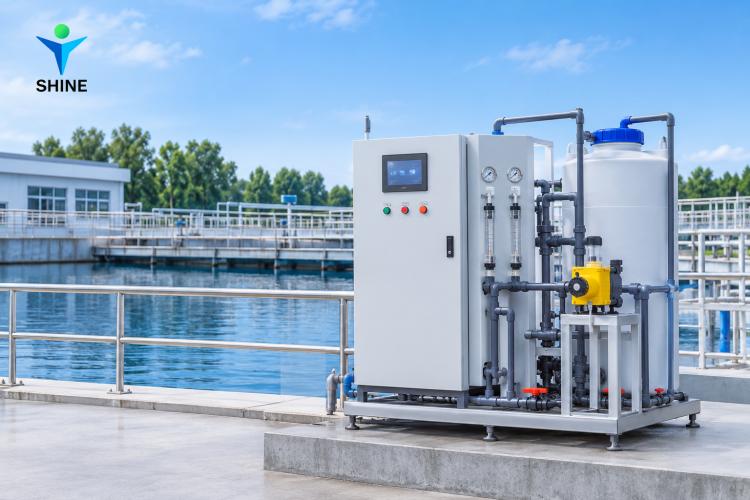
1. What Are the Main Water Treatment Methods?
Water treatment uses several processes to improve water quality. Each process targets specific contaminants and supports a different treatment goal. In practice, engineers often combine several treatment methods to achieve the required water quality.
The three main categories include:
Physical treatment: Separates particles and impurities through physical processes.
Chemical treatment: Uses chemical reactions to remove contaminants or control microorganisms.
Biological treatment: Uses microorganisms to break down organic matter and other pollutants.
A water treatment plant may also use advanced technologies, such as membrane filtration and ion exchange. These technologies help remove contaminants that traditional processes may not handle effectively.
How Do Water Treatment Processes Work Together?
Most treatment systems follow a clear sequence. First, physical processes remove large particles and suspended solids. Next, chemical processes help remove fine impurities and control harmful microorganisms. Biological processes handle biodegradable organic matter, especially in wastewater treatment.
However, not every plant follows the same order. Drinking water treatment and industrial wastewater treatment have different goals. Engineers must consider raw water quality, treatment capacity, discharge requirements, and final water use.
2. Physical Water Treatment: Removing Particles
Physical treatment removes contaminants without relying mainly on chemical reactions. It often serves as the first stage of water treatment. This approach helps reduce the load on downstream equipment and improves overall system performance.
Common physical treatment methods include:
Screening
Sedimentation
Sand filtration
Activated carbon filtration
Membrane filtration
Flotation
Filtration and Sedimentation
Sedimentation allows suspended particles to settle under gravity. Larger particles settle faster, while smaller particles may need additional treatment. This process reduces turbidity and prepares water for further cleaning.
Filtration systems then capture particles as water passes through filter media. Sand filters remove many suspended solids, while activated carbon helps reduce certain organic compounds, odors, and unwanted tastes. These methods provide practical solutions for many water treatment systems.
Membrane Filtration and Dissolved Solids
Membrane filtration uses special membranes to separate contaminants from water. Different membranes have different pore sizes and separation abilities.
For example:
Microfiltration removes many suspended particles and larger microorganisms.
Ultrafiltration removes finer particles and many bacteria.
Nanofiltration removes some dissolved organic compounds and mineral ions.
Reverse osmosis removes many dissolved salts and other small contaminants.
Physical treatment works well for particle removal. However, ordinary sand filtration cannot effectively remove all dissolved solids or heavy metals. Plants may need membrane filtration, ion exchange, or chemical treatment for these contaminants.
3. Chemical Water Treatment: Using Reactions to Remove Contaminants
Chemical treatment uses selected chemicals to change water quality. These chemicals help separate impurities, control pH, remove certain dissolved substances, and kill harmful microorganisms. This method plays an important role in modern drinking water treatment.
What Chemical Is Used for Water Treatment?
There is no single chemical for every application. Operators select chemicals according to water quality and treatment goals. Common choices include:
Chemical | Main purpose |
Aluminum sulfate (Al₂(SO₄)₃) | Coagulation |
Ferric chloride (FeCl₃) | Coagulation and phosphorus removal |
Sodium hydroxide (NaOH) | pH adjustment |
Lime (Ca(OH)₂) | pH control and softening |
Sodium hypochlorite (NaClO) | Water disinfection |
Ozone (O₃) | Oxidation and disinfection |
Activated carbon | Adsorption of organic compounds |
Chemical coagulation deserves special attention. Many fine particles carry a negatively charged surface. This charge keeps them apart and makes natural settling difficult. Coagulants reduce these electrical forces and help particles form larger groups called flocs.
Operators then use sedimentation or filtration to remove these flocs. This process can effectively remove suspended particles, turbidity, and some organic matter.
Chemical Disinfection and Killing Bacteria
Disinfection water processes help control harmful microorganisms. Common options include chlorine, sodium hypochlorite, chlorine dioxide, ozone, and ultraviolet light.
Each option offers different benefits:
Chlorination: Provides effective microbial control and can maintain residual protection.
Ozonation: Provides strong oxidation and disinfection but leaves no lasting disinfectant residual.
UV treatment: Inactivates microorganisms without adding a chemical disinfectant.
Sodium hypochlorite: Provides a practical chlorine source for continuous water treatment.
For many water treatment plants, sodium hypochlorite offers a convenient disinfection solution. It supports controlled chemical dosing and helps maintain water quality throughout distribution. Operators must still monitor chlorine concentration, contact time, pH, and water demand.
4. Biological Water Treatment: Let Microorganisms Work
Biological treatment uses microorganisms to break down organic matter in water. These microorganisms consume biodegradable pollutants and convert them into simpler substances. We find this approach especially useful in municipal and industrial wastewater treatment.
Unlike chemical treatment, biological processes depend on living organisms. Operators must maintain suitable conditions for microbial growth and activity.
Common Biological Treatment Methods
Several biological processes serve different treatment needs:
Activated sludge: Uses aeration tanks and microorganisms to break down organic pollutants.
Biofilm treatment: Allows microorganisms to grow on special surfaces or filter media.
Trickling filters: Pass wastewater over media covered with active microorganisms.
Anaerobic digestion: Uses microorganisms without oxygen to break down organic waste.
Moving bed biofilm reactors (MBBR): Use moving carriers to support microbial growth.
Oxygen, temperature, pH, and nutrient levels affect biological performance. Poor control can reduce treatment efficiency and increase operating costs.
Biological treatment works particularly well for biodegradable pollutants. However, it cannot replace every physical or chemical process. Heavy metals, dissolved salts, and certain toxic compounds may require additional treatment.
5. Physical vs. Chemical vs. Biological Treatment
Each method has a different role. Choosing the right process depends on the contaminants, water source, and final water quality requirements.
Comparison | Physical | Chemical | Biological |
Main function | Separate particles | React with contaminants | Break down organic matter |
Typical equipment | Filters, screens, membranes | Dosing pumps, reactors | Aeration tanks, biofilters |
Main targets | Suspended solids | Microorganisms, ions, particles | Biodegradable pollutants |
Operating needs | Pressure and filtration control | Chemical dosing and monitoring | Oxygen and microbial control |
Common use | Drinking and industrial water | Drinking water and wastewater | Mainly wastewater |
Main limitation | Some dissolved pollutants remain | Requires careful chemical control | Limited by pollutant biodegradability |
Which Treatment Method Should You Choose?
The following examples show how engineers combine different technologies:
High turbidity: Coagulation, sedimentation, and sand filtration.
High dissolved solids: Reverse osmosis or suitable ion exchange.
Heavy metals: Chemical precipitation, selective ion exchange, or membrane treatment.
High organic pollution: Biological treatment and activated carbon.
Microbial contamination: Filtration followed by suitable disinfection.
In reality, the best solution rarely depends on one process. A well-designed treatment train combines several technologies to meet the required water quality.
6. How to Design a Water Treatment Plant
Knowing how to do water treatment starts with understanding the raw water. Engineers should never select equipment based only on general industry practices. They need reliable water analysis and clear treatment targets.
We recommend following these steps when planning a new water treatment plant.
Step 1: Test the Raw Water
First, collect representative water samples and test important parameters.
Parameter | What it tells us |
pH | Water acidity or alkalinity |
Turbidity (NTU) | Suspended particle levels |
TDS (mg/L) | Total dissolved solids |
COD (mg/L) | Chemically oxidizable pollutants |
BOD₅ (mg/L) | Biodegradable organic pollution |
Total iron (mg/L) | Iron contamination |
Heavy metals (mg/L) | Potential toxic metal pollution |
E. coli | Possible fecal contamination |
These results help engineers identify the main treatment challenges. They also provide a starting point for equipment selection and process design.
Step 2: Select the Right Treatment Combination
Next, match each contaminant with a suitable process. For example, high turbidity may require coagulation and filtration. High salinity may require reverse osmosis. Microbial contamination requires an effective disinfection barrier.
The WHO water treatment methods guidance also emphasizes risk-based water safety management. Treatment performance depends on source water quality and proper process control. Therefore, operators should test treated water regularly instead of relying on equipment settings alone.
Step 3: Control Operation and Water Quality
A treatment system needs continuous monitoring. Operators should check flow, pressure, chemical dosage, and important water quality indicators. They should also inspect filters, dosing pumps, and other key equipment.
A simple treatment process may follow this sequence:
Raw Water
Water from rivers, lakes, wells, or industrial sources
Pretreatment
Screening and sedimentation
Main Treatment
Coagulation, filtration, membranes, or biological treatment
Disinfection
Sodium hypochlorite, UV, or another suitable method
Treated Water
Testing, storage, and distribution
This sequence provides a useful starting point, not a universal design. Actual processes depend on local regulations, water analysis, and the intended application.
7. On-Site Sodium Hypochlorite Generation in Water Treatment
Disinfection is an essential part of many water treatment processes. However, chemical supply and storage can create challenges for large treatment facilities. An on-site sodium hypochlorite generator offers another approach.
An On-site Sodium Hypochlorite Generator produces sodium hypochlorite at the treatment facility. The system uses electrolysis to generate a disinfectant solution from salt and water. Operators then use dosing equipment to add the required amount to the water.
We see several practical advantages in this approach:
Local production: The plant generates disinfectant where operators need it.
Supply flexibility: Operators reduce dependence on frequent deliveries of commercial chemicals.
Dosing control: Automatic systems can adjust chemical feed according to water demand.
Storage management: On-site production can reduce the need for large inventories of purchased hypochlorite.
Operational planning: Plants can match production capacity with daily disinfectant demand.
What Should Buyers Consider?
When selecting an electrolytic sodium hypochlorite generator, we recommend checking several technical details:
Available chlorine production capacity (g/h or kg/day).
Generated solution concentration (g/L or %).
Salt and water consumption.
Electrical power requirements (kW).
Automatic control and dosing compatibility.
Hydrogen removal and ventilation design.
Maintenance requirements and spare parts availability.
At Shandong Shine Health, we focus on practical on-site generation solutions for water treatment applications. We believe equipment should match actual plant demand rather than simply offer the largest production capacity.
A properly selected generator can support stable disinfection and simplify chemical supply management. However, operators must still verify disinfectant dosage, contact time, residual chlorine, and final water quality.
Conclusion: Build a Smarter Water Treatment System
So, what are the water treatment methods, and which one works best? Physical, chemical, and biological processes each solve different problems. Physical methods separate particles, chemical methods control reactions and microorganisms, and biological methods break down organic pollutants.
For most treatment facilities, combining these methods delivers better results. Engineers should start with raw water testing, identify the main contaminants, and select suitable equipment. They should also monitor treated water to maintain consistent quality.
At Shandong Shine Health, we believe reliable disinfection deserves the same attention as filtration and purification. Our On-site Sodium Hypochlorite Generator provides water treatment plants with a practical option for on-site disinfectant production.
Good water treatment does more than make water look clean. It protects public health, supports industrial production, and helps facilities operate with confidence.
Frequently Asked Questions
1. What are the three main water treatment methods?
The three main methods are physical, chemical, and biological treatment. Most modern facilities combine them to remove different types of contaminants.
2. Which method removes heavy metals from water?
Chemical precipitation, ion exchange, and membrane filtration can remove certain heavy metals. The best choice depends on metal type, concentration, and water chemistry.
3. Can filtration remove all dissolved solids?
No. Ordinary sand filtration mainly removes suspended particles. Reverse osmosis and suitable ion exchange systems can remove many dissolved substances.
4. Why do water treatment plants use sodium hypochlorite?
Plants use sodium hypochlorite to disinfect water and control harmful microorganisms. Operators adjust the dosage according to water quality and disinfection requirements.
5. What is the best method for cleaning water?
There is no universal solution. The best treatment combination depends on the original water quality and its intended use.