

How is Chlorine used in Water Treatment
Introduction: Why We Trust Chlorine in Water
We rely on clean water every single day. Yet, many of us rarely think about how it becomes safe. I’ve spent years studying water treatment, and one truth stands out: chlorine remains one of the most reliable tools we have.
In the United States, water utilities use chlorine to protect millions of people. It helps prevent waterborne diseases and keeps the water supply safe from harmful microbes. Without it, modern life would look very different.
So, how is chlorine used in water treatment? Let’s break it down in a simple and practical way.
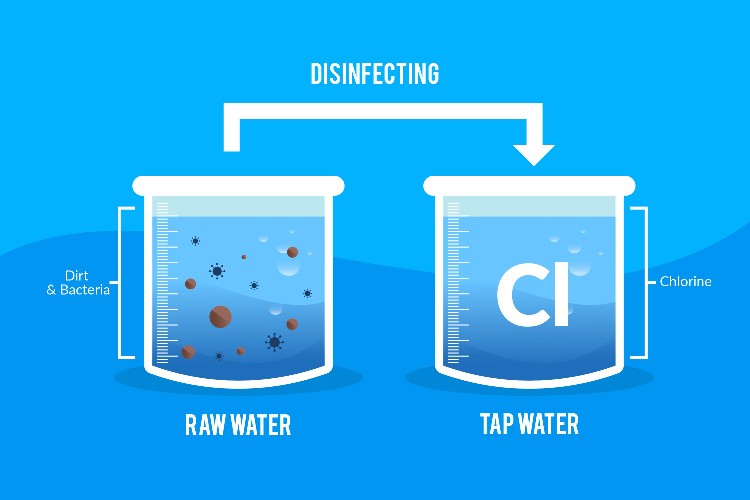
What Is Chlorine and Why Do We Add It?
Chlorine is a powerful chemical disinfectant. It kills bacteria, viruses, and parasites in water. When we add chlorine, we make water safer to drink.
We often use three common forms:
Chlorine gas (Cl₂)
Sodium hypochlorite (NaOCl)
Calcium hypochlorite (Ca(OCl)₂)
Each form releases the same active disinfecting agent. That agent is hypochlorous acid (HOCl), which forms in water.
How Chlorine Works at the Molecular Level
When we add chlorine to water, it reacts quickly. It forms hypochlorous acid and hypochlorite ion (OCl⁻).
HOCl = strong disinfectant
OCl⁻ = weaker but still useful
HOCl penetrates microbial cells. Then it destroys enzymes and proteins. This process stops bacteria from growing.
Why It Remains One of the Best Disinfectants
We still choose chlorine because:
It works fast
It remains in the water
It is cost-effective
It protects long distribution systems
That last point matters a lot. Many disinfectants kill germs but leave no residual protection.
The Process of Water Chlorination
Water chlorination is not random. It follows a controlled and measured process.
Step 1: Adding Chlorine to Raw Water
Operators add chlorine at the treatment plant. They calculate the correct dose based on water quality.
For example:
Clean water may need 1–2 ppm
Dirty water may need 5–10 ppm or more
Step 2: Contact Time Matters
Chlorine needs time to work. We call this “contact time.”
Typical contact time:
20–30 minutes for effective disinfection
During this period, chlorine reacts with contaminants.
Step 3: Residual Chlorine Remains
After treatment, some chlorine remains in the water. This is called residual chlorine.
Typical residual: 0.2–0.5 ppm
Purpose: protect water during distribution
This “remaining in the water” effect prevents contamination in pipes.
Chlorine Dosage and ppm Explained.
Understanding parts per million (ppm) helps us control water quality.
What Does ppm Mean?
ppm means parts per million. It tells us how much chlorine exists in water.
1 ppm = 1 mg of chlorine per liter of water
Typical Chlorine Levels in Water Treatment
Here’s a simple guide:
Drinking water: 0.2–0.5 ppm residual
Shock treatment: up to 10 ppm
Industrial systems: can reach 8000 ppm (concentrated solutions)
That 8000 ppm solution is not for direct drinking. We dilute it before use.
Why Accurate Dosing Matters
Too little chlorine:
Fails to kill pathogens
Too much chlorine:
Affects taste and odor
May create by-products
We always aim for balance.
Forms of Chlorine Used in Water Treatment
Different systems use different chlorine sources.
Chlorine Gas in Large Facilities
Large plants often use chlorine gas. It is efficient but requires careful handling.
Pros:
Strong and effective
Low cost for large volumes
Cons:
Hazardous if leaked
Requires strict safety systems
Sodium Hypochlorite in Modern Systems
Sodium hypochlorite is a liquid form of chlorine. Many facilities prefer it today.
Advantages:
Safer than gas
Easy to store and transport
This is where an On-site Hypochlorite Generator becomes valuable. It produces sodium hypochlorite directly on location.
On-Site Generation for Efficiency
Instead of shipping chemicals, we can generate chlorine on demand.
Benefits include:
Lower transport risks
Fresh solution quality
Reduced chemical storage
We often see concentrations like 0.8% or controlled outputs depending on design.
How Chlorine Protects Drinking Water
Chlorine plays a direct role in public health.
Eliminating Waterborne Diseases
Chlorine kills pathogens that cause:
Cholera
Typhoid
Dysentery
Before chlorination, these diseases spread easily through water.
Maintaining Water Quality in Pipelines
Water travels long distances. Pipes may contain contaminants.
Residual chlorine:
Stops bacterial regrowth
Keeps water safe until it reaches homes
Ensuring Safe Water Supply Nationwide
In the United States, most systems rely on chlorine. It provides a consistent barrier against contamination.
Challenges of Chlorinated Water
Chlorine works well, but it is not perfect.
Taste and Odor Issues
Some people notice a “pool-like” smell. This happens when chlorine reacts with organic matter.
We can reduce this by:
Using activated carbon
Adjusting dosage
Formation of By-Products
Chlorine can form disinfection by-products (DBPs).
Examples:
Trihalomethanes (THMs)
We control these by optimizing treatment conditions.
Handling Large Amounts Safely
Storing large amounts of chlorine requires care.
That’s why many facilities move toward on-site generation. It reduces risks linked to transportation.
Comparing Chlorine with Other Disinfectants
Chlorine is not the only option, but it remains dominant.
Chlorine vs UV Treatment
UV kills microbes quickly. However:
It leaves no residual
It cannot protect pipelines
Chlorine vs Ozone
Ozone is very strong. Yet:
It costs more
It breaks down quickly
Why Chlorine Still Wins
Chlorine offers a balance:
Effective
Affordable
Long-lasting
That’s why we still rely on it worldwide.
Best Practices for Adding Chlorine
We always follow strict guidelines when we treat water.
Key Factors to Consider
Water temperature
pH level (ideal: 6.5–7.5)
Organic content
These factors affect chlorine performance.
Simple Dosage Formula
We often calculate dosage like this:
Dose (mg/L) = Desired ppm × volume
Example:
2 ppm × 1000 L = 2000 mg chlorine
Monitoring and Testing
We use test kits to measure chlorine levels.
Common tools:
Test strips
Digital meters
Regular testing ensures safety and consistency.
Future Trends in Water Chlorination
Water treatment continues to evolve.
Smarter Monitoring Systems
Automation helps us control dosing precisely. Sensors track chlorine levels in real time.
Growth of On-Site Generation
More facilities now adopt on-site systems. They reduce dependency on chemical transport.
Improved Water Quality Standards
Regulations continue to tighten. We must maintain safe levels while minimizing by-products.
Conclusion: Why Chlorine Still Matters
Chlorine has protected public health for over a century. It remains one of the most effective tools in water treatment.
From killing pathogens to maintaining residual protection, it plays many roles. We trust it because it works.
As technology improves, we refine how we use chlorine. But the core idea stays the same: clean water saves lives.
And honestly, every time I drink a glass of tap water, I appreciate the science behind it.