

Inside a Water Treatment Plant
Water is essential for every community and industry. However, natural water sources rarely provide the quality people need directly. Rivers, lakes, and underground sources often contain dirt, bacteria, organic matter, heavy metals, and other contaminants.
So, how does a water treatment plant work? It uses several physical and chemical processes to turn raw water into clean, usable water. Each treatment stage removes a different group of impurities. Together, these processes help plants produce safe and reliable treated water.
At Shandong Shine Health, we understand the importance of reliable water disinfection. We also believe that understanding the complete treatment process helps plant operators choose better equipment. In this guide, we explain the main treatment stages, essential equipment, and the role of on-site sodium hypochlorite generation.
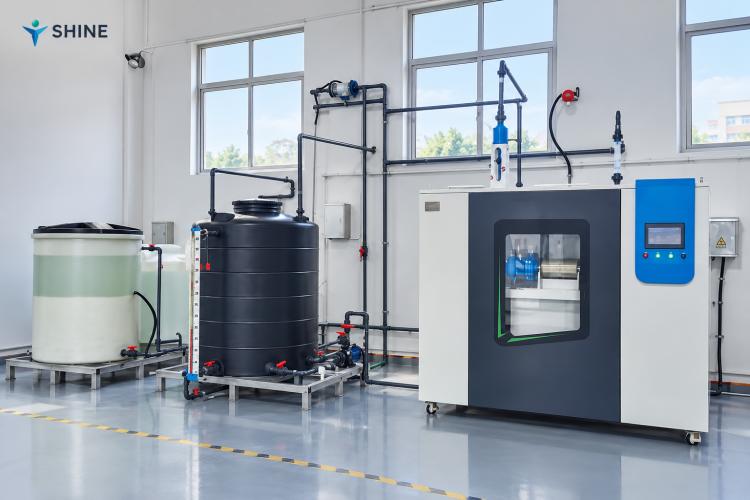
1. What Is a Water Treatment Plant?
A water treatment plant is a facility that removes unwanted substances from raw water. Its main purpose involves improving water quality and making water suitable for a specific use. These uses include drinking, industrial production, agriculture, and other applications.
Different water sources contain different contaminants. For example, river water often contains suspended particles and organic matter. Groundwater may contain dissolved solids, iron, manganese, and heavy metals. Therefore, each facility needs suitable treatment methods.
What Are the Main Goals?
A well-designed water treatment plant usually aims to:
· Remove suspended particles, dirt, and sediment.
· Reduce harmful bacteria, viruses, and other microorganisms.
· Remove or control heavy metals and harmful chemicals.
· Reduce unwanted organic matter.
· Control dissolved solids when necessary.
· Improve water clarity, taste, and odor.
· Maintain stable water quality during distribution.
Not every plant needs every treatment stage. Engineers select suitable water treatment systems according to raw water quality and final water requirements.
2. What Is the Process of a Water Treatment Plant?
The traditional drinking water treatment process follows several main stages. These stages work together to remove physical, chemical, and biological contaminants.
A typical process flow looks like this:
Raw Water → Screening → Coagulation → Flocculation → Sedimentation → Filtration → Disinfection → Storage → Distribution
Some facilities add advanced treatment equipment. These systems may include activated carbon filters, membrane filtration, and ion exchange units.
Step 1: Raw Water Intake and Screening
First, pumps transport raw water from rivers, lakes, reservoirs, or underground sources into the treatment facility.
At the intake point, screening equipment removes large objects. These objects may include leaves, branches, plastic waste, and other debris.
Common equipment includes:
· Bar screens
· Mechanical screens
· Intake pumps
· Raw water pipelines
· Flow meters
This stage protects downstream pumps and equipment. It also reduces the amount of large debris entering the treatment process.
Step 2: Coagulation and Flocculation
Next, the plant removes small suspended particles through coagulation and flocculation.
Many tiny particles carry a negatively charged surface. This electrical charge prevents them from joining together naturally. As a result, ordinary settling cannot effectively remove these particles.
During coagulation, operators add chemicals such as aluminum sulfate or ferric chloride. These chemicals reduce particle repulsion and help small particles combine.
During flocculation, slow mixing encourages particles to form larger groups called flocs. These larger particles settle more easily in the next stage.
Typical equipment includes:
· Chemical dosing pumps
· Rapid mixing tanks
· Flocculation tanks
· Mechanical mixers
· Chemical storage tanks
Correct chemical dosing matters greatly. Too little coagulant may leave particles in the water. Too much can increase operating costs and affect water quality.
Step 3: Sedimentation
After flocculation, water enters a sedimentation tank or clarifier.
Here, gravity separates heavy particles from the water. The larger flocs gradually settle at the bottom and form sludge. Operators then remove this sludge through dedicated collection systems.
Common equipment includes:
· Sedimentation basins
· Clarifiers
· Sludge scrapers
· Sludge pumps
· Sludge collection systems
This stage removes a large amount of suspended solids. It also reduces the workload on downstream filtration systems.
3. Filtration and Advanced Treatment Methods
Sedimentation cannot remove every impurity. Some fine particles, dissolved substances, and organic compounds remain in the water. Therefore, filtration plays an important role in producing higher-quality treated water.
Step 4: Filtration Systems
After sedimentation, water passes through filtration systems. These systems capture remaining suspended particles and other unwanted substances.
Common filtration equipment includes:
· Sand filters
· Multimedia filters
· Activated carbon filters
· Cartridge filters
· Membrane filtration units
Sand and multimedia filters remove fine particles through physical filtration. Activated carbon helps reduce organic matter, unwanted odors, and certain chemical compounds.
For applications requiring higher water purity, membrane filtration offers another option.
Step 5: Advanced Treatment
Some water sources require additional treatment before disinfection. Engineers select advanced treatment methods according to laboratory results and water quality targets.
Two common technologies include:
1. Membrane Filtration
Membrane filtration uses special barriers to separate unwanted substances from water. Different membrane types remove different particle sizes and dissolved substances.
Common membrane technologies include:
· Microfiltration (MF)
· Ultrafiltration (UF)
· Nanofiltration (NF)
· Reverse osmosis (RO)
Reverse osmosis can remove many dissolved salts and other small contaminants. It works well when plants need to reduce dissolved solids.
2. Ion Exchange
Ion exchange uses special resin materials to exchange unwanted ions with other ions. This method can remove selected dissolved substances, including certain heavy metals.
For example, some ion exchange systems target calcium, magnesium, or specific metal ions. However, operators must select suitable resins for each application.
These advanced treatment methods do not replace every conventional stage. Instead, they provide additional treatment when raw water contains specific contaminants.
4. Disinfection: The Final Barrier Against Bacteria
Filtration removes many physical impurities, but harmful microorganisms may still remain. Disinfection provides another important barrier before water enters the distribution network.
Step 6: Water Disinfection
Disinfection aims to kill or inactivate harmful bacteria, viruses, and other microorganisms. Treatment plants commonly use chlorine, sodium hypochlorite, chlorine dioxide, ozone, or ultraviolet light.
Each method has different operating features. For example, UV treatment uses ultraviolet energy to inactivate microorganisms. However, UV does not provide a lasting disinfectant residual in distribution pipelines.
Chlorine-based disinfection offers an important advantage. It can maintain a disinfectant residual as water travels through storage tanks and distribution networks.
Common disinfection equipment includes:
· Chemical dosing pumps
· Disinfectant storage tanks
· Static mixers
· Contact tanks
· Residual chlorine analyzers
· Automatic dosing control systems
Why Choose an On-site Sodium Hypochlorite Generator?
An On-site Sodium Hypochlorite Generator produces sodium hypochlorite solution directly at the water treatment facility.
Instead of relying entirely on delivered disinfectant, operators can generate the required solution using salt, water, and electricity. The system then supplies sodium hypochlorite to the plant's dosing equipment.
For municipal and industrial water treatment plants, this approach offers several practical advantages:
· On-site production: Generate disinfectant close to the dosing point.
· Reduced transportation: Reduce dependence on delivered sodium hypochlorite.
· Lower storage risks: Reduce the need to store large quantities of commercial disinfectant.
· Flexible operation: Adjust production according to actual chlorine demand.
· Reliable supply: Support continuous disinfection operations.
At Shandong Shine Health, we manufacture on-site sodium hypochlorite generation systems for water treatment applications.
Our systems use electrolytic technology to produce sodium hypochlorite at a nominal concentration of 0.8% (8,000 ppm). We also provide customized production capacities according to project requirements.
For water treatment plants, reliable disinfection depends on more than the generator itself. Operators must also consider dosing accuracy, chlorine demand, contact time, water quality, and residual monitoring.
5. Storage and Water Distribution
After treatment and disinfection, water enters a clean water storage tank. This tank provides a stable supply for downstream distribution.
Before distribution, operators monitor several important water quality parameters.
These commonly include:
· Turbidity
· pH value
· Free chlorine residual
· Microbiological indicators
· Dissolved solids
· Other regulated chemical parameters
Once the water meets applicable quality standards, distribution pumps send it through pipelines to consumers.
Storage tanks also help balance differences between water production and daily demand. This function becomes especially important during peak consumption periods.
6. Major Equipment in a Water Treatment Plant
Every treatment stage requires suitable equipment. The equipment arrangement depends on plant capacity, raw water quality, and treatment targets.
Here is a simple overview of the major equipment and its functions.
Treatment Stage | Main Equipment | Primary Function |
Intake | Screens, pumps | Remove large debris and transport water |
Coagulation | Dosing pumps, mixers | Help particles combine |
Flocculation | Flocculation tanks, mixers | Form larger flocs |
Sedimentation | Clarifiers, sludge scrapers | Separate settled particles |
Filtration | Sand, carbon, membrane filters | Remove remaining impurities |
Advanced Treatment | RO, ion exchange | Remove selected dissolved substances |
Disinfection | Chlorine dosing systems, UV | Control harmful microorganisms |
Storage | Clear water tanks | Store treated water |
Distribution | Pumps, pipelines | Deliver water to users |
Automation also plays an important role. Modern plants use PLC control systems, online sensors, and monitoring software. These tools help operators control chemical dosing, water flow, pressure, and equipment performance.
7. How to Improve Water Treatment Plant Efficiency
A water treatment plant must do more than remove contaminants. It must also maintain stable performance and control operating costs.
From our industry experience, several factors deserve special attention.
Understand Raw Water Quality
First, operators should regularly test their raw water. Important parameters include turbidity, pH, hardness, dissolved solids, organic matter, and microbial levels.
These results help engineers select suitable treatment methods. They also prevent unnecessary chemical consumption and equipment investment.
Optimize Chemical Dosing
Chemical dosing directly affects treatment performance. Automatic dosing systems can adjust chemical feed according to water flow and quality measurements.
For example, chlorine dosing should respond to actual chlorine demand. Operators must also monitor contact time and residual chlorine levels.
Maintain Equipment Regularly
Pumps, valves, filters, membranes, and dosing systems need regular maintenance. Filter backwashing also helps maintain filtration performance.
Meanwhile, operators should inspect electrolytic cells, salt supply systems, and hydrogen removal equipment in on-site generation systems.
Small maintenance tasks can prevent expensive production interruptions.
Conclusion
A water treatment plant uses several connected processes to turn raw water into clean and usable water. Screening, coagulation, flocculation, sedimentation, filtration, and disinfection each perform an important function.
However, no single treatment process works for every water source. Engineers must select suitable equipment according to water quality, treatment capacity, and final application requirements.
Disinfection remains one of the most important stages. An On-site Sodium Hypochlorite Generator can help water treatment facilities maintain a reliable disinfectant supply while reducing dependence on delivered chemicals.
At Shandong Shine Health, we focus on developing practical sodium hypochlorite generation solutions for water treatment plants. We believe that reliable equipment, proper process design, and effective operation create better long-term results.
Need an on-site sodium hypochlorite generation solution for your water treatment project? Contact Shandong Shine Health to discuss your capacity and technical requirements.