

Natural Disinfectant for Food
Food safety matters to every family. We all want clean fruits, fresh vegetables, and safe meals. However, many people worry about germs on food. They also dislike strong chemical cleaners.
That is why more businesses now use Natural Disinfectant for Food solutions. One popular option is hypochlorous acid hocl. It kills germs fast while staying gentle on food surfaces.
The best part is simple. This disinfectant starts from salt water.
Why Food Needs Disinfection
Food travels through many places before reaching our homes. Farmers harvest crops outdoors. Workers pack food in factories. Trucks move products across long distances.
During this process, bacteria can spread easily. Germs may grow on fruits, vegetables, seafood, and kitchen tools.
Good food cleaning helps reduce risks such as:
Bacteria
Mold
Bad smells
Cross contamination
Food spoilage
People now want safer cleaning methods. They want strong cleaning without harsh chemicals.
Problems With Strong Chemical Cleaners
Some disinfectants smell very strong. Others may irritate skin or eyes. Certain products also leave chemical residue behind.
Nobody wants apples that smell like bleach.
Many traditional cleaners may cause:
Strong odors
Skin discomfort
Surface damage
Chemical residue
Environmental problems
Today, consumers prefer safer products for disinfection purposes.
What Is Hypochlorous Acid HOCl?
Hypochlorous acid HOCl is a gentle disinfectant. Our own immune system makes it naturally to fight germs.
Scientists learned how to produce it safely using:
Salt water
Electricity
Simple electrolysis technology
This process creates a powerful cleaner that works very fast.
Many industries now use hypochlorous acid hocl because it helps with:
Killing germs
Food sanitation
Surface cleaning
Odor control
Water treatment
Why HOCl Works Well
HOCl attacks bacteria quickly. It breaks down harmful microorganisms in seconds.
At the same time, it stays gentle on many food surfaces.
Around 50 PPM, the solution works especially well for food cleaning.
Benefits include:
Fast action
Mild smell
No sticky residue
Safer handling
Easy daily use
That balance makes HOCl popular worldwide.
How Food Disinfection Works
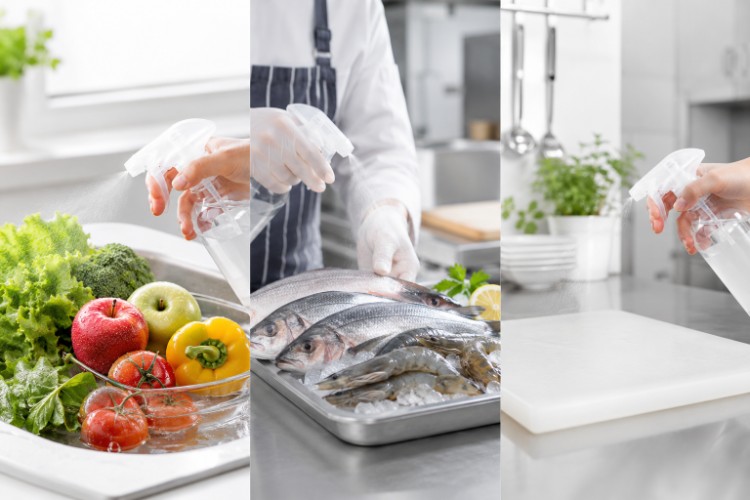
Food disinfection is simple. Workers spray or rinse food using diluted HOCl solution.
Many homes also use a spray bottle for daily cleaning.
Common food applications include:
Vegetables | 30-50 PPM |
Fruits | 40-50 PPM |
Seafood | 50 PPM |
Kitchen tools | 100 PPM |
Most users spray the surface first. Then they wait about one minute before rinsing lightly.
Why 50 PPM Is Popular
The 50 PPM level gives strong cleaning without damaging food.
Food companies choose this level because it helps:
Reduce bacteria
Keep food fresh
Lower food waste
Improve food safety
Maintain better quality
Many restaurants use this concentration every day.
Uses In The Food Industry
Today, many food businesses use hypochlorous acid hocl.
Fruit And Vegetable Cleaning
Fresh produce can carry bacteria from farms and transportation.
HOCl helps clean:
Lettuce
Tomatoes
Apples
Spinach
Berries
Workers also notice that produce often looks fresher after cleaning.
Seafood Processing
Seafood needs careful sanitation because it spoils quickly.
HOCl helps with:
Fish washing
Ice sanitation
Table cleaning
Storage room cleaning
It also helps reduce bad odors in work areas.
Restaurant Kitchens
Busy kitchens need fast cleaning during food preparation.
Kitchen workers often use a spray bottle filled with diluted HOCl solution.
This helps clean:
Counters
Cutting boards
Knives
Sinks
Food contact surfaces
The process saves time and improves safety.
How An HOCl Generator Works
An HOCl Generator creates disinfectant onsite. The machine mainly uses salt water and electricity.
The process is simple:
Add water and salt
Start electrolysis
Produce hypochlorous acid
Store the solution
Use immediately
This system avoids transporting large amounts of dangerous chemicals.
Benefits Of Onsite Generation
Many businesses now prefer onsite production because it offers:
Lower storage risks
Fresh solution every day
Reduced chemical handling
Lower transportation costs
Better environmental support
The system also stays easy to operate.
Why Consumers Prefer Natural Solutions
People care more about health today. They read food labels carefully. They also ask more questions about cleaning products.
Consumers often prefer products that feel:
Natural
Safe
Gentle
Clean
Environmentally friendly
That is why Natural Disinfectant for Food products continue growing in popularity.
Parents especially like safer cleaning around children and pets.
Food Safety Builds Trust
Food is emotional. Families gather around meals every day. Safe food creates peace of mind.
When people hear words like:
Gentle
Non-toxic
Natural
Safe
They feel more confident about food cleaning methods.
Choosing The Right System
Different businesses need different equipment. Small kitchens need smaller systems. Large factories need higher output.
Before choosing equipment, companies should check:
Water quality
Daily usage
Needed PPM level
Maintenance requirements
Production capacity
Reliable systems keep concentration stable during operation.
Important Features
Good systems should provide:
Easy operation
Stable output
Low maintenance
Durable parts
Adjustable concentration
These features help improve long-term performance.
The Future Of Food Disinfection
Food safety standards continue rising around the world. Consumers now expect safer and cleaner food production.
Hypochlorous acid already supports:
Farms
Restaurants
Food factories
Supermarkets
Home kitchens
Its popularity will likely continue growing.
People want safer cleaning without harsh chemicals. HOCl helps solve that problem.
Final Thoughts
Natural food cleaning has become very important today. Hypochlorous acid hocl offers strong killing germs performance while staying gentle on food.
At around 50 PPM, the solution helps clean fruits, vegetables, seafood, and kitchen surfaces safely.
Because it starts from salt water, it also supports greener cleaning practices.
For many businesses, HOCl technology provides a smart balance between safety, simplicity, and performance.