

On-Site vs Bulk Hypochlorite Costs
When we evaluate disinfection systems, chemical supply often becomes a major operating issue. A treatment plant can buy sodium hypochlorite solution in bulk. It can also produce sodium hypochlorite on site. Both options can support reliable drinking water disinfection.
However, they create very different demands for transport, storage, handling, and plant operations. Our view is simple: the right choice depends on plant size, chemical demand, site conditions, and local supply costs.
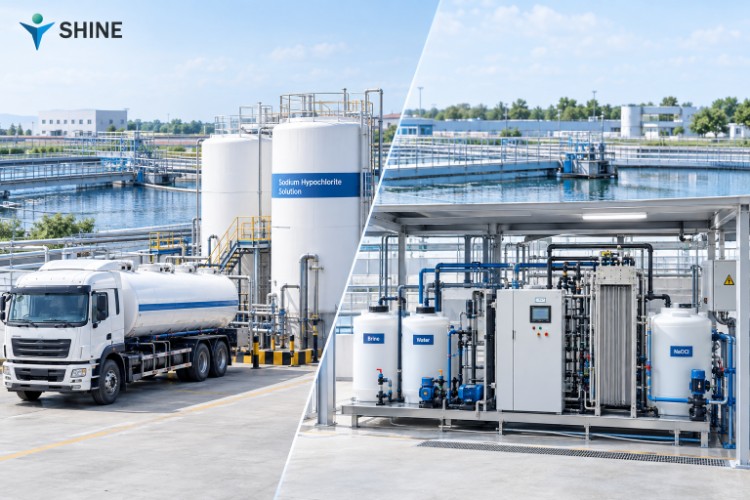
How the Two Supply Methods Work
Bulk chemical delivery
Bulk supply brings ready-made sodium hypochlorite (NaOCl) to the site by truck. Treatment facilities then transfer the chemical into storage tanks. Metering pumps feed the solution into the disinfection process.
This method looks simple. However, long transport distances can increase cost. EPA notes that transportation limits the practical distribution range of sodium hypochlorite.
Site generation
A Sodium Hypochlorite Generation System uses salt water, treated water, and electricity. An electrolytic cell converts brine into sodium hypochlorite. The system then sends the product to a storage tank or dosing point.
This approach reduces dependence on regular bulk chemical deliveries. EPA describes this process as onsite brine electrolysis for water treatment facilities.
Where the Cost Difference Comes From
Chemical and transport costs
Bulk chemical pricing includes more than the chemical itself. Plants also pay for transportation, delivery scheduling, unloading, and storage equipment.
With site generation, the main consumables become salt, water, and electricity. Therefore, we usually examine these costs together rather than comparing chemical prices alone.
Key cost items include:
Salt consumption
Electricity consumption
Water consumption
Delivery frequency
Chemical transport distance
Storage tank size
Metering equipment
Maintenance and labor
Storage losses matter
Concentrated sodium hypochlorite can lose strength during storage. Temperature, light, concentration, impurities, and storage time all affect stability. EPA reports that proper storage can still limit shelf life to roughly one month under suitable conditions.
That matters because weaker chemical changes the actual dosing requirement. In other words, a cheap chemical delivery does not always mean a cheap disinfection process.
Safety and Chemical Handling
Bulk storage needs control
Sodium hypochlorite is a hazardous material that requires controlled storage and handling. It is corrosive and needs compatible tanks, pumps, pipes, and safety procedures.
Operators also need to prevent contact with incompatible chemicals. Certain mixtures can release chlorine gas and other hazardous gases.
Site generation changes the risk profile
A hypochlorite generation system still requires proper engineering and safety controls. The system produces chemical close to the point of use. This can reduce the need for frequent delivery of concentrated bulk chemical.
Modern systems also manage hydrogen generated during electrolysis. Proper ventilation, gas detection, electrical protection, and control systems remain important.
Storage and Plant Operations
Smaller chemical inventories
Bulk delivery often requires larger storage tanks to maintain supply between deliveries. A plant must also consider delivery delays, seasonal demand, and emergency supply.
Site generation can reduce this inventory. We can design production around actual demand. This can make daily plant operations more predictable.
Stable disinfection supply
Water quality can change throughout the year. Operators may need different dosing rates during storms, seasonal changes, or raw-water quality events.
A sodium hypochlorite system can adjust production and dosing according to plant demand. This flexibility can support more responsive disinfection processes.
How to Compare Systems Fairly
Use the total cost
We recommend using a simple lifecycle calculation:
Total Cost = Chemical + Transport + Storage + Energy + Water + Maintenance + Labor
For a sodium hypochlorite chemical feed system, include tank replacement, pump maintenance, chemical degradation, and delivery charges.
For an onsite system, include the generator, salt water, electricity, maintenance, and spare parts. This gives plant managers a clearer picture than chemical price alone.
Match production to demand
A site sodium hypochlorite generator should match the plant's actual chlorine demand. Important parameters include:
Available chlorine: g/h or kg/h
Product concentration: g/L
Salt consumption: kg/day
Power demand: kW
Water demand: L/h
Storage volume: L
Dosing flow: L/h
This approach helps us avoid oversizing the equipment.
Choosing the Right Supply Model
When bulk supply may fit
Bulk delivery may suit plants with reliable suppliers, short delivery routes, and existing chemical storage. It can also fit sites that already have suitable tanks and chemical feed equipment.
When site generation may fit
Sodium hypochlorite generating equipment can make more sense when transport costs are high or deliveries are difficult. It can also suit treatment plants that want greater control over chemical production.
Our Sodium Hypochlorite Generation System focuses on producing disinfectant close to where the plant uses it. The system can support drinking water treatment while reducing dependence on bulk chemical logistics.
For buyers researching terms such as osec sodium hypochlorite generation system, ClorTec onsite sodium hypochlorite generation system, or other hypochlorite generation technologies, the key questions remain the same: capacity, concentration, energy use, salt use, safety, and lifecycle cost.
Final Thoughts
Bulk chemical delivery and site generation can both support effective water treatment. The main difference lies in the supply chain around the disinfectant.
Bulk delivery depends on transportation, chemical storage, and regular replenishment. Onsite generation uses an electrolytic cell to produce sodium hypochlorite from salt and water at the treatment site.
For us, the best evaluation starts with real operating data. Plant demand, delivery distance, storage needs, electricity prices, and local water quality should guide the final system design.