

UV vs Chlorine: Which Is Better?
Clean water requires more than good filtration. It also needs reliable disinfection. Water treatment plants must control harmful microorganisms before water reaches consumers. Two common methods are ultraviolet (UV) light and chlorine disinfection.
But which method works better? The answer depends on water quality, treatment goals, operating costs, and the distribution system. UV light offers fast microbial inactivation without adding chemicals. Chlorine provides a residual disinfectant that protects water after treatment. Both methods have clear advantages, and each has limitations.
At Shandong Shine Health, we believe water treatment plants should choose disinfection systems based on actual operating needs. In this guide, we compare both methods and explain when an On-site Sodium Hypochlorite Generator makes practical sense.
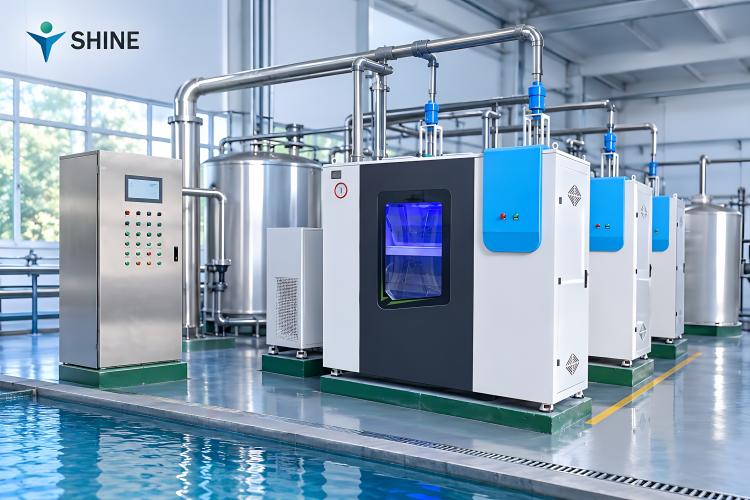
1. What Is UV Treatment of Water?
To understand UV vs chlorine disinfection, we first need to understand how each method works. UV treatment uses ultraviolet UV light to inactivate harmful microorganisms in water. The system usually uses UV-C radiation, which damages the DNA or RNA of bacteria, viruses, and other pathogens. These microorganisms then lose their ability to reproduce and cause infections.
How Does UV Disinfection Work?
A typical UV disinfection system contains several key components:
· UV lamps: Produce ultraviolet light for microbial inactivation.
· Quartz sleeves: Protect the lamps from direct water contact while allowing UV light to pass.
· UV reactor: Provides a controlled space for water exposure.
· Sensors: Monitor UV intensity and system performance.
· Control panel: Tracks operating conditions and triggers alarms.
During operation, water flows through the UV reactor. The lamps expose microorganisms to ultraviolet radiation. The UV dose depends on light intensity and exposure time.
We usually express UV dose in mJ/cm². Many drinking water systems use a validated target of 40 mJ/cm², although local requirements and treatment goals vary.
What Affects UV Disinfection Performance?
UV treatment needs suitable water quality to achieve effective disinfection. Several factors can reduce its performance:
1. High turbidity and suspended particles can shield microorganisms.
2. Organic matter can absorb UV light.
3. Dirty quartz sleeves can reduce light transmission.
4. Excessive flow rates can shorten exposure time.
5. Low UV intensity can reduce the delivered dose.
Therefore, we recommend installing proper filtration before UV treatment when raw water contains suspended solids. Operators should also clean quartz sleeves and monitor UV intensity regularly.
2. How Does Chlorine Disinfection Work?
Chlorine disinfection uses chlorine-based chemicals to control harmful microorganisms. Water treatment plants commonly use chlorine gas, calcium hypochlorite, or sodium hypochlorite. These chemicals release active chlorine into water and support effective disinfection.
When sodium hypochlorite enters water, it forms hypochlorous acid (HOCl) and hypochlorite ions (OCl⁻). HOCl plays an important role in microbial inactivation. Its effectiveness depends on factors such as pH, temperature, chlorine concentration, and contact time.
The Role of Residual Disinfectant
Here is one major difference between UV and chlorine. Chlorine can leave a residual disinfectant in treated water. This residual helps protect the water supply during storage and distribution.
For example, treated water may enter a storage tank before reaching residential users. Chlorine residual helps control microbial regrowth and contamination within the distribution network. UV treatment cannot provide this continuing protection.
The World Health Organization recommends maintaining at least 0.5 mg/L free chlorine after 30 minutes of contact at pH below 8.0 for effective disinfection. It also recommends a minimum residual of 0.2 mg/L at the delivery point. Operators must follow applicable local standards.
What Is an On-site Sodium Hypochlorite Generator?
An On-site Sodium Hypochlorite Generator produces sodium hypochlorite directly at the treatment facility. Instead of transporting large quantities of ready-made chemicals, operators use salt, water, and electricity to produce disinfectant.
A typical system includes:
· Salt dissolving and brine preparation equipment.
· An electrolytic cell.
· Rectifier and electrical control components.
· Hydrogen separation and ventilation equipment.
· Product storage tanks.
· Automatic dosing pumps.
Shandong Shine Health specializes in on-site sodium hypochlorite generation equipment. Our approach focuses on reliable production, controlled concentration, and convenient chemical dosing. For water treatment plants, on-site generation can reduce dependence on external chemical deliveries and simplify supply planning.
3. UV vs Chlorine Disinfection: Key Differences
Both methods can support safe water treatment. However, they work differently and solve different problems. The following table highlights their main differences.
Comparison | UV disinfection | Chlorine disinfection |
Working principle | UV radiation damages microbial DNA/RNA | Chemical oxidation and inactivation |
Chemical addition | Not required | Required |
Residual protection | No | Yes |
Bacteria control | Effective with a suitable UV dose | Effective with suitable chlorine CT |
Virus control | Depends on UV dose and virus type | Depends on chlorine concentration and contact time |
Protozoa control | Effective against many UV-sensitive protozoa | Limited against some resistant protozoa |
Water quality | Sensitive to turbidity and UV transmittance | Affected by pH and chlorine demand |
Storage protection | No residual protection | Residual can protect stored water |
Main maintenance | Lamp replacement and sleeve cleaning | Chemical supply, dosing, and residual monitoring |
Main operating costs | Electricity and equipment maintenance | Chemicals, electricity, dosing, and storage |
Which Method Provides Better Protection?
UV works especially well against chlorine-resistant protozoa, including Cryptosporidium and Giardia. Chlorine provides broader system protection through its residual effect. However, some microorganisms require higher doses or longer contact times.
Neither method solves every disinfection problem. We believe operators should evaluate the complete water treatment process rather than focus on one technology.
4. UV Disinfection Water Treatment Cost vs Chlorination
Cost plays an important role when selecting disinfection systems. However, the cheapest equipment does not always deliver the lowest long-term operating cost.
The UV disinfection water treatment cost depends on treatment capacity, lamp power, water quality, and system design. Chlorination costs depend on chemical prices, transportation, storage, dosing equipment, and safety requirements.
Main UV Operating Costs
A UV system requires an initial equipment investment and regular maintenance. Its main operating expenses include:
· Electricity consumption for UV lamps.
· Periodic lamp replacement.
· Quartz sleeve cleaning and replacement.
· Sensor inspection and calibration.
· Preventive maintenance and spare parts.
High turbidity may also increase pretreatment costs. Therefore, operators should evaluate filtration and UV treatment together.
Main Chlorination Operating Costs
Chlorination requires continuous chemical management. Its expenses may include:
· Sodium hypochlorite or other chlorine chemicals.
· Chemical transportation and storage.
· Dosing pumps and control equipment.
· Storage tank inspection and cleaning.
· Residual chlorine testing.
· Staff training and safety management.
An On-site Sodium Hypochlorite Generator offers another approach. It produces disinfectant near the dosing point and reduces reliance on purchased liquid chemicals.
We recommend comparing the total cost over 5–10 years. Include equipment investment, energy, chemicals, maintenance, labor, and replacement parts. This approach provides a more realistic view of cost effectiveness.
5. Can UV and Chlorine Work Together?
Absolutely. In many drinking water treatment applications, combining UV and chlorine provides a practical solution.
UV handles primary disinfection, while chlorine maintains residual protection. This combination also helps plants control chlorine-resistant microorganisms without relying entirely on chemical treatment.
A Typical Combined Treatment Process
Example drinking water treatment flow
Raw Water
Source water enters the treatment plant
Water Filtration System
Removes suspended solids and reduces turbidity
UV Disinfection
Inactivates microorganisms using UV light
Chlorine Dosing
Adds a residual disinfectant for continued protection
Storage Tank and Distribution
Maintains water quality throughout the supply network
This arrangement allows each technology to perform its strongest role. However, engineers must determine the correct treatment sequence and dosing conditions for each project. They should also consider UV compatibility, chlorine demand, and disinfection by-product formation.
Why Do Water Plants Choose This Combination?
We see several practical reasons:
1. UV reduces dependence on chlorine for primary microbial inactivation.
2. Chlorine provides residual protection after treatment.
3. UV helps control certain chlorine-resistant pathogens.
4. Automatic dosing improves operational control.
5. On-site generation supports a more stable disinfectant supply.
For larger water treatment facilities, this combination can offer a balanced disinfection strategy.
6. Which Disinfection Method Should You Choose?
There is no universal winner. The right choice depends on your water source, treatment capacity, distribution distance, and operating budget.
We suggest considering the following situations:
Application | Recommended approach |
Small private water systems | UV or chlorine, depending on local requirements |
Municipal drinking water | UV combined with chlorine when appropriate |
Long distribution networks | Chlorination for residual protection |
Water with chlorine-resistant protozoa | UV as part of a multi-barrier process |
Industrial process water | Choose according to water quality and process needs |
Water with high turbidity | Improve filtration before UV treatment |
Facilities with chemical supply concerns | Consider on-site sodium hypochlorite generation |
Questions to Ask Before Buying
Before selecting disinfection systems, we recommend checking these parameters:
· Water capacity: How many m³/h must the system treat?
· Water quality: What are the turbidity, pH, and organic matter levels?
· UV performance: Can the equipment maintain the required UV dose?
· Chlorine demand: How much active chlorine does the water consume?
· Storage: Does the facility need residual protection inside a storage tank?
· Operating budget: What are the expected costs over five years?
· Automation: Does the project require automatic monitoring and dosing?
These details help engineers select equipment with suitable capacity. They also prevent unnecessary investment and operating problems.
7. Final Thoughts: Choose the Right Technology
UV and chlorine both play important roles in modern water treatment. UV offers chemical-free microbial inactivation at the treatment point. Chlorine provides a valuable residual that protects water during storage and distribution.
For many municipal water projects, combining both methods offers a sensible approach. A UV disinfection system handles primary treatment, while sodium hypochlorite supports residual disinfection.
At Shandong Shine Health, we focus on practical on-site sodium hypochlorite generation solutions. Our systems help water treatment plants produce disinfectant when and where they need it. This approach supports controlled dosing, reliable chemical supply, and more flexible plant operation.
Choosing a disinfection system is not simply about UV versus chlorine. It is about protecting water quality from the treatment plant to the final user.
If your project needs reliable chlorine production, contact Shandong Shine Health to discuss your water treatment requirements.
Frequently Asked Questions
1. What is UV treatment of water?
UV treatment exposes flowing water to ultraviolet light. The radiation damages microbial genetic material and prevents microorganisms from reproducing. It does not add a chemical disinfectant or provide residual protection.
2. Is UV disinfection better than chlorine?
UV works well against many microorganisms, including chlorine-resistant protozoa. Chlorine offers continued protection through residual disinfectant. The better option depends on the water source and treatment requirements.
3. How much does a UV disinfection system cost?
The price depends on treatment capacity, UV lamp power, reactor design, and water quality. Long-term expenses also include electricity, cleaning, lamp replacement, and maintenance.
4. Do UV lamps need regular replacement?
Yes. UV lamps gradually lose output during operation. Operators should follow manufacturer replacement schedules and monitor UV intensity to maintain the required dose.
5. Can I use UV and sodium hypochlorite together?
Yes. Many treatment plants use UV for primary disinfection and sodium hypochlorite for residual protection. Engineers should determine the correct process sequence and dosing requirements.
6. Are Pelican UV water treatment and disinfection systems suitable for drinking water?
The suitability of any UV product depends on its certified performance, rated flow rate, UV dose, and local drinking water requirements. Searches such as "pelican water uv water treatment and disinfection" and "uv disinfection water treatment Flemington" often reflect specific product and local service needs. Buyers should check the exact model and installation conditions.