

What is Coagulation in Water Treatment
Clean water rarely comes from one treatment step. In most plants, several processes work together to turn raw water into safe, usable water. Coagulation often starts that journey by helping tiny particles join together.
So, what is coagulation in water treatment? In simple terms, we add a chemical that changes how small particles behave. The chemical helps those particles stop repelling each other and form larger groups. We can then remove those groups through flocculation, sedimentation, and filtration.
As a manufacturer of water disinfection equipment, we see coagulation as an important part of the larger water treatment process. Our Sodium Hypochlorite Generator normally supports the later disinfection stage. Coagulation handles particles first, while disinfection targets microorganisms later.
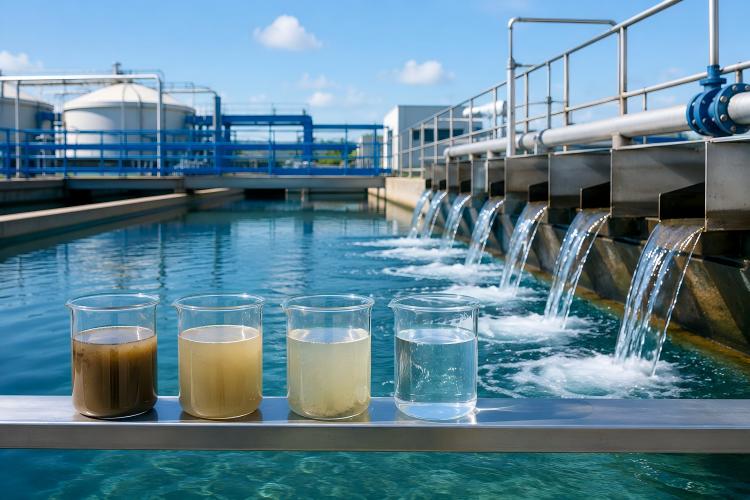
Why Coagulation Matters in Water Treatment
Raw water can contain clay, silt, algae, bacteria, color, and organic compounds. Many of these materials remain too small for ordinary settling. Some particles also carry an electrical charge that keeps them apart.
The problem with suspended particles
Many suspended particles carry a negative surface charge. Since similar charges repel each other, the particles remain dispersed in water. They can stay suspended for hours or even days.
This behavior creates a major challenge for water treatment plants. A normal settling tank cannot easily remove very small particles. Filtration also becomes harder when the incoming water carries a heavy particle load.
Coagulation solves part of this problem by making the particles easier to collect. The goal involves more than simply making water look clearer. Good coagulation can improve downstream filtration and overall water quality.
Coagulation versus simple settling
Imagine trying to collect a handful of flour floating in a bathtub. Waiting for it to sink would test anyone's patience. Water treatment faces a similar problem with tiny colloidal particles.
During coagulation, we add a chemical that carries a positively charged form. This chemical neutralizes the negative charge around colloidal particles. Once the repulsion decreases, the particles can approach one another.
The process does not remove every contaminant. Instead, it prepares many contaminants for the next treatment steps. That distinction matters when we design a complete treatment system.
How the Coagulation Process Works
The coagulation process usually begins when operators add a coagulant to raw water. Rapid mixing then spreads the chemical through the water. The chemical interacts with particles and destabilizes them.
Charge neutralization and zeta potential
One useful concept here is zeta potential. It describes the electrical behavior near the surface of suspended particles. A high negative zeta potential often indicates strong repulsion between particles.
A suitable coagulant reduces this repulsion. In practical terms, the particles become less stable in suspension. They can then collide and attach more easily.
Operators do not simply chase one magic number. Raw water changes throughout the year, so the best chemical dose can also change. Temperature, turbidity, pH, alkalinity, and organic matter all influence performance.
Rapid mixing starts the reaction
Operators usually add the coagulant during rapid mixing. This stage needs strong and controlled agitation. The goal involves fast chemical distribution rather than large floc formation.
Typical coagulation contact times can range from seconds to less than a minute. Actual values depend on plant design and water chemistry. EPA material describes rapid coagulation and sweep floc formation in roughly 0.5–30 seconds.
The next stage uses gentler mixing. That stage allows destabilized particles to form larger flocs. Therefore, coagulation and flocculation work together, but they are not identical processes.
Common Types of Coagulants
Different raw water sources need different chemicals. Operators normally select among several types of coagulants. The choice depends on water chemistry, treatment goals, cost, and local operating conditions.
Aluminum sulfate and ferric chloride
Two familiar options include aluminum sulfate or ferric chloride. Aluminum sulfate, often called aluminum sulfate alum, has a long history in drinking water treatment. Ferric chloride also provides strong coagulation performance across many applications.
Other common choices include:
Aluminum chloride
Ferric sulfate
Polyaluminum chloride (PACl)
Organic polymers
Blended coagulant products
Aluminum and iron salts form positively charged hydrolysis products in water. These products help destabilize colloidal particles. They can also form metal hydroxide flocs that trap particles as they grow.
The best choice depends on the raw water. We should never select a chemical from a brochure alone. Real water chemistry should guide the decision.
Coagulant selection needs testing
A chemical that performs well at one plant may perform poorly at another. Even the same river can behave differently after heavy rain. That is why experienced operators rely on testing rather than guesswork.
Important factors include:
Raw water turbidity
pH and alkalinity
Temperature
Color
Suspended solids
Natural organic matter
Coagulant dose
Mixing conditions
Settling behavior
Good testing can prevent both underdosing and overdosing. Too little chemical may leave particles unstable. Too much can increase chemical costs and create unnecessary sludge.
Jar Testing Finds the Right Dose
Jar testing gives operators a practical way to compare coagulants and doses. It uses several containers of the same raw water. Each container receives a different chemical dose or treatment condition.
A simple jar testing sequence
A typical test may follow these steps:
Collect a representative raw water sample.
Fill several test jars with equal volumes.
Add different coagulant doses.
Apply rapid mixing.
Reduce the mixing speed.
Allow flocs to develop.
Let the water settle.
Compare turbidity and other indicators.
Operators may measure turbidity, pH, color, and settled water appearance. They can then compare results and select a practical operating range.
EPA guidance also recommends jar tests when operators evaluate coagulant doses.
In our view, jar testing acts like a small laboratory version of the treatment plant. It lets operators make decisions before changing full-scale equipment. That can save chemicals, time, and plenty of headaches.
What Coagulation Can Remove
Coagulation works best against particles that can destabilize and attach to flocs. These include many colloids, suspended materials, and some forms of natural organic matter.
Natural organic matter and organic compounds
Natural organic matter NOM occurs naturally in rivers, lakes, soil, and other water sources. It can contribute to color, taste, and odor. NOM can also affect chemical demand during later treatment.
Research reviewed by the EPA shows that coagulation can remove significant portions of NOM, especially some hydrophobic and higher-molecular-weight fractions.
However, coagulation does not remove every dissolved organic compound. Some contaminants need activated carbon, membranes, oxidation, or another specialized process. We should always match the treatment method with the contaminant.
Coagulation can also help reduce the load on downstream filters. This benefit becomes important when raw water contains high turbidity. Better particle removal upstream can make later filtration more manageable.
Where Coagulation Fits in the Treatment System
Coagulation normally sits near the front of a conventional drinking water process. The exact layout depends on the source water and treatment goals.
From raw water to disinfection
A common sequence looks like this:
Raw Water → Coagulation → Flocculation → Sedimentation → Filtration → Disinfection
The CDC describes coagulation, flocculation, sedimentation, filtration, and disinfection as common treatment steps.
Each stage has a different job. Coagulation destabilizes small particles. Flocculation grows larger flocs. Sedimentation removes settled solids. Filtration catches remaining particles, while disinfection controls microorganisms.
Our Sodium Hypochlorite Generator fits into the disinfection side of this chain. It generates sodium hypochlorite for controlled chlorine dosing. Therefore, coagulation and chlorination should not compete with each other. They solve different problems.
Why the whole system matters
A strong water treatment system needs balance. Excellent coagulation cannot replace proper disinfection. Likewise, strong chlorination cannot compensate for poor particle removal.
Good particle removal can also support disinfection performance. When water carries fewer particles and organic materials, downstream treatment can operate under more stable conditions. EPA research continues to examine how contaminant removal and treatment processes affect drinking water quality and disinfection byproducts.
For us, this is one of the most important lessons. Water treatment works best as a connected system, not as a collection of isolated machines.
Key Parameters Operators Should Watch
Coagulation looks simple from a distance. In practice, several parameters control its performance.
Practical operating checklist
Operators should regularly monitor:
pH: Coagulants perform differently at different pH levels.
Alkalinity: Metal salts can consume alkalinity during hydrolysis.
Turbidity: High turbidity may require process adjustment.
Temperature: Cold water can slow floc formation.
Coagulant dose: Small changes can affect removal efficiency.
Mixing intensity: Rapid mixing should distribute chemicals quickly.
Floc size: Larger, stronger flocs generally settle more easily.
Settling time: Operators need enough time for separation.
Zeta potential: It can help evaluate particle destabilization.
Sludge production: Better removal also creates more solids to manage.
There is no universal dose that works everywhere. For example, EPA reference material lists alum dose rates of about 5–150 mg/L in certain treatment contexts. This range shows why operators need testing instead of blindly copying another plant's settings.
Final Thoughts on Coagulation
So, what is coagulation in water treatment? It is the chemical step that destabilizes tiny particles and helps them come together. By reducing electrical repulsion, coagulants prepare particles for flocculation, settling, and filtration.
We see coagulation as one of the quiet workhorses of water treatment. It rarely gets the spotlight, but it supports the stages that follow. When operators control pH, dose, mixing, and raw water conditions carefully, the entire process can run more smoothly.
At the same time, coagulation does not replace disinfection. After physical and chemical particle removal, water may still contain microorganisms. A properly selected disinfection process remains essential, and a reliable Sodium Hypochlorite Generator can provide controlled chlorine production for suitable applications.
For modern water treatment plants, the winning approach remains simple: understand the raw water, test the process, control the chemistry, and monitor the results. Clear water does not happen by accident. Good engineering makes it happen.