

How to Disinfect a Retainer Safely
A retainer works quietly after orthodontic treatment. It helps keep our teeth in their new position. Yet it also sits close to saliva, plaque, and food particles every day. That makes regular cleaning important for both the retainer and our oral health.
We often focus on brushing our teeth and forget the appliance itself. A dirty retainer can develop odor, stains, and bacterial buildup. Fortunately, cleaning a retainer does not need to become a complicated science project. With the right routine, we can keep retainers clean without damaging delicate materials.
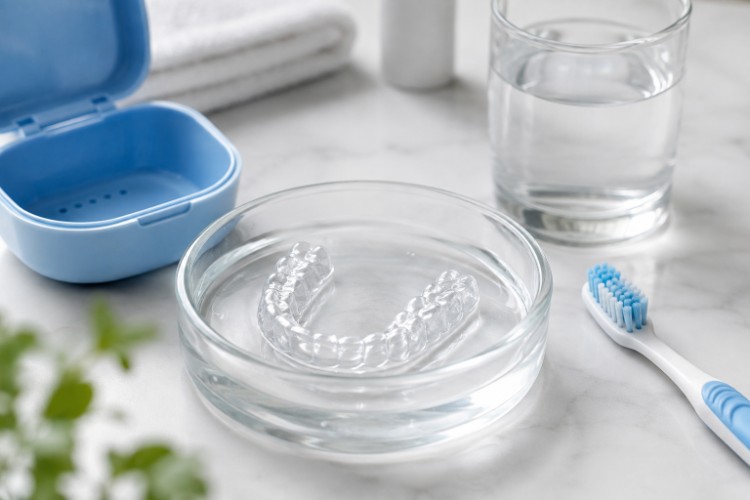
Why Retainer Disinfection Matters
Bacteria Can Build Up Quickly
A retainer creates a warm and moist environment. Bacteria can grow when plaque and food residue remain on its surface. Over time, this buildup may contribute to bad breath and gum irritation. The American Association of Orthodontists recommends regular retainer care to protect both the appliance and oral health.
We believe consistency matters more than aggressive cleaning. A simple routine often works better than an occasional deep cleaning session. Think of your retainer like your favorite coffee mug. Nobody wants yesterday's coffee hiding inside it.
Clean the Retainer Before Storage
After removing a removable retainer, rinse it with cool water. This step removes loose saliva and food particles before they dry. Then gently brush the surface with a soft-bristled toothbrush and a suitable mild cleanser.
Always rinse the retainer thoroughly after cleaning. Finally, place it inside a clean, ventilated case. Avoid sealing a wet retainer in a damp container because moisture can encourage microbial growth.
How To Clean a Retainer Daily
Use Gentle Brushing
For daily cleaning, we recommend a gentle approach. Hold the retainer carefully and brush all accessible surfaces. Use a small amount of mild soap if your orthodontist approves it.
Avoid scrubbing aggressively. Excessive pressure can scratch some plastic surfaces and create places where deposits collect. The AAO recommends gentle brushing and warns against hot water because heat can distort plastic retainers.
Avoid Hot Water and Harsh Chemicals
Hot water may seem useful for disinfection, but it can damage many retainers. Plastic can warp when exposed to excessive heat. Once the shape changes, your retainer may no longer fit correctly.
We also advise against bleach, alcohol-based products, and other harsh chemicals unless your orthodontist specifically recommends them. These substances may damage materials or leave unwanted residues. NHS guidance also advises patients to avoid very hot water and unsuitable cleaning products.
Deep Cleaning Your Retainer
Try a Retainer Cleaning Tablet
A retainer cleaning tablet can provide convenient weekly maintenance. Follow the product instructions carefully. Many products require a short soak rather than an overnight treatment.
A typical routine may look like this:
Rinse the retainer with cool water.
Add the recommended amount of water.
Place the retainer into the cleaning solution.
Follow the stated soaking time.
Remove the retainer.
Rinse it thoroughly.
Let it air-dry before storage.
The AAO suggests using a retainer-cleaning solution periodically for deeper cleaning.
What About Baking Soda and White Vinegar?
Some people use baking soda for retainer cleaning. Others try white vinegar diluted with water. These home methods appear frequently online, but we should use caution.
A mild baking soda solution may help loosen odor and surface residue. However, abrasive scrubbing can scratch certain retainer materials. Vinegar also contains acid, so prolonged or repeated exposure may not suit every appliance.
For that reason, we prefer products designed for dental appliances. If you want to use baking soda or vinegar, ask your orthodontist first. The retainer manufacturer may also provide specific material-care instructions.
Can HOCl Help Disinfect a Retainer?
Understanding Hypochlorous Acid HOCl
Hypochlorous acid HOCl offers an interesting option for disinfection. HOCl occurs naturally as part of the body's immune response. Properly produced solutions can provide antimicrobial activity at relatively low concentrations.
Our HOCl Generator technology produces hypochlorous acid water on-site. We can adjust the concentration according to the intended application. However, retainer care needs special attention because the appliance stays in the mouth.
We do not recommend treating every HOCl solution as automatically suitable for retainers. Concentration, pH, purity, contact time, and material compatibility all matter. Users should follow the retainer manufacturer's instructions and their orthodontist's advice before using HOCl.
Why On-Site HOCl Gets Attention
An on-site system can produce disinfecting solution when needed. That approach reduces the need to store large amounts of ready-made chemical products. It also allows users to control production parameters more precisely.
For professional applications, this can offer practical advantages. Our experience with on-site generation shows that disinfection works best when users control the full process. That includes water quality, concentration, pH, contact time, and storage.
Still, a retainer requires a different standard. We should never sacrifice material safety for stronger disinfection. Gentle and consistent care remains the foundation.
Permanent Retainers Need Extra Care
Clean Around the Wire
Permanent retainers stay bonded behind the teeth. They cannot come out for cleaning so that plaque can collect around the wire and bonding points. This makes careful brushing and flossing especially important.
Use floss or floss threaders to clean underneath and around the wire. An interdental brush or water flosser may also help. The AAO recommends cleaning around fixed wires daily to reduce plaque buildup.
Check the Bond and Wire
A fixed retainer can develop a loose bond or damaged wire. Sometimes the change feels minor at first. However, a loose section can trap food and make cleaning difficult.
Check the area during normal brushing. If the wire feels sharp, loose, or different, contact your dental professional. Do not try to bend or repair it yourself.
Common Retainer Cleaning Mistakes
Small Habits Can Cause Big Problems
Most retainer problems do not come from complicated mistakes. They often come from small habits repeated every day. Avoid these common errors:
Using boiling or very hot water.
Scrubbing plastic too aggressively.
Using abrasive toothpaste without professional advice.
Leaving the retainer wet inside a closed case.
Using bleach or strong chemical cleaners.
Skipping regular cleaning.
Eating with a removable retainer when your orthodontist says not to.
Ignoring cracks, sharp edges, or changes in fit.
Different retainers can require different care. Some NHS instructions recommend cold water and liquid soap, while other clinical instructions may allow toothpaste. Therefore, we should always follow the instructions provided for our specific appliance.
A Simple Retainer Care Routine
Our Practical Daily Schedule
We find that a simple routine makes clean retainers easier to maintain. After removing a removable appliance, rinse it immediately. Brush it gently, rinse again, and store it in a clean case.
For deeper care, use an approved retainer cleaner according to its instructions. A weekly cleaning routine can help remove deposits that daily brushing misses. The AAO recommends periodic soaking with a retainer-cleaning solution.
A practical routine looks like this:
Every removal:
Rinse with cool water.
Brush gently.
Rinse again.
Store in a ventilated case.
About once a week:
Use an approved cleaning solution.
Follow the recommended contact time.
Rinse thoroughly.
Inspect the appliance.
For permanent retainers:
Brush the teeth carefully.
Clean around the wire.
Use floss or floss threaders.
Check the bonding regularly.
When You Should See a Professional
Cleaning cannot fix every retainer problem. A cracked, warped, loose, or painful retainer needs professional attention. Changes in fit can also indicate that your teeth have shifted or the appliance has changed shape.
Do not force a retainer that no longer fits. If you notice persistent odor despite cleaning, visible damage, or gum irritation, schedule an appointment with your orthodontist. Professional advice can prevent a small issue from becoming an expensive replacement.
Final Thoughts on Retainer Care
Knowing how to disinfect a retainer starts with one simple idea: gentle care wins. Cool water, careful brushing, regular cleaning, and approved deep-cleaning products can keep many retainers fresh and functional. We should avoid harsh chemicals and excessive heat because stronger does not always mean safer.
HOCl provides an interesting disinfection technology for many professional settings. Our HOCl Generator systems support controlled on-site production, but users should confirm retainer compatibility first. For personal retainer care, always prioritize the manufacturer's instructions and your orthodontist's advice.
A clean retainer supports good oral hygiene and protects your orthodontic investment. With a few minutes of care each day, we can keep the appliance cleaner, fresher, and ready for its next job: keeping our smile straight.