

Make Hypochlorite On Site
Shandong Shine builds practical disinfection equipment for sites that need steady chlorine output. Our On-site Generation System for Sodium Hypochlorite helps users make disinfectant where they need it, instead of waiting for chemical deliveries. That sounds simple, but anyone who manages water treatment knows the pain behind those deliveries.
When a plant runs short of disinfectant, nobody laughs. Well, maybe the purchasing department laughs nervously. Our goal feels different. We want to help operators create a safer, cleaner, and more predictable water disinfection system with salt, water, and electricity.
A modern Sodium Hypochlorite Generator works through electrolysis. It uses brine, electrical current, and controlled reaction conditions to produce a low-strength hypochlorite solution. Many commercial on-site systems produce about 0.8% sodium hypochlorite through brine electrolysis, using water, salt, and electricity as key inputs.
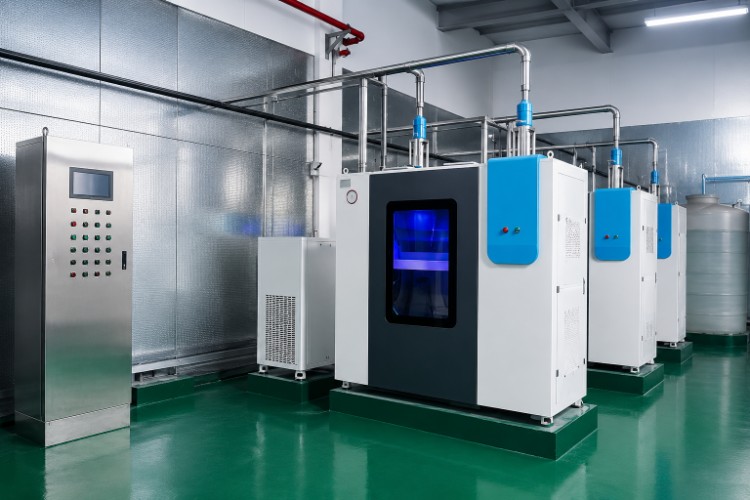
What Is an On-site Generation System For Sodium Hypochlorite?
An on-site sodium hypochlorite generation system produces disinfectant directly at the use location. It allows water plants, factories, buildings, and utilities to avoid storing large amounts of stronger commercial bleach. Instead, operators generate a fresh, low-strength solution for daily use.
This approach supports sodium hypochlorite production on-site. It also reduces dependence on long-distance chemical supply chains. The U.S. EPA notes that some water treatment facilities generate sodium hypochlorite on-site by passing brine through an electrolytic cell, then storing and metering the product into water.
For many buyers, the appeal is not only technical. It feels reassuring. When disinfectant production happens on demand, teams gain more control over dosing, storage, and daily operation.
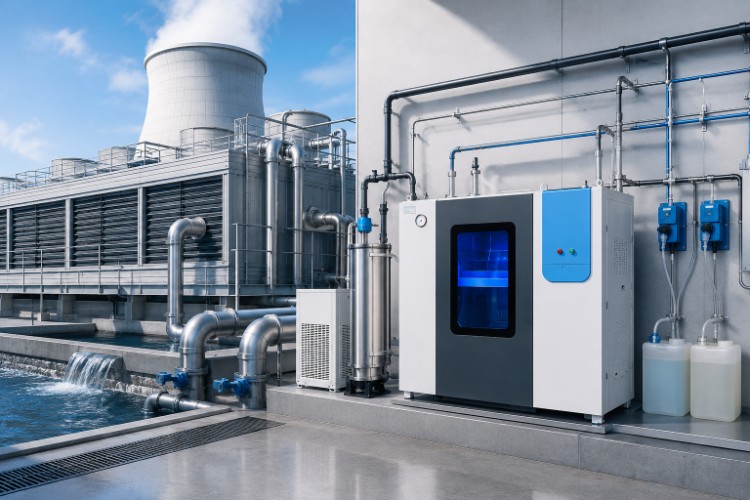
How Brine Electrolysis Turns Salt Into Disinfectant
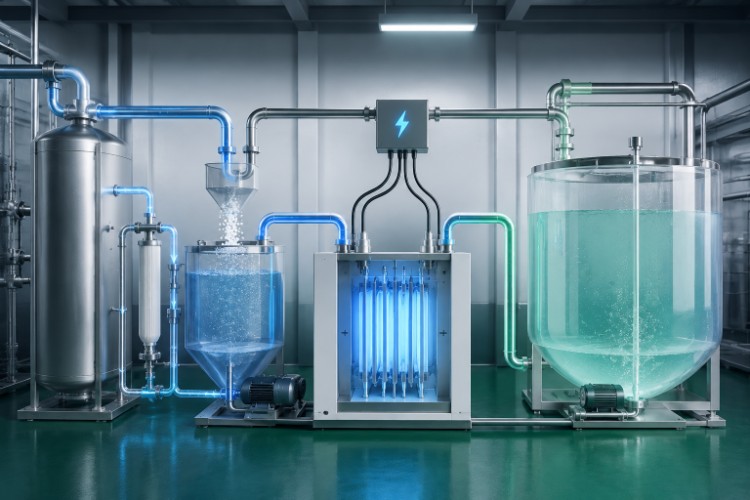
A brine electrolysis system uses a prepared salt solution, also called brine. The system sends this brine through an electrolytic cell. Then electrical current drives the chemical process and forms a sodium hypochlorite solution.
In plain English, it is a saltwater electrolysis process. The machine does not need a secret potion or a magic drum behind the panel. It needs clean water, quality salt, stable power, and smart control. That is why we sometimes call it a saltwater and electricity disinfectant generator.
Brine Electrolysis System: Simple Inputs
The basic inputs look refreshingly simple: NaCl + H₂O + electricity. However, the engineering behind the process matters a lot. Flow rate, cell design, water hardness, temperature, and power control all affect output stability.
A good electrolytic sodium hypochlorite generator should manage these variables with care. It should also help operators avoid unnecessary downtime. In real sites, nobody wants to become a part-time chemist at 2 a.m.
Salt Water Electrolysis and the 0.8% Target
An 8000 PPM solution equals about 0.8% sodium hypochlorite solution. This concentration suits many on-site disinfection needs because it remains useful while reducing the risks linked with stronger chemical storage. Commercial on-site hypochlorite systems often target this 0.8% level for water treatment applications.
This lower concentration supports safe chlorine generation. It also helps reduce the handling pressure on operators. Strong chemicals can make people nervous, and honestly, they should.
Why 8000 PPM Matters in Water Treatment
An 8000 ppm sodium hypochlorite generator gives users a practical concentration for many chlorination tasks. The solution has enough strength for dosing, yet it avoids some headaches linked with higher-strength commercial products. It can support stable daily disinfection in municipal, commercial, and industrial settings.
The number also helps buyers compare systems. Some suppliers focus on capacity. Others focus on automation, dosing accuracy, or installation style. We think serious buyers should look at all of them together.
8000 PPM and 0.8% Sodium Hypochlorite Solution
The phrase 0.8% sodium hypochlorite solution sounds small, but it works hard. In water treatment, operators care less about drama and more about reliable dosing. The solution must enter the water at the right rate, at the right point, and at the right time.
A low-concentration sodium hypochlorite stream also supports safer storage. Sodium hypochlorite can decompose under heat and light, and stronger solutions need more careful handling. PubChem notes that sodium hypochlorite should stay separated from acids, be stored cool, kept dark, and be held in closed containers.
Free Chlorine Residual: The Number Operators Watch
Operators often track free chlorine residual after dosing. This value shows how much active chlorine remains available in water. It helps confirm whether disinfection has enough strength after contact time.
WHO guidance recommends a minimum free chlorine residual of 0.2 mg/L at the point of delivery for many drinking-water systems. It also notes that higher residuals may help where water must travel or sit before use.
Where Our System Fits Best
Shandong Shine designs systems for real operating environments. These sites may include water plants, industrial facilities, hotels, farms, cooling towers, and process-water loops. Each site has different flow, dosing, and control needs.
That is why one model rarely fits every project. Some customers need a compact installation. Others need high capacity, remote operation, or easy maintenance access. Our team studies the water source, chlorine demand, space limits, and operating habits before recommending a solution.
Drinking Water Disinfection
For drinking water disinfection, operators need consistency and careful monitoring. The system should dose accurately and help maintain proper residual chlorine levels. It should also support easy maintenance, because small problems can grow fast in water networks.
WHO also notes that chlorination works best when the pH stays below 8 for effective disinfection. However, the best operating range can depend on corrosion control and local conditions. That is why water testing matters before final system selection.
Wastewater Disinfection and Industrial Water Treatment
For wastewater disinfection, chlorine demand can change quickly. Organic load, flow changes, and contact time all affect dosing. A stable on-site hypochlorite generation setup can help operators respond without waiting for chemical deliveries.
In industrial water treatment, users may need disinfection for process water, reuse systems, or plant hygiene. Some facilities also need cooling tower water treatment. CDC guidance recognizes sodium hypochlorite as one chlorine-containing disinfectant option for cooling tower and evaporative condenser disinfection procedures.
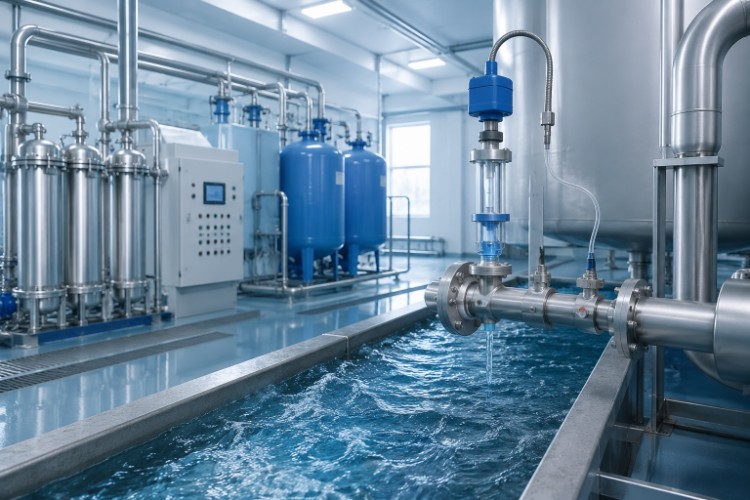
Design Details Buyers Should Check
A good system needs more than a shiny cabinet. Buyers should check output capacity, salt consumption, power demand, water quality needs, automation level, dosing compatibility, and service access. In our view, the boring details often save the most money.
For example, a plant may need a chlorine dosing system that links with existing storage tanks and pumps. Another site may need a compact design because the equipment room looks like a broom closet with ambition. Good engineering turns those limits into workable layouts.
PLC Control, Skid Mounting, and Dosing
A PLC control sodium hypochlorite generator can support automatic operation, alarms, and process monitoring. PLC control helps the operator manage production, tank level, current, flow, and fault signals. It also makes the system friendlier for remote or semi-attended sites.
A skid-mounted sodium hypochlorite generator can simplify installation. The skid can integrate key parts such as the electrolytic cell, control cabinet, piping, pumps, and safety devices. Pre-assembled systems can reduce installation complexity and help shorten commissioning time.
Low Concentration Sodium Hypochlorite Safety
Low concentration sodium hypochlorite does not mean “no risk.” Operators still need training, PPE, ventilation, labels, and correct storage. The difference is that the system avoids large storage volumes of stronger commercial hypochlorite.
This supports on-demand disinfectant production. It also helps users reduce truck delivery concerns and chemical aging problems. In short, it gives the site more control and fewer “where is the chemical truck?” moments.
Why Shandong Shine Builds for Real Sites
At Shandong Shine, we care about practical value. We do not want a system that only looks good in a brochure. We want equipment that works when the site gets busy, dusty, hot, wet, or slightly chaotic.
Our automatic sodium hypochlorite generator concept focuses on stable output and simple operation. We design for clear control, practical maintenance, and reliable integration with site dosing needs. We also help customers understand capacity, concentration, salt use, and operation logic before purchase.
The market already has enough vague promises. We prefer clear parameters: 8000 PPM, 0.8%, NaCl input, water input, electrical control, dosing connection, and residual chlorine monitoring. Those numbers tell a better story than buzzwords.
Quick Buyer Checklist Before Ordering
Before choosing equipment, buyers should confirm the following points:
Required output: g/h, kg/day, or L/h
Target concentration: 8000 PPM or 0.8%
Water source: softened water, deionized water, or treated tap water
Salt quality: purity, storage, and feeding method
Power supply: voltage, phase, and site stability
Dosing point: pipe, tank, tower, or contact chamber
Control mode: manual, automatic, PLC, or remote monitoring
Safety needs: ventilation, hydrogen handling, alarms, and containment
Application: drinking water, wastewater, industrial process, or cooling tower
Service plan: spare parts, training, and maintenance access
A smart purchase starts before the invoice. It starts with honest site data. When we understand the water, the flow, and the operator’s daily routine, we can recommend a better system.
Final Thought: Make Disinfection Less Stressful
An on-site hypochlorite generation system gives users a practical way to make disinfectant when needed. It can support safer handling, steadier supply, and better control. For many water treatment teams, that combination feels like a deep breath.
Shandong Shine builds equipment for buyers who want fewer surprises and more confidence. We know water disinfection rarely gets applause when everything works. But when it fails, everyone notices. That is exactly why we take the system seriously.
Reference Links
Shine OSEC on-site hypochlorite system: 0.8% solution through brine electrolysis.
Shine OSEC system: on-site 0.8% sodium hypochlorite generation.
U.S. EPA Sodium Hypochlorite Supply Chain Profile: on-site generation process and supply notes.
WHO drinking-water guidance: free chlorine residual and pH recommendations.