

Water Disinfection: From Source to Safe
Clean water does not always mean safe water. Water can look clear and still contain harmful germs. Bacteria, viruses, and protozoa can enter water from many sources.
At Shandong Shine Health, we see disinfection as a key step in water treatment. It helps reduce harmful germs before people use the water. The right system also helps keep water safe during storage and distribution.
In this guide, we explain the disinfection process in water treatment in simple terms. We also compare common methods and explain how to choose a suitable system.
What Is Disinfection in Water Treatment?
What is disinfection in water treatment?
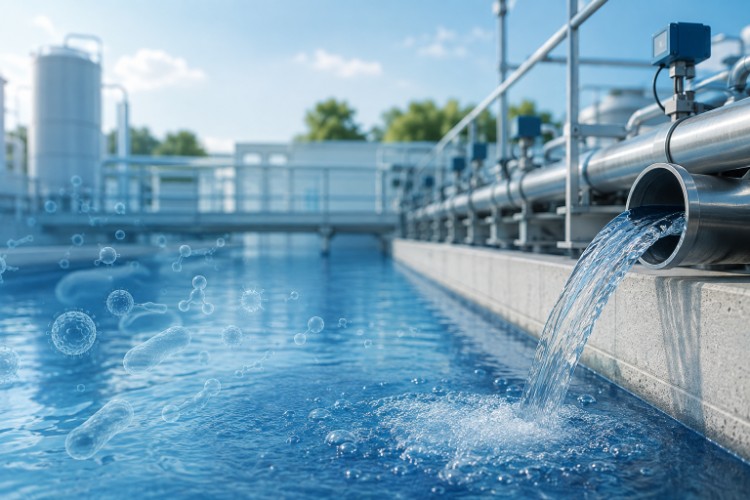
So, what is disinfection in water treatment? It means using a method to control harmful microorganisms in water. The method can use chemicals, UV light, ozone, or heat.
A normal drinking water treatment process has several steps. These may include filtration, sedimentation, and disinfection. Each step has a different job. (CDC)
Disinfection mainly targets harmful microorganisms. These include bacteria, viruses and protozoa. Good disinfection can reduce the risk of waterborne disease.
Why is disinfection important in water treatment?
Why is disinfection important in water treatment? The main reason is health. Untreated water may contain germs that cause illness.
Contaminated water can carry many types of pathogens. Some can cause stomach problems, fever, or other health risks. Good treatment helps reduce these risks.
Filtration and disinfection work well together. Filtration removes many particles. Disinfection then controls microorganisms that remain in the water.
How Does the Disinfection Process Work?
Main factors that affect disinfection
The disinfection process depends on several key factors. We normally check these values before selecting equipment.
Flow rate: L/h or m³/h
Disinfectant level: ppm or mg/L
Contact time: min
Water temperature: °C
pH: 0–14
Turbidity: NTU
Microbial level: CFU
Residual disinfectant: mg/L or ppm
For chemical treatment, concentration and contact time matter greatly. A simple way to understand this is C × T.
Here, C means disinfectant concentration. T means contact time. A suitable combination can provide more effective disinfection.
Water quality also affects results. High turbidity can make treatment harder. Particles may protect microorganisms from the disinfectant.
How does disinfection affect germs?
Different methods attack germs in different ways. Some chemical disinfectants can damage microbial cell walls and other key parts.
This damage can stop germs from working or reproducing. The goal is to reduce the number of harmful microorganisms to a safe level.
UV works in another way. UV disinfection damages the genetic material of microorganisms. This can prevent them from reproducing.
In simple terms, good disinfection stops germs from causing problems. That is the key point.
What Are Common Water Disinfection Treatments?
Sodium hypochlorite
Sodium hypochlorite is a common choice for many water treatment systems. Operators can add it to water at a controlled rate.
Our company focuses on sodium hypochlorite generation systems. An on-site system can produce sodium hypochlorite close to the point of use.
This can reduce the need to transport large amounts of finished chemicals. It can also give operators better control over production.
A typical system may use parameters such as:
Production capacity: g/h
Solution concentration: %
Flow rate: L/h or m³/h
Power: kW
Control mode: manual or automatic
The correct values depend on the water source and application.
UV, chlorine dioxide, and ozone
UV disinfection uses ultraviolet light to control microorganisms. It does not add chemicals to the water. However, it does not provide long-lasting residual protection. (CDC)
Chlorine dioxide is another chemical treatment. It can provide strong microbial control in selected applications. Operators must control its dose and monitor water quality.
Ozone also provides strong oxidation. It can help control microorganisms and some other water quality problems. However, ozone does not provide the same lasting residual as chlorine. (CDC)
Common water treatment disinfectant options include:
Chlorine
Sodium hypochlorite
Chloramine
Chlorine dioxide
UV
Ozone
Each method has strengths and limits. There is no single solution for every water system.
Disinfection Process in Water Treatment Plant
From untreated water to treated water
A common disinfection process in a water treatment plant follows this path:
Untreated water → Pretreatment → Filtration → Disinfection → Storage → Distribution
The process can change with the water source. River water may contain more particles and germs. Groundwater may need fewer treatment steps.
Filtration often comes before final disinfection. It can reduce turbidity and remove particles. This gives the final treatment step a better starting point.
Operators should also monitor water quality during operation. Useful values include:
pH
Turbidity
Flow rate
Temperature
Disinfectant concentration
Disinfectant residual
Microbial test results
These values help operators find problems early.
Why is residual disinfection useful?
Water does not always stay in one place. It may move through long pipes and storage tanks. During this time, microbial growth can become a concern.
This is why residual disinfection matters in many water supplies. A suitable disinfectant residual can continue to control microorganisms after treatment. (CDC)
This gives chlorine-based systems an important advantage. They can continue protecting water after it leaves the treatment plant.
How to Choose a Disinfection System
Start with water quality
We always recommend checking the water first. Do not choose equipment based only on flow rate.
Important information includes:
Water source
Average flow
Maximum flow
pH
Turbidity
Temperature
Microbial level
Required disinfectant level
Required residual
Local regulations
These values help define the correct system size.
For example, a system for 10 m³/h needs a different design from one for 100 m³/h. The disinfectant demand may also change with water quality.
Compare different systems
Method | Main benefit | Main concern |
Sodium hypochlorite | Easy dosing and residual | Chemical control |
Chlorine | Strong residual | By-products |
UV | No chemical dosing | Needs clear water |
Chlorine dioxide | Strong oxidation | Careful control |
Ozone | Strong oxidation | No long residual |
Combined system | Multiple barriers | More complex |
We recommend looking at the complete process. Equipment cost is only one part of the decision.
Energy use, chemical use, maintenance, safety, and service also affect the long-term cost.
Applications of Water Treatment Disinfection
Drinking water treatment
Drinking water treatment needs strong control of harmful microorganisms. Municipal plants must protect water from the source to the user.
The system may treat river water, lake water, reservoir water, or groundwater. Each source has different water quality.
Operators may monitor indicators such as E. coli and fecal coliform. These tests can help show whether microbial contamination exists.
The exact testing plan depends on local rules and the water application.
Wastewater and industrial water
Wastewater treatment also uses disinfection. The goal may involve reducing microorganisms before discharge or reuse.
Industrial facilities may disinfect process water, cleaning water, or other water streams. Some facilities need continuous treatment.
Our view is simple. The system should match the real job. A small plant does not need a giant machine. A large plant cannot rely on a system that is too small.
What Is the Purpose of Disinfection?
Five questions to ask first
The purpose of disinfection in water treatment is to reduce harmful microorganisms and lower health risks.
Before choosing a disinfection system for water treatment, we suggest asking five questions:
What germs do we need to control?
How much water do we treat?
What is the incoming water quality?
Do we need residual protection?
How will we monitor the system?
These questions make equipment selection much easier.
At Shandong Shine Health, we focus on practical disinfection systems and sodium hypochlorite generation solutions. We consider capacity, concentration, flow, automation, and installation conditions together.
We believe good equipment should make daily work easier. Operators should understand the system without fighting through complicated controls.
Clean water should be simple to manage. Good engineering helps make that possible