

Why disinfect dental treatment room surfaces?
Dental treatment rooms may look clean. However, many germs cannot be seen. During treatment, saliva, blood, and aerosols spread into the air. These tiny droplets land on chairs, lights, trays, and other equipment. This is why many people ask, Why Must Surfaces in Dental Treatment Rooms be Disinfected?
At Shandong Shine Health, we work with disinfection technology every day. We know that surface hygiene plays an important role in dental safety. A clean treatment room protects patients and staff. It also helps patients feel more comfortable.
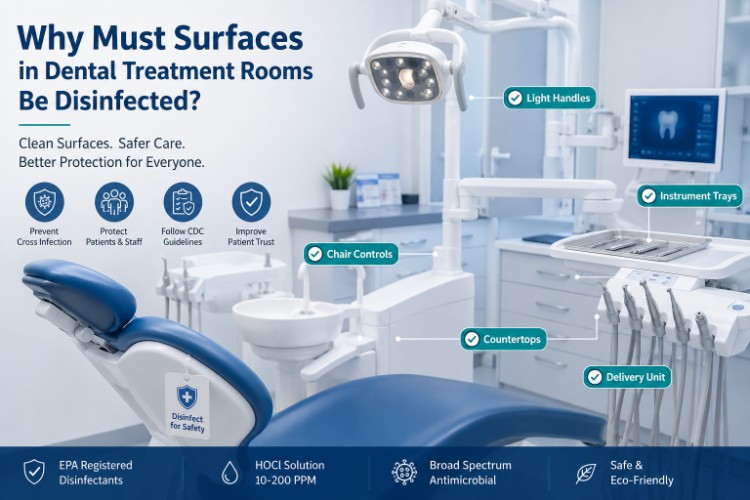
Why Must Surfaces in Dental Treatment Rooms be Disinfected?
Dental tools create aerosols during treatment. High-speed handpieces and ultrasonic scalers spread tiny droplets into the air. These droplets settle on nearby objects in a few seconds. Some germs can stay alive for many hours.
The risk of disease transmission increases when surfaces are not disinfected. One contaminated handle may affect many people. Germs do not need an appointment. They simply wait for the next patient.
The centers for disease control and agencies for disease control and prevention continue to support good cleaning habits. Proper surface disinfection remains one of the most important infection prevention practices in dental care.
Sources of Surface Contamination
Common sources include:
Saliva
Blood
Aerosols
Gloves
Instruments
Hand contact
These materials can spread microorganisms throughout the treatment room.
CDC Guidelines for Dental Offices
The guidelines for infection control in dental health care settings 2003 continue to guide dental clinics. The centers for infection control in dental health care settings 2003 provide clear recommendations for environmental cleaning.
The cdc recommend the following actions:
Clean surfaces after treatment.
Wear protective equipment.
Use approved disinfectants.
Follow contact times.
Train employees regularly.
These actions improve infection control practices and reduce contamination.
Personal Protective Equipment PPE
Dental workers should wear personal protective equipment ppe during cleaning.
Common PPE includes:
Gloves
Masks
Face shields
Safety glasses
Protective clothing
PPE helps protect workers during disinfection. It also lowers the chance of accidental exposure.
Surfaces Found in Dental Treatment Rooms
Different surfaces carry different risks. Some surfaces require disinfection after every patient.
Clinical Contact Surfaces
These surfaces receive frequent contact:
Dental chair controls
Light handles
Instrument trays
X-ray buttons
Drawer handles
Computer keyboards
These areas require regular disinfection.
Housekeeping Surfaces
Housekeeping surfaces include:
Floors
Walls
Cabinets
Sinks
Countertops
Waiting room furniture
These surfaces have lower risks. However, regular cleaning remains important. Many dental offices create daily cleaning schedules.
Cleaning and Disinfecting Procedures
Good cleaning and disinfecting follows several steps. Each step matters.
Remove visible dirt.
Clean the surface.
Apply disinfectant.
Wait for the contact time.
Allow the surface to dry.
Skipping a step reduces the final result.
Many clinics use epa registered disinfectants because they meet recognized standards. The food and drug administration fda also regulates certain healthcare products.
Intermediate Level Disinfectants
Many treatment rooms use intermediate level disinfectants.
These products help control:
Bacteria
Viruses
Fungi
Mycobacteria
A good surface disinfectant should work quickly and remain safe for equipment.
Hypochlorous Acid HOCl for Surface Disinfection
Today, many clinics use hypochlorous acid hocl for environmental cleaning. HOCl naturally forms inside white blood cells. The human body uses it to fight harmful microorganisms.
Because of this, many healthcare workers trust HOCl technology. It provides strong disinfection and produces very little odor.
Nobody wants a treatment room that smells like a swimming pool.
Recommended Concentrations: 10–200 PPM
Different applications require different concentrations.
Application | Concentration |
Light cleaning | 10–30 PPM |
General surfaces | 30–80 PPM |
Clinical surfaces | 50–100 PPM |
Heavy contamination | 100–200 PPM |
The 10-200 PPM range allows clinics to select the proper strength for different situations.
A modern HOCl Generator can produce fresh disinfectant on site. Fresh solutions often provide better stability and convenience.
Why HOCl Is an Ideal Disinfectant
Every clinic wants an ideal disinfectant. A good product should:
Work quickly
Kill many microorganisms
Produce little odor
Protect equipment
Be easy to use
HOCl meets many of these requirements. Staff members often prefer products with mild odors. Patients also appreciate clean and comfortable treatment rooms.
Benefits of On-Site Production
Producing disinfectant on site offers several benefits:
Fresh solutions
Adjustable concentration
Lower storage needs
Reduced transportation costs
Stable quality
Many clinics prefer making disinfectant when needed.
Preventing the Spread of Disease
The main goal is preventing the spread of microorganisms. Surface disinfection helps protect patients and staff.
Good infection prevention practices include:
Surface disinfection
Hand hygiene
Instrument sterilization
PPE use
Staff training
Air management
Research by rutala wa weber dj has helped improve healthcare disinfection methods. Their work supports modern environmental cleaning practices.
Patients notice clean treatment rooms. Clean equipment creates confidence. Small cleaning tasks often make a big difference.
Our View on Dental Surface Safety
At Shandong Shine Health, we believe clean surfaces save time and reduce risk. Technology helps, but good habits matter just as much.
The recommendations from the centers for disease control continue to guide dental clinics around the world. Combined with proper disinfectants, these practices create safer treatment rooms.
So, why must surfaces in dental treatment rooms be disinfected?
Every cleaned handle protects another patient. Every disinfected tray reduces contamination. Every safe treatment room improves dental care.