

UV Disinfection in Water Treatment
Introduction
Clean drinking water is very important. Water treatment plants use different disinfection processes to keep water safe. Two common methods are UV water disinfection and the on-site generation system for sodium hypochlorite.
UV systems use ultraviolet light to kill harmful microorganisms. Sodium hypochlorite systems make disinfectant directly at the treatment site. Both methods help improve water quality.
In our experience, many water plants use both technologies together. This gives better protection and more stable operation.
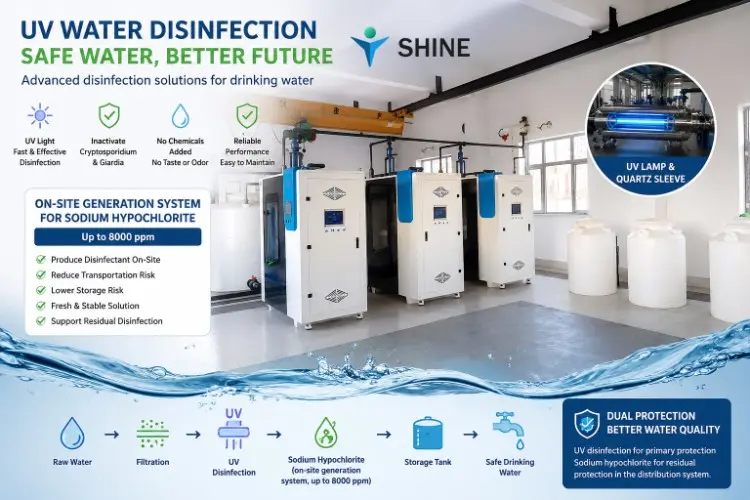
What Is UV Water Disinfection?
UV water disinfection uses UV light to stop microorganisms from growing. The ultraviolet UV energy damages their DNA. As a result, the organisms cannot reproduce.
A typical UV disinfection system includes:
UV lamp
Quartz sleeve
Reactor chamber
Control unit
Monitoring system
Water passes through the reactor while the UV lamp produces ultraviolet energy. The treatment happens within seconds.
How a UV System Works
The process is simple.
Water Flows Through the Reactor
The water enters the chamber and moves around the UV lamp. Proper water flow is very important because every part of the water must receive enough UV energy.
The UV Lamp Produces Light
The UV lamp creates ultraviolet radiation. The light passes through the quartz sleeve and reaches the water.
Microorganisms Become Inactive
The UV energy damages bacteria, viruses, and parasites. This process prevents them from multiplying.
UV treatment can:
Kill bacteria
Control viruses
Reduce algae
Inactivate Giardia
Inactivate cryptosporidium
Cryptosporidium is difficult to remove with chlorine alone. UV technology works very well against it.
Main Parts of UV Disinfection Systems
Several parts help the UV system work properly.
UV Lamp
The lamp creates ultraviolet light. The lamp becomes weaker over time and must be replaced regularly.
Quartz Sleeve
The quartz sleeve protects the lamp from water. If minerals build up on the sleeve, the UV light becomes weaker.
Reactor Chamber
The chamber controls the water flow and exposure time.
Control System
Modern systems monitor:
UV intensity
Water flow
Lamp condition
Operating hours
These functions help maintain stable water disinfection.
Advantages of UV Water Treatment
UV treatment offers many benefits.
Fast Treatment
The treatment happens immediately.
No Chemical Addition
UV systems do not add chemicals to the water.
Better Taste and Odor
UV treatment does not change the taste or smell of drinking water.
Effective Against Resistant Organisms
UV can successfully inactivate cryptosporidium, which is difficult for chlorine to control.
Small Installation Space
Most UV equipment requires limited space inside treatment plants.
These advantages make UV water systems popular in many industries.
Limitations of UV Systems
Although UV technology is effective, it also has some limits.
No Residual Protection
After the water leaves the reactor, the UV effect stops. There is no remaining disinfectant in the pipes.
Water Quality Matters
Poor water quality can reduce UV performance. High turbidity or organic matter may block the UV light.
Regular Maintenance
Operators must clean the quartz sleeve and replace the UV lamp.
Continuous Power Supply
UV systems need electricity to operate.
Because of these limits, many facilities add chemical disinfection after UV treatment.
On-Site Generation System for Sodium Hypochlorite
Many drinking water plants use an on-site generation system for sodium hypochlorite.
The sodium hypochlorite generator uses:
Salt
Water
Electricity
It produces fresh sodium hypochlorite solution directly at the site.
Some systems can generate disinfectant concentrations up to 8000 ppm. This concentration is suitable for many water treatment applications.
The system offers several advantages:
Reduced chemical transportation
Lower storage risks
Fresh disinfectant production
Safer operation
Stable disinfection
Unlike UV treatment, sodium hypochlorite leaves a disinfectant residual in the water.
Why Residual Disinfection Is Important
Water often travels long distances after leaving treatment plants.
It passes through:
Pipelines
Storage tank systems
Distribution networks
During transportation, new contamination may occur.
Sodium hypochlorite helps protect the water during this period. The disinfectant remains active inside the distribution system.
For this reason, many facilities combine UV and sodium hypochlorite treatment.
UV and Sodium Hypochlorite Working Together
Many modern water treatment plants use both technologies.
FunctionUV System Sodium Hypochlorite Fast disinfection Yes Yes Inactivate cryptosporidium Excellent Limited Residual protection No Yes Storage tank protection No Yes Pipeline protection No Yes Chemical free operation Yes No
UV treatment removes resistant microorganisms. Sodium hypochlorite protects the water after treatment.
This combination gives multiple barriers against contamination.
Choosing the Right Treatment Process
Several factors affect the choice of disinfection technology.
Water Quality
Poor water quality may reduce UV performance.
Water Flow
Large water flow rates require larger equipment.
Distribution Distance
Long pipelines usually require residual disinfectants.
Operating Costs
Maintenance, electricity, and chemical costs should all be considered.
Local Regulations
Some areas require a disinfectant residual in drinking water systems.
Each treatment plant should choose the system that matches its needs.
Conclusion
UV water disinfection is an effective method for improving drinking water quality. UV light works quickly and can inactivate cryptosporidium without changing the taste or odor of water.
However, UV systems do not provide residual protection. This is why many facilities also use an on-site generation system for sodium hypochlorite.
Systems producing sodium hypochlorite concentrations up to 8000 ppm can provide reliable disinfection for treatment plants and distribution networks.
By combining UV technology and sodium hypochlorite, water utilities can improve water quality and provide safer drinking water for consumers.