

How To Clean a Dog Wound
Dogs love to run, dig, and explore. That also means they sometimes come home with cuts, scrapes, or small injuries. We know how worrying that feels. As a manufacturer of HOCl Generator systems, we work with professionals who use hypochlorous acid HOCl for safe sanitation in many industries. We also understand the importance of gentle wound care for pets.
This guide explains how to clean a dog wound safely at home. We will also answer common questions like Can I put peroxide on my dog's wound, how to disinfect a dog wound, and what can I use to clean a dog wound. Our goal is simple. We want to help you make smart decisions while knowing when veterinary care becomes necessary.
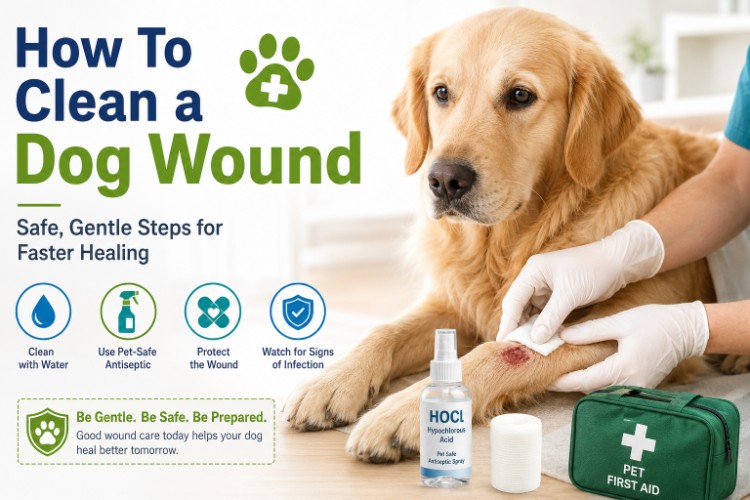
Why Proper Dog Wound Care Matters
Even a tiny scratch can become a problem if bacteria enter the skin. Dirt, grass, and saliva may slow healing. Good wound care helps reduce that risk.
Many owners ask how to clean dog wounds at home because they want fast action before seeing a veterinarian. Cleaning the injury early often helps reduce irritation and supports the body's natural healing process.
Common Types of Dog Wounds
Dogs often experience:
Small cuts
Scratches
Paw injuries
Bite wounds
Abrasions
Torn nails
Minor burns
Some injuries look small but extend deep below the skin. If you notice heavy bleeding, severe pain, or exposed tissue, contact your veterinarian immediately.
How To Clean a Dog Wound Step by Step
If you wonder how to clean a dog's wound at home, follow these simple steps.
Step 1: Stay Calm and Restrain Your Dog
Dogs feel our emotions. We always speak softly and move slowly.
Ask another person to help if your dog feels scared. A gentle towel wrap works well for small dogs.
Step 2: Wash Your Hands
Use hand soap and warm water before touching the injury.
Clean hands reduce the chance of adding bacteria to the wound.
Step 3: Stop Bleeding
If bleeding continues, apply pressure using clean gauze.
Maintain steady pressure for 5-10 minutes.
Seek immediate veterinary help if bleeding will not stop.
Step 4: Clean the Wound
Many owners ask what to clean a dog wound with or what should be used to clean a wound on.my.dog.
We recommend flushing the area with:
Sterile saline
Clean drinking water
Veterinary-approved wound rinse
Always clean the wound with water or saline before using any disinfectant.
Remove visible dirt carefully. Never scrub hard because rough cleaning delays healing.
Step 5: Apply a Pet-Safe Antiseptic
This step answers questions like:
how to disinfect a dog wound
Many veterinarians recommend a gentle antiseptic solution for dog wounds.
Possible options include:
Diluted chlorhexidine for dog wounds
Veterinary iodine solutions
Hypochlorous acid HOCl
Other dog-safe antiseptic for wounds
After cleaning, apply a small amount of the recommended product according to its instructions.
Should You Use Hydrogen Peroxide or Alcohol?
This remains one of the most searched questions online.
Can I Put Peroxide on My Dog's Wound?
Owners often ask:
Can I put peroxide on my dog's wound
Can you clean dog wounds with hydrogen peroxide
The short answer is usually no.
Hydrogen peroxide kills bacteria, but it also damages healthy cells that help wounds close. That may slow healing.
Most veterinarians no longer recommend routine peroxide use for open wounds unless they specifically instruct you.
Can You Put Rubbing Alcohol on a Dog Wound?
People also ask:
Can I use alcohol on dogs wound
Again, the answer is generally no.
Rubbing alcohol causes pain. It dries healthy tissue and delays healing.
If your goal is faster recovery, alcohol usually works against you.
Is Chlorhexidine Safe for Dogs?
Many owners search for:
Can you use chlorhexidine on open wounds on dogs
Using Chlorhexidine Correctly
Veterinarians often recommend diluted chlorhexidine for minor skin injuries.
Always follow product directions.
Many veterinary products use concentrations around:
PurposeTypical ConcentrationSkin cleaning0.05%Surgical preparationHigher concentrations under veterinary supervision
Never pour concentrated chlorhexidine directly onto an open wound.
When unsure, ask your veterinarian for the correct dilution.
Why More Pet Owners Choose Hypochlorous Acid
During recent years, hypochlorous acid HOCl has become more popular in animal health.
Our team has spent years developing HOCl Generator systems that produce fresh hypochlorous acid through simple electrolysis of salt and water.
What Makes HOCl Different?
Hypochlorous acid offers several advantages:
Naturally produced by white blood cells
Gentle on healthy skin
Low odor
Non-staining
Suitable for frequent use
Supports clean wound environments
Many veterinarians use HOCl products as a natural antiseptic for dog wounds because they balance effectiveness with skin comfort.
Although HOCl supports cleaning, it does not replace professional medical advice for serious injuries.
Signs Your Dog Needs Veterinary Care
Home care only works for small injuries.
Watch closely for signs of infection, including:
Redness swelling
Heat around the wound
Bad odor
Thick yellow or green discharge
Increased pain
Fever
Loss of appetite
Limping
Swelling that continues growing
If you notice these symptoms, make an appointment with your vet.
Deep punctures, bite wounds, eye injuries, or wounds exposing muscle always require veterinary care.
Frequently Asked Questions
What Can I Use to Clean a Dog Wound?
Safe choices include:
Sterile saline
Clean water
Veterinary-approved wound cleanser
Diluted chlorhexidine
HOCl wound spray recommended by your veterinarian
How Do I Clean a Dog Cut Wound?
For how to clean a dog cut wound or cleaning cuts on dogs, remember these steps:
Wash your hands.
Stop bleeding.
Flush with saline.
Remove loose dirt.
Apply a pet-safe antiseptic.
Prevent licking.
Monitor healing daily.
How Can I Clean Dog Wounds at Home?
If you search for how to clean dog wounds at home, how to clean wounds on dogs, cleaning dog wounds at home, or how to clean wounds on dogs, keep supplies ready.
A basic pet first-aid kit should include:
Sterile saline
Gauze
Soft bandages
Tweezers
Gloves
Pet-safe disinfectant
Digital thermometer
Prepared owners usually respond faster when accidents happen.
Our View on Safe Dog Wound Care
We believe good dog wound disinfectant products should clean without causing unnecessary irritation.
That is one reason many professionals continue exploring hypochlorous acid HOCl. Fresh HOCl produced by a reliable HOCl Generator offers a gentle cleaning option for many applications, including animal health environments.
Still, every wound deserves careful judgment. Minor scratches often heal well with proper cleaning. Serious injuries require professional treatment.
When in doubt, choose safety first. Clean your dog carefully, monitor healing every day, and never hesitate to contact your veterinarian if something looks wrong. A little caution today often means a faster wound heal tomorrow.